• HOME
  • NEWS
  • EXPLORE
    • CAREER
      • Companies
      • Jobs
    • EVENTS
    • iGEM
      • News
      • Team
    • PHOTOS
    • VIDEO
    • WIKI
  • BLOG
  • COMMUNITY
    • FACEBOOK
    • INSTAGRAM
    • TWITTER
Thursday, November 19, 2026
BIOENGINEER.ORG
No Result
View All Result
  • Login
  • HOME
  • NEWS
  • EXPLORE
    • CAREER
      • Companies
      • Jobs
        • Lecturer
        • PhD Studentship
        • Postdoc
        • Research Assistant
    • EVENTS
    • iGEM
      • News
      • Team
    • PHOTOS
    • VIDEO
    • WIKI
  • BLOG
  • COMMUNITY
    • FACEBOOK
    • INSTAGRAM
    • TWITTER
No Result
View All Result
Bioengineer.org
No Result
View All Result
Home NEWS Science News Chemistry

Near-IR Spectroscopy Resolves Reaction Kinetics in Paramagnetic Iron(III) Catalysis

by
November 18, 2026
in Chemistry
Reading Time: 2 mins read
0
Near-IR Spectroscopy Resolves Reaction Kinetics in Paramagnetic Iron(III) Catalysis

Near-IR Spectroscopy Resolves Reaction Kinetics in Paramagnetic Iron(III) Catalysis

Share on FacebookShare on TwitterShare on LinkedinShare on RedditShare on Telegram

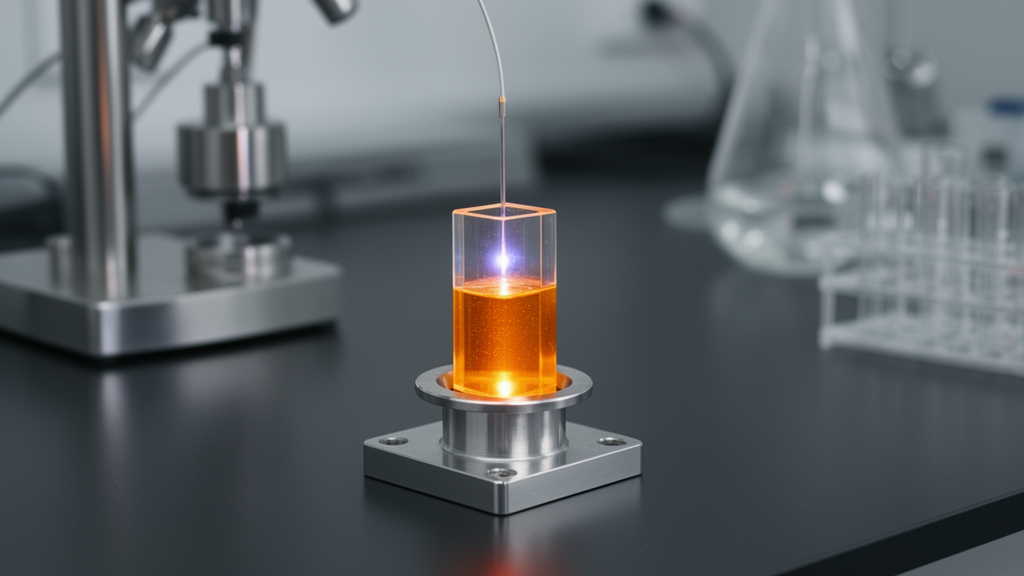
Near-infrared spectroscopy has provided new mechanistic insights into iron(III)-catalyzed organic reactions, overcoming analytical barriers associated with conventional nuclear magnetic resonance techniques. According to a brief report published in Discover Catalysis by researcher Eike B. Bauer, this spin-independent spectroscopic method enables kinetic tracking of reaction pathways. Because iron(III) species exhibit paramagnetic properties that create significant challenges for standard nuclear magnetic resonance analysis, researchers within the iron catalysis community have sought reliable alternative methods to investigate these catalytic processes.

The investigation demonstrates that time-resolved near-infrared spectroscopy can effectively monitor the progressive formation and disappearance of functional groups during chemical transformations. Data collected through this optical technique can be processed in a manner directly comparable to nuclear magnetic resonance or ultraviolet-visible spectroscopy for kinetic studies. By recording time-resolved spectral changes, this analytical approach enables both the precise determination of reaction rate constants and the observation of reaction intermediates throughout the catalytic sequence.

Using this spectroscopic methodology, the study determined rate constants for two iron(III)-catalyzed organic transformations: a Meyer-Schuster rearrangement and Michael addition reactions. The implementation of near-infrared monitoring allowed continuous observation of functional group transitions without interference from paramagnetic metals. These experimental results establish that near-infrared measurements provide quantitative kinetic data across different reaction types while avoiding the spectroscopic complications typically encountered when applying magnetic resonance to iron(III) systems.

In addition to measuring reaction kinetics, the research evaluated spectra collected from mixtures containing stoichiometric amounts of catalyst and reagent. The resulting near-infrared spectra revealed distinct spectral shifts directly associated with catalyst-substrate interactions. These observed optical shifts permitted the clear identification of the specific part of the organic substrate activated by the iron(III) catalyst during the interaction.

By establishing quantitative kinetic tracking and identifying catalyst-substrate interactions in paramagnetic reaction mixtures, the research introduces a spin-independent analytical framework for iron catalysis. The reported findings show that near-infrared spectroscopy provides a practical route to measure rate constants, analyze reaction intermediates, and determine substrate activation sites in iron(III)-catalyzed organic reactions.

Subject of Research: Near-infrared spectroscopy for kinetic analysis of iron(III) catalysis

Article Title: Kinetic study of iron (III)-catalyzed reactions via near-IR spectroscopy

Article References: Bauer, E. B. (2025). Kinetic study of iron (III)-catalyzed reactions via near-IR spectroscopy. Discover Catalysis, 2(1), Article 4. https://doi.org/10.1007/s44344-025-00008-5

Image Credits: AI Generated

DOI: 10.1007/s44344-025-00008-5

Keywords: near-IR spectroscopy, iron(III) catalysis, reaction kinetics, Meyer-Schuster rearrangement, Michael addition, reaction intermediates, paramagnetic species, rate constants, catalyst-substrate interactions, time-resolved spectroscopy, functional group monitoring, spin-independent methods, substrate activation, Discover Catalysis, spectroscopic shifts, organic reaction mechanisms

News Source: Bethany Barker. (November 18, 2026). Near-IR Spectroscopy Resolves Reaction Kinetics in Paramagnetic Iron(III) Catalysis. Scienmag.
Tags: catalyst-substrate interactionsDiscover Catalysisfunctional group monitoringiron(III) catalysisMeyer-Schuster rearrangementMichael additionnear-IR spectroscopyorganic reaction mechanismsparamagnetic speciesrate constantsreaction intermediatesreaction kineticsspectroscopic shiftsspin-independent methodssubstrate activationTime-resolved spectroscopy
Share12Tweet7Share2ShareShareShare1

Related Posts

Betalain and Anthocyanin Copigmentation Yields Thermally Resilient and Bioactive Natural Food Colorants

Betalain and Anthocyanin Copigmentation Yields Thermally Resilient and Bioactive Natural Food Colorants

November 19, 2026
Plant-Synthesized Silver-Cobalt Nanoparticles Inhibit Acetylcholinesterase and Microbes in Vitro

Plant-Synthesized Silver-Cobalt Nanoparticles Inhibit Acetylcholinesterase and Microbes in Vitro

November 19, 2026

Tomato Leaf Waste Extract Inhibits Copper–Nickel Alloy Corrosion in Sulfuric Acid

November 19, 2026

Human Airway Tissue Model Reveals Cellular Metaplasia From E-Cigarette Aerosol Exposure

November 19, 2026

POPULAR NEWS

  • Mouse Study Maps Chromatin and Splicing Shifts Driving Sertoli Cell Maturation

    Mouse Study Maps Chromatin and Splicing Shifts Driving Sertoli Cell Maturation

    29 shares
    Share 12 Tweet 7
  • Meta-Analysis Identifies Major Factors Shaping Clinical Healthcare Provider Performance

    29 shares
    Share 12 Tweet 7
  • Layered Double Hydroxide Nanomaterials Advance Targeted Drug Delivery Across Biomedical Applications

    29 shares
    Share 12 Tweet 7
  • Lovastatin and 1-MCP Suppress Scald Genes in Cold-Stored Apples

    29 shares
    Share 12 Tweet 7

About

We bring you the latest biotechnology news from best research centers and universities around the world. Check our website.

Follow us

Recent News

Altered TGF-Beta Receptor Signalling Shifts Cartilage Homeostasis Toward Osteoarthritis Breakdown

Post-Exposure Screening Detects Highest Latent Tuberculosis Rates in Thai Hospital Staff

Salmonella Paratyphi A Bilateral Eye Infection Yields Recovery Following Combined Therapy

Subscribe to Blog via Email

Enter your email address to subscribe to this blog and receive notifications of new posts by email.

Join 88 other subscribers
  • Contact Us

Bioengineer.org © Copyright 2023 All Rights Reserved.

Welcome Back!

Login to your account below

Forgotten Password?

Retrieve your password

Please enter your username or email address to reset your password.

Log In
No Result
View All Result
  • Homepages
    • Home Page 1
    • Home Page 2
  • News
  • National
  • Business
  • Health
  • Lifestyle
  • Science

Bioengineer.org © Copyright 2023 All Rights Reserved.