• HOME
  • NEWS
  • EXPLORE
    • CAREER
      • Companies
      • Jobs
    • EVENTS
    • iGEM
      • News
      • Team
    • PHOTOS
    • VIDEO
    • WIKI
  • BLOG
  • COMMUNITY
    • FACEBOOK
    • INSTAGRAM
    • TWITTER
Thursday, August 13, 2026
BIOENGINEER.ORG
No Result
View All Result
  • Login
  • HOME
  • NEWS
  • EXPLORE
    • CAREER
      • Companies
      • Jobs
        • Lecturer
        • PhD Studentship
        • Postdoc
        • Research Assistant
    • EVENTS
    • iGEM
      • News
      • Team
    • PHOTOS
    • VIDEO
    • WIKI
  • BLOG
  • COMMUNITY
    • FACEBOOK
    • INSTAGRAM
    • TWITTER
  • HOME
  • NEWS
  • EXPLORE
    • CAREER
      • Companies
      • Jobs
        • Lecturer
        • PhD Studentship
        • Postdoc
        • Research Assistant
    • EVENTS
    • iGEM
      • News
      • Team
    • PHOTOS
    • VIDEO
    • WIKI
  • BLOG
  • COMMUNITY
    • FACEBOOK
    • INSTAGRAM
    • TWITTER
No Result
View All Result
Bioengineer.org
No Result
View All Result
Home NEWS Science News Biology

Natural pest control saving billions

Bioengineer by Bioengineer
September 3, 2020
in Biology
Reading Time: 2 mins read
0
IMAGE
Share on FacebookShare on TwitterShare on LinkedinShare on RedditShare on Telegram

IMAGE

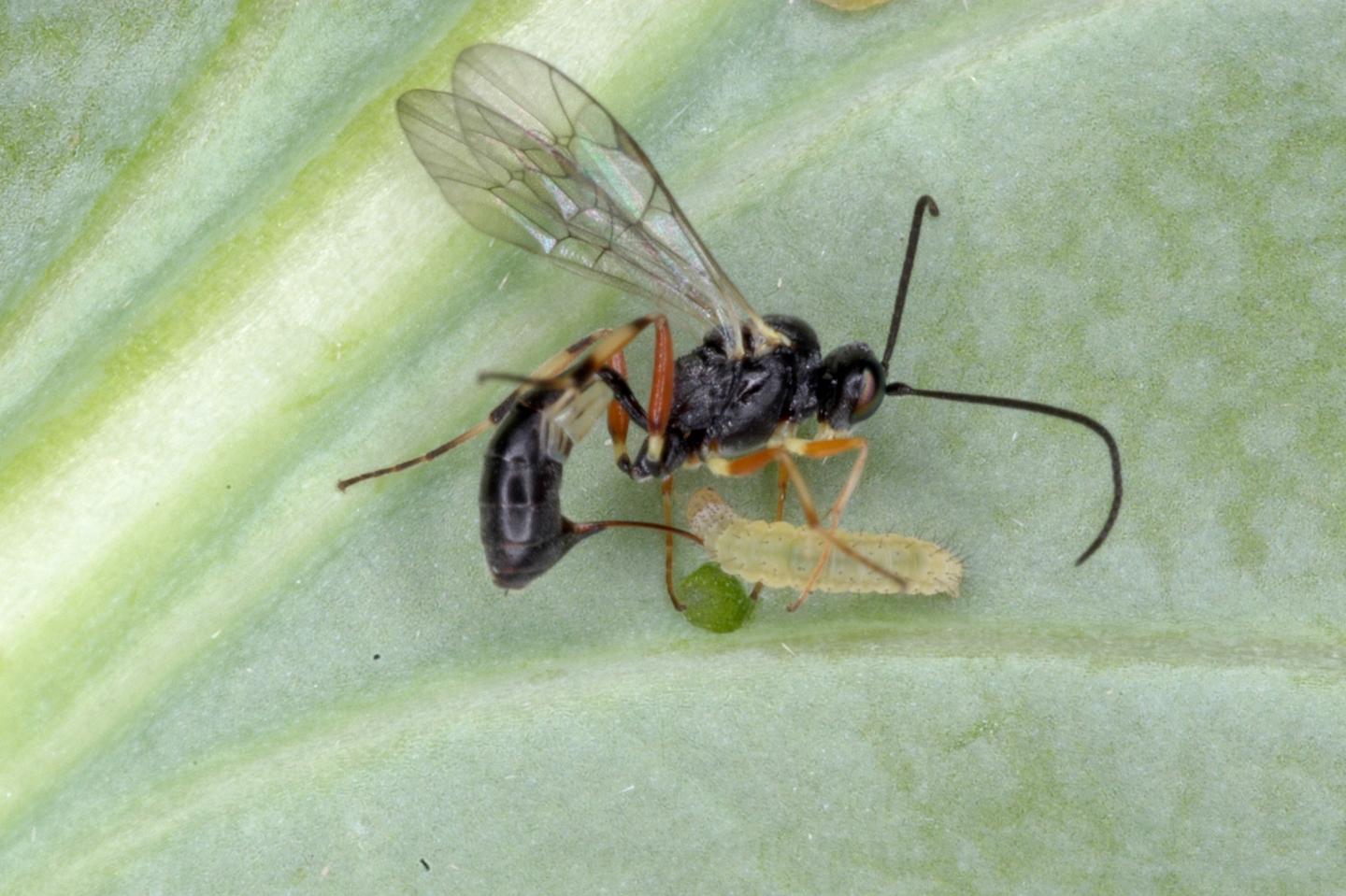
Credit: The University of Queensland

Biological control of insect pests – where ‘natural enemies’ keep pests at bay – is saving farmers in Asia and the Pacific billions of dollars, according to University of Queensland-led research.

Dr Kris Wyckhuys from UQ’s School of Biological Sciences said biological control involved the careful release of an exotic natural enemy from a pest’s native habitat.

“Scientists meticulously choose co-evolved beneficial insects that are the most effective and least likely to pose ecological upsets,” Dr Wyckhuys said.

“We’ve reviewed how biological control introductions have effectively managed 43 insect pests in food, feed and fibre crops in the Asia-Pacific region over a century.”

The team found that biological control has helped regulate invasive pest threats in multiple key food crops such as banana, breadfruit and coconut.

“Our work shows these techniques are saving farmers in Asia around $20.1 billion to $26.8 billion (US$14.6-19.5 billion) per year,” Dr Wyckhuys said.

“That’s a phenomenal amount of money and benefit, particularly when compared to other innovations in the agricultural sector.

“A good point of comparison is the Green Revolution in Asia during the late 1960s, which tripled the output of local rice production but also saw a rise of chemical fertilisers, agrochemicals and newer methods of cultivation.

“A large part of the Green Revolution impacts can be ascribed to double-yielding rice varieties, which generated $4.8 billion (US$4.3 billion) per year in Asia.”

UQ’s Associate Professor Michael Furlong said recognition of the success of biological control might lead to greater uptake and more resilient, prosperous farming globally.

“Biological control offers great opportunities for some of the world’s poorest farmers,” Dr Furlong said.

“It’s promoted rural growth and prosperity even in marginal, poorly endowed, non-rice environments.

“A great example is the coconut scale (Aspidiotus destructor), which jeopardised the economic prosperity and food security of entire nations.

“This coconut scale posed a serious problem to crops like coconut, bananas and copra industries in Fiji at the start of the Twentieth Century.

“In 1928, lady beetles from Trinidad and millimetre-long parasitic wasps were introduced, and the results were almost immediate.

“Coconut scale ceased to be an economic issue on all of the main Fijian islands within nine months, and after 18 months, the scale was so rare it was difficult to find.

“These innovative approaches, with increasingly better science, are helping feed the world, safeguard on-farm biodiversity and increase farmers’ quality of life.

“We’re hoping this research provides lessons for future efforts to mitigate invasive species, restore ecological resilience, and sustainably increase the output of our global food system.”

###

The research has been published in Nature Ecology and Evolution (DOI: 10.1038/s41559-020-01294-y).

Media Contact
Michael Furlong
[email protected]

Original Source

https://www.uq.edu.au/news/article/2020/09/natural-pest-control-saving-billions

Related Journal Article

http://dx.doi.org/10.1038/s41559-020-01294-y

Tags: Agricultural Production/EconomicsAgricultureBusiness/EconomicsEcology/EnvironmentFertilizers/Pest ManagementNature
Share12Tweet8Share2ShareShareShare2

Related Posts

ShanghaiTech Researchers Develop Diffusion-Regularized Neural Representation to Reduce CT Metal Artifacts

ShanghaiTech Researchers Develop Diffusion-Regularized Neural Representation to Reduce CT Metal Artifacts

August 13, 2026
New fossil evidence upends long-held assumptions about how mammals gave birth

New fossil evidence upends long-held assumptions about how mammals gave birth

August 13, 2026

Scientists create innovative technique to 3D-print blood vessel networks

August 13, 2026

Over a decade of Seattle suburban observations reveals where sensitive birds avoid

August 13, 2026
Please login to join discussion

POPULAR NEWS

  • Brain Protein Defect Disrupts Fat Cravings, Dietary Intake, and Body Weight

    29 shares
    Share 12 Tweet 7
  • Compact BIC Laser Produces Highly Pure Linearly Polarized Emission

    29 shares
    Share 12 Tweet 7
  • Supportive workplaces help retain experienced NHS nurses, study finds

    29 shares
    Share 12 Tweet 7
  • ShanghaiTech Researchers Develop Diffusion-Regularized Neural Representation to Reduce CT Metal Artifacts

    29 shares
    Share 12 Tweet 7

About

We bring you the latest biotechnology news from best research centers and universities around the world. Check our website.

Follow us

Recent News

Brain Protein Defect Disrupts Fat Cravings, Dietary Intake, and Body Weight

Compact BIC Laser Produces Highly Pure Linearly Polarized Emission

Supportive workplaces help retain experienced NHS nurses, study finds

Subscribe to Blog via Email

Enter your email address to subscribe to this blog and receive notifications of new posts by email.

Join 86 other subscribers
  • Contact Us

Bioengineer.org © Copyright 2023 All Rights Reserved.

Welcome Back!

Login to your account below

Forgotten Password?

Retrieve your password

Please enter your username or email address to reset your password.

Log In
No Result
View All Result
  • Homepages
    • Home Page 1
    • Home Page 2
  • News
  • National
  • Business
  • Health
  • Lifestyle
  • Science

Bioengineer.org © Copyright 2023 All Rights Reserved.