


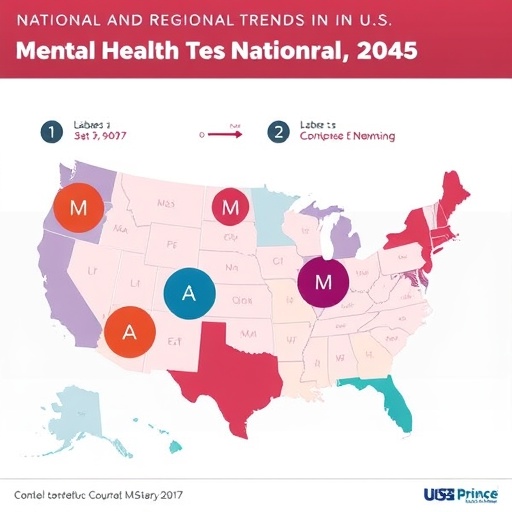
In a transformative study poised to reshape our understanding of mental health care in the United States, researchers have meticulously charted national and regional trends in mental health disorders among adults receiving treatment through state mental health systems. This expansive investigation goes beyond surface observations, delving into epidemiological shifts, treatment modalities, and regional disparities that characterize mental health care engagement across the nation. Published in the International Journal of Mental Health and Addiction, the study presents a comprehensive and data-driven portrait of the evolving landscape of mental health disorders over recent years.
Utilizing a robust dataset drawn from state mental health system records, the research team conducted an intricate analysis of diagnostic trends, treatment access, and demographic variables. Their approach integrated both temporal and spatial dimensions, allowing for a nuanced understanding of how mental health disorders manifest differently across various U.S. regions. This multi-layered methodology lends substantial weight to the findings, which reveal significant shifts not only in the prevalence of certain diagnostic categories but also in the demographic composition of those seeking and receiving care.
One of the hallmark revelations of the study pertains to the rising incidence of mood and anxiety disorders among state system patients. These disorders, traditionally recognized for their pervasive impact on functional impairment and quality of life, have seen a notable uptick in diagnosis rates. The researchers hypothesize that this trend may be attributable to both heightened awareness and improved screening protocols, as well as socio-economic stressors exacerbated by recent national crises. Such insights underscore the dynamic interplay between environment, healthcare infrastructure, and mental health epidemiology.
Contrastingly, the study also documented a relative stabilization or slight decline in the rates of severe mental illnesses, such as schizophrenia and bipolar disorder, within state mental health systems. This paradoxical trend invites further inquiry, suggesting potential influences ranging from shifts in diagnostic criteria and healthcare access to the effectiveness of early intervention strategies. The apparent divergence in trends between common mental health disorders and severe psychiatric conditions provides fertile ground for future research and policy adjustments.
Geographic disparities emerged prominently within the analysis, highlighting stark contrasts in mental health disorder prevalence and treatment patterns between urban, suburban, and rural regions. Urban areas demonstrated higher overall rates of diagnosis, potentially reflecting greater healthcare resource availability and diagnosis accessibility. Conversely, rural regions exhibited lower apparent prevalence rates, raising concerns about underdiagnosis and systemic barriers to care. This geographic heterogeneity calls attention to the critical need for tailored intervention strategies that account for local healthcare infrastructure and social determinants of health.
Moreover, the study’s temporal scope allowed researchers to observe changes linked to specific historical events and policy shifts. For instance, the aftermath of the COVID-19 pandemic and the implementation of telehealth services appear to have significantly influenced treatment engagement patterns and diagnostic trajectories. The rapid expansion of telepsychiatry catalyzed broader access to care, especially in historically underserved regions, while also modifying the presentation and reporting of symptoms. These findings contribute to a growing body of literature examining how digital health innovations are reshaping the mental health care landscape.
Notably, the research underscores demographic disparities related to age, race, and socioeconomic status in mental health disorder diagnosis and treatment within state systems. Younger adults showed increased diagnostic rates for mood and anxiety disorders, aligning with national data on rising mental health challenges in this cohort. Racial and ethnic minorities were often underrepresented in treatment populations despite evidence of substantial mental health burdens, pointing to persistent systemic inequities. Socioeconomic factors also influenced access and treatment continuity, reinforcing the intricate web of social determinants affecting mental health outcomes.
The intersection of mental health and substance use disorders also featured prominently in the study’s findings. The comorbidity of these conditions complicates treatment pathways and often exacerbates prognosis. The analysis revealed regional and demographic variations in the prevalence of co-occurring disorders, emphasizing the need for integrated care models. State systems face the dual challenge of addressing complex clinical presentations while optimizing resource allocation to meet diverse patient needs.
From a methodological standpoint, the study leveraged advanced statistical modeling and geospatial analysis to parse complex datasets into actionable insights. This approach enabled the identification of latent patterns and emerging trends that might otherwise have remained obscured. The precision afforded by these techniques enhances confidence in the study’s conclusions and bolsters its potential to inform evidence-based policy and clinical interventions.
Importantly, the authors advocate for sustained investment in mental health infrastructure and data monitoring systems. The capacity to track trends at both national and local levels is vital for responsive and adaptive service provision. Real-time data integration could facilitate earlier detection of emerging mental health crises and enable targeted deployment of resources where they are most needed.
Furthermore, the study highlights the imperative of culturally competent care models that address the unique needs of diverse populations. Bridging the gap in mental health service utilization among marginalized communities requires culturally sensitive outreach, stigma reduction efforts, and structural reforms. Recognizing and rectifying these disparities is paramount to achieving equity in mental health outcomes.
The implications of this research extend to policymakers, clinicians, and public health advocates alike. By illuminating the multifaceted dynamics within state mental health systems, the study provides a roadmap for optimizing mental health care delivery in an era marked by rapid societal change and growing mental health challenges. Investments in workforce training, digital innovation, and community-based services emerge as critical focal points.
In conclusion, this landmark study offers a granular, evidence-based examination of mental health disorder trends among U.S. adults engaged in state mental health systems. Its revelations about rising diagnostic rates, regional disparities, and evolving treatment modalities furnish essential knowledge for stakeholders aiming to enhance mental health care quality and accessibility. As the landscape of mental health continues to shift, research of this caliber equips the field with the tools necessary to navigate the complex terrain ahead.
Subject of Research: National and regional trends in mental health disorders among U.S. adults treated in state mental health systems, including epidemiological patterns, demographic disparities, and treatment dynamics.
Article Title: National and Regional Trends in Mental Health Disorders Among U.S. Adults Treated in the State Mental Health System.
Article References:
Rjbongshi, A., Ahmmad, M.R., Mazumder, S. et al. National and Regional Trends in Mental Health Disorders Among U.S. Adults Treated in the State Mental Health System. International Journal of Mental Health and Addiction (2026). https://doi.org/10.1007/s11469-025-01621-z
Image Credits: AI Generated
DOI: https://doi.org/10.1007/s11469-025-01621-z
Tags: adult mental health disorderscomprehensive mental health care portraitdata-driven mental health researchdemographic trends in mental healthepidemiological shifts in mental healthmental health care engagementnational mental health trendsregional mental health disparitiesrising mood and anxiety disordersstate mental health system analysistreatment modalities in mental healthtrends in mental health treatment access



