In a groundbreaking study poised to alter our understanding of chemotherapy resistance and immunotherapy evasion, researchers have unveiled the pivotal role of NAT10 in fostering cisplatin resistance and facilitating immune escape in gastric cancer. The findings, recently published in Cell Death Discovery, deliver profound insights into the molecular orchestration behind these phenomena, revealing how NAT10 orchestrates the upregulation of DUSP1 and PD-L1—two crucial players that modulate cancer cell survival and immune system interaction.
Gastric cancer remains one of the leading causes of cancer-related mortality worldwide, with cisplatin—a platinum-based chemotherapeutic agent—serving as a cornerstone in its systemic treatment. Despite initial responses, many patients eventually succumb to the disease due to acquired drug resistance. Adding complexity, tumors adopt sophisticated immune evasion tactics, blunting the effectiveness of emerging immunotherapies. This double jeopardy has spurred intense scientific efforts to identify molecular culprits underpinning these resistance mechanisms.
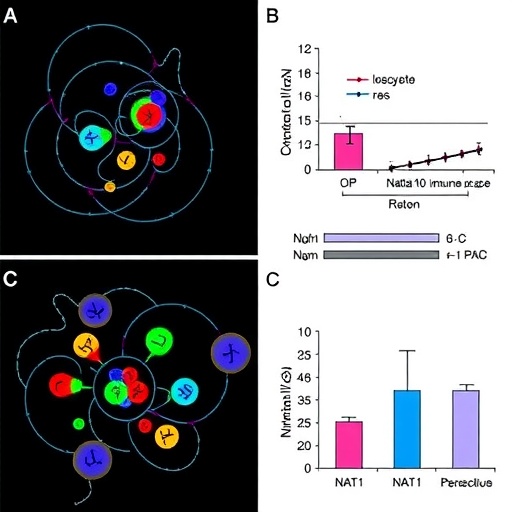
The investigative team spearheaded by Qian, Gao, and Wang deployed cutting-edge genomics combined with proteomic analyses to dissect the contributions of NAT10, an acetyltransferase previously implicated in RNA modification and cellular stress responses. They demonstrated that elevated NAT10 expression in gastric cancer cells correlates strongly with diminished cisplatin sensitivity and heightened PD-L1-mediated immune checkpoint activation. This dual role positions NAT10 as a master regulator, deftly modulating cancer cell fate and immune engagement.
Mechanistically, the study elucidates that NAT10 promotes the transcriptional and post-transcriptional augmentation of DUSP1, a dual-specificity phosphatase with known roles in attenuating MAPK signaling pathways. By bolstering DUSP1 levels, NAT10 effectively dampens pro-apoptotic signals traditionally triggered by cisplatin, thereby enabling malignant cells to circumvent the cytotoxic stresses induced by chemotherapy. Concurrently, NAT10 upregulates PD-L1, a cell surface protein that binds PD-1 receptors on T cells, effectively disarming immune surveillance mechanisms.
This nuanced interplay between NAT10, DUSP1, and PD-L1 reveals an intricate axis of resistance that allows gastric tumors not only to survive chemotherapy but also to evade cytotoxic T cell-mediated destruction. The findings suggest that NAT10 acts as a molecular switch, coordinating cell-intrinsic survival programs with immune checkpoint activation, thereby fortifying tumor resilience on multiple fronts.
Importantly, the authors utilized gastric cancer patient-derived xenograft models to validate their in vitro observations. These models recapitulated the aggressiveness and treatment resistance observed clinically, reinforcing the therapeutic relevance of targeting the NAT10-DUSP1-PD-L1 axis. Pharmacological inhibition of NAT10 in these models restored cisplatin sensitivity and reinvigorated antitumor immune responses, highlighting it as a promising therapeutic target.
Additionally, advanced transcriptomic profiling unraveled the broader impact of NAT10 dysregulation on the tumor microenvironment. NAT10 overexpression was linked to a suppressive milieu characterized by reduced infiltration of cytotoxic lymphocytes and increased presence of regulatory T cells, further emphasizing its multifaceted contribution to immune escape.
This research resonates deeply in the context of current oncology paradigms, where the integration of chemotherapy with immune checkpoint blockade aims to amplify antitumor efficacy. However, resistance remains a formidable obstacle. By illuminating NAT10’s role in orchestrating both chemoresistance and immune escape, the study paves the way for developing combination therapies that target this enzyme alongside conventional treatments.
Moreover, the study raises intriguing questions about the broader implications of RNA modification enzymes like NAT10 in cancer biology. As RNA epigenetics emerges as a critical frontier, understanding how such modifications influence gene expression and protein function could unlock novel avenues to combat refractory cancers.
The discovery also underscores the importance of personalized medicine. Measuring NAT10 expression levels may serve as a biomarker to stratify gastric cancer patients likely to benefit from combined cisplatin and immune checkpoint inhibitor therapies. Such stratification could optimize treatment regimens, reduce unnecessary toxicity, and improve patient outcomes.
Furthermore, this research prompts the exploration of NAT10 inhibitors currently in preclinical development, which could be repurposed or refined for gastric cancer applications. The notion of dual targeting—simultaneous modulation of chemotherapy response and immune evasion—embodies a sophisticated therapeutic strategy that aligns with the complexity of tumor biology.
While these findings mark a substantial leap forward, the study also highlights the necessity for future investigations to elucidate the structural basis of NAT10 interactions with its substrates and regulators. Deciphering this could expedite the design of highly specific inhibitors with minimal off-target effects.
In addition, expanding this research to other cancer types characterized by cisplatin resistance and immune checkpoint activation could reveal whether the NAT10-mediated pathway is a universal mechanism or specific to gastric carcinoma. Such comparative studies would broaden the therapeutic impact.
This seminal work not only advances scientific knowledge but offers tangible hope for patients battling gastric cancer. As drug resistance and immune escape continue to thwart conventional and emerging treatments, innovative approaches targeting fundamental molecular drivers like NAT10 usher in a new era in cancer therapy.
In essence, the discovery of NAT10’s role provides a key piece in the complex puzzle of cancer resilience. It exemplifies how unraveling molecular crosstalk within tumors can translate into groundbreaking clinical interventions, reinforcing the relentless pursuit of more effective and durable cancer treatments.
Subject of Research: Mechanisms underlying cisplatin resistance and immune escape in gastric cancer via NAT10-mediated regulation.
Article Title: NAT10 promotes cisplatin resistance and immune escape by increasing the expression of DUSP1 and PD-L1 in gastric cancer.
Article References:
Qian, L., Gao, W., Wang, X. et al. NAT10 promotes cisplatin resistance and immune escape by increasing the expression of DUSP1 and PD-L1 in gastric cancer. Cell Death Discov. (2026). https://doi.org/10.1038/s41420-026-03107-w
Image Credits: AI Generated
DOI: https://doi.org/10.1038/s41420-026-03107-w
Tags: cancer cell survival signaling pathwayscisplatin resistance mechanismsDUSP1 function in chemotherapy resistancegastric cancer drug resistance pathwaysgenomic studies in chemotherapy responseimmune escape in cancerimmunotherapy evasion in gastric tumorsmolecular targets for overcoming cisplatin resistanceNAT10 role in gastric cancerPD-L1 immune checkpoint regulationproteomic analysis of cancer resistanceRNA acetyltransferase in cancer