UMD physicist for Apollo experiment gets chance to send next gen version to moon
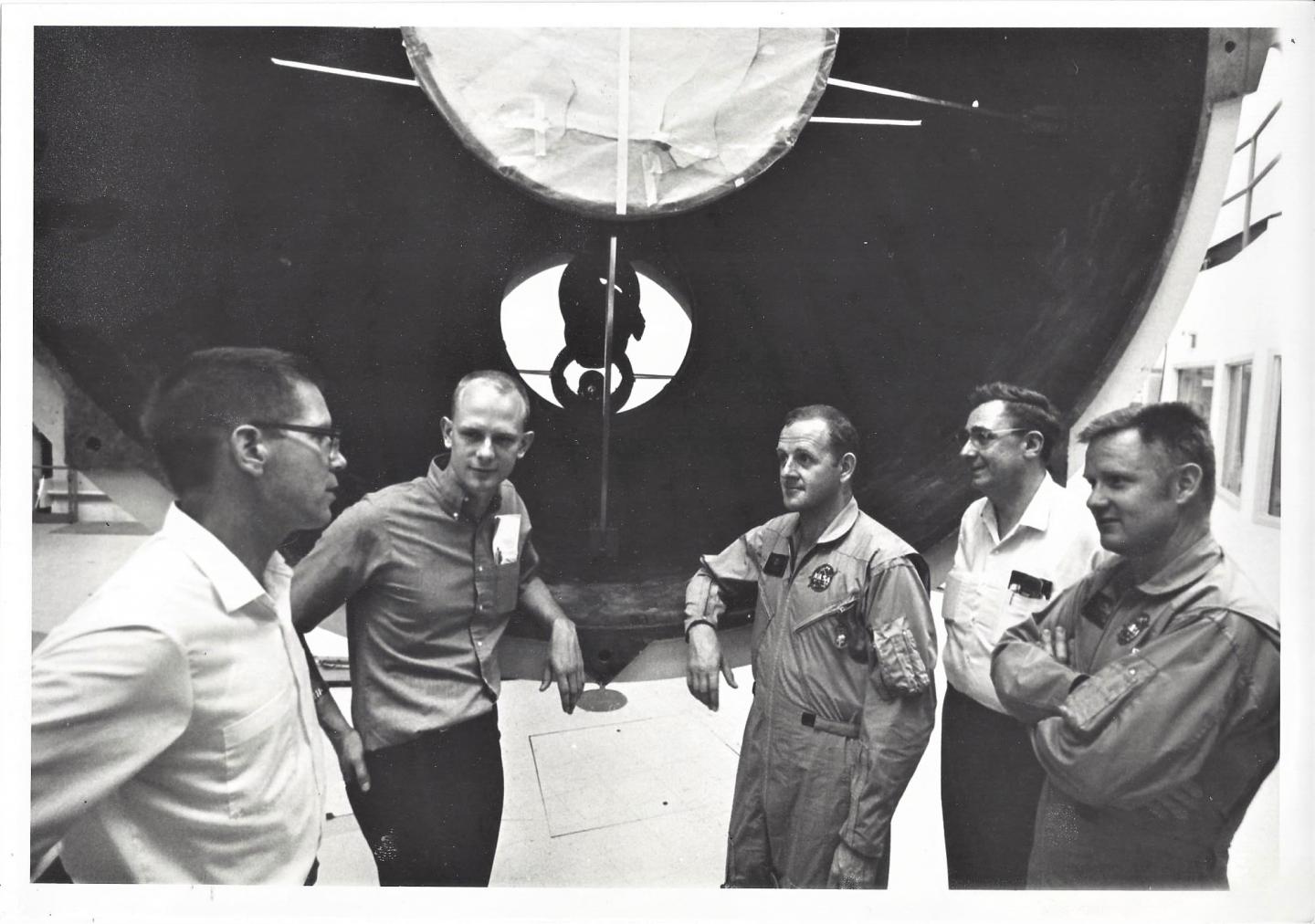
Credit: Doug Currie, University of Maryland
COLLEGE PARK, Md. — In 1969, University of Maryland physicist Doug Currie helped design three still-in-use lunar instruments placed on the moon by Apollo 11, 14 and 15. Fifty years later, Currie is the lead scientist for a just-approved NASA project to place next-generation versions of these instruments on the Moon.
Known as lunar retroreflectors, the instruments reflect laser pulses sent from Earth back to their exact origin point, allowing precise measurements of the Earth-moon distance; providing data to better understand aspects of the moon’s interior, including its liquid core; testing questions of fundamental physics, and allowing better mapping and navigation of the lunar surface.
According to Currie, a senior research scientist and professor emeritus at the University of Maryland, the new UMD-led project can lead to improvements in all of these research areas: (1) because of the hundred fold improvement in the accuracy of individual ranges using the new retroreflectors and (2) by the increased accuracy produced by a larger number of reflectors with a wider lunar area covered by the network. Currently, there are five retroreflectors on the moon: the three placed by Apollo missions and two French-designed instruments placed by Soviet lunar missions. The Currie-led proposal would add three Next Generation Retroreflectors for a total of eight lunar retroreflector arrays.
“Our Next Generation Lunar Retroreflector is a 21st Century version of the instruments currently on the Moon. Each placement of a next generation lunar laser ranging retroreflector will greatly enhance the scientific and navigational capabilities of the retroreflector network,” said Currie. “These additions improve the mapping and navigation capabilities important for NASA’s plans to return to the Moon and by 2028 establish a sustained human presence.”
“And these also will significantly boost scientists’ ability to use the network to conduct important science, such as new tests of general relativity and other theories of gravity. Such studies may help us understand the nature of mysterious dark matter, which appears to constitute almost 27 percent of the Universe,” he said.
According to a NASA release, the Next Generation Lunar Retroreflectors (NGLR) is one of 12 new science and technology payloads selected by the agency to help humans study the Moon and explore more of its surface as part of the NASA’s Artemis lunar program. The agency says the retroreflector and the other 11 investigations and demonstrations “will help the agency to send astronauts to the Moon by 2024 as a way to prepare to send humans to Mars for the first time.”
The selected investigations will go to the Moon on future flights through NASA’s Commercial Lunar Payload Services (CLPS) project. According to the agency, the CLPS project allows rapid acquisition of lunar delivery services for payloads like these that advance capabilities for science, exploration, or commercial development of the Moon.
NASA has selected the first three commercial Moon landing service providers that will deliver science and technology payloads to the lunar surface. According to Currie, the Next Generation Retroreflectors are not currently scheduled by NASA to be among the payloads carried on those three commercial Moon landings. “However, we believe because of the low size and weight of these retroreflectors, each mission could safely add one to their planned payloads for each of these commercial delivery missions,” he said.
“The selected lunar payloads represent cutting-edge innovations, and will take advantage of early flights through our commercial services project,” said Thomas Zurbuchen, associate administrator of the agency’s Science Mission Directorate in Washington. “Each demonstrates either a new science instrument or a technological innovation that supports scientific and human exploration objectives, and many have broader applications for Mars and beyond.”
The Next Generation Lunar Retroreflector (NGLR) team consists of: Principal Investigator Douglas Currie Professor Emeritus, Department of Physics, University of Maryland College Park (UMD); Co-I/Co-PI: Simone Dell’Agnello Istituto Nazionale di Fisica Nucleare, Laboratori Nazionali di Frascati, Frascati, Italy; and Co-Investigators Professor Christopher Davis Electrical Engineering Department (UMD); James Williams Jet Propulsion Laboratory Technical Personnel; John Rzasa (UMD); and Dennis Wellnitz Department of Astronomy (UMD). UMD Assistant Research Scientist Chensheng Wu, a member of Professor Chris Davis’s Maryland Optical Group in Electrical and Computer Engineering has also done crucial work on the design of the Next Generation Lunar Retroreflectors.
###
Links for more Information:
What Neil & Buzz Left on the Moon | NASA Science Mission Directorate: https:/
NASA Selects 12 New Lunar Science, Technology Investigations: https:/
Media Contact
Leon (Lee) Tune
[email protected]
Original Source
https:/