• HOME
  • NEWS
  • EXPLORE
    • CAREER
      • Companies
      • Jobs
    • EVENTS
    • iGEM
      • News
      • Team
    • PHOTOS
    • VIDEO
    • WIKI
  • BLOG
  • COMMUNITY
    • FACEBOOK
    • INSTAGRAM
    • TWITTER
Wednesday, April 1, 2026
BIOENGINEER.ORG
No Result
View All Result
  • Login
  • HOME
  • NEWS
  • EXPLORE
    • CAREER
      • Companies
      • Jobs
        • Lecturer
        • PhD Studentship
        • Postdoc
        • Research Assistant
    • EVENTS
    • iGEM
      • News
      • Team
    • PHOTOS
    • VIDEO
    • WIKI
  • BLOG
  • COMMUNITY
    • FACEBOOK
    • INSTAGRAM
    • TWITTER
  • HOME
  • NEWS
  • EXPLORE
    • CAREER
      • Companies
      • Jobs
        • Lecturer
        • PhD Studentship
        • Postdoc
        • Research Assistant
    • EVENTS
    • iGEM
      • News
      • Team
    • PHOTOS
    • VIDEO
    • WIKI
  • BLOG
  • COMMUNITY
    • FACEBOOK
    • INSTAGRAM
    • TWITTER
No Result
View All Result
Bioengineer.org
No Result
View All Result
Home NEWS Science News

NASA sees Tropical Depression 2E moving over Mexican state of Oaxaca

Bioengineer by Bioengineer
June 1, 2017
in Science News
Reading Time: 2 mins read
0
Share on FacebookShare on TwitterShare on LinkedinShare on RedditShare on Telegram
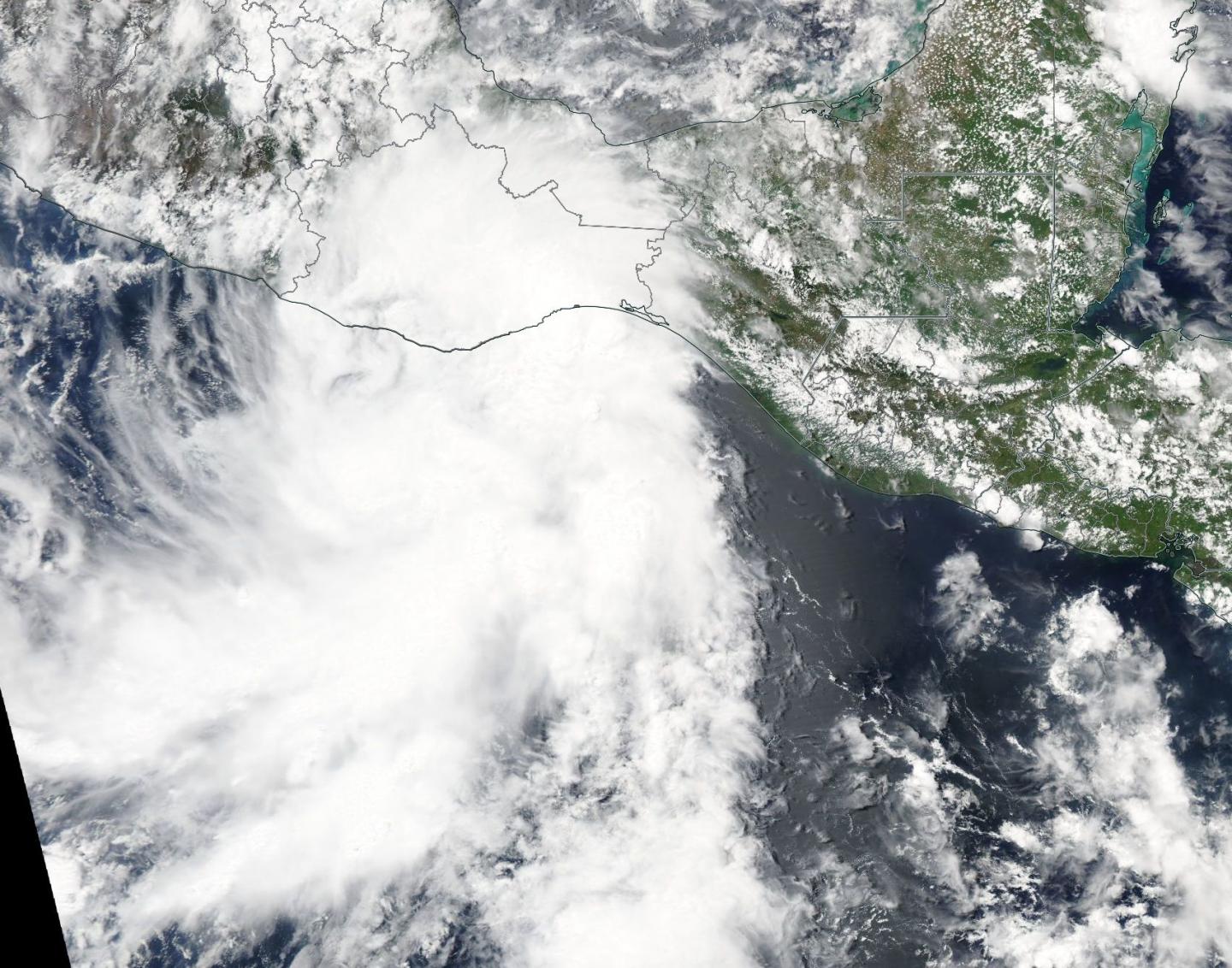
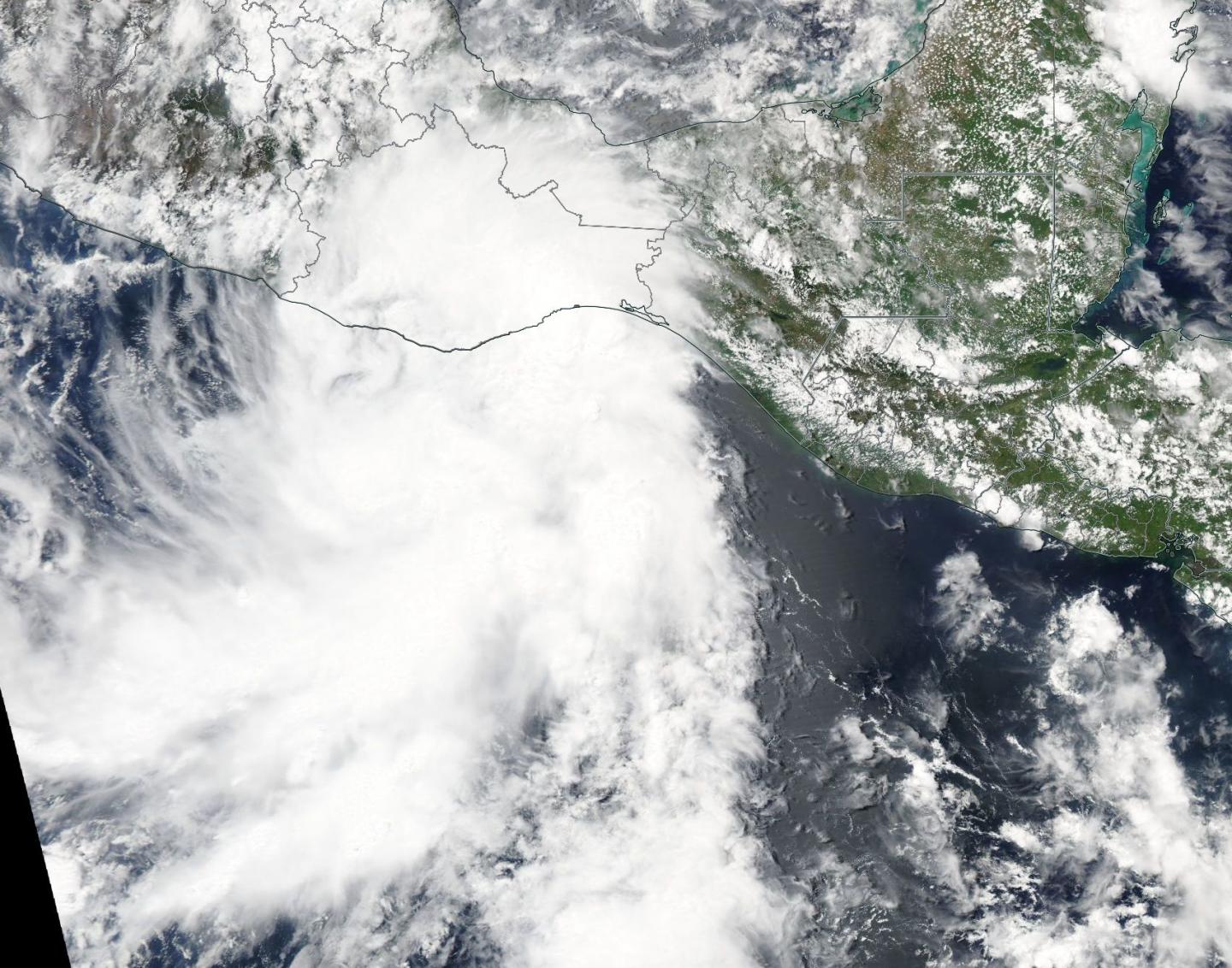
IMAGE

Credit: Credits: NASA Goddard MODIS Rapid Response Team

NASA's Aqua satellite analyzed Tropical Depression 2E in infrared, visible and microwave light as it began its landfall on June 1, bringing heavy rains to southern Mexico.

Tropical Depression 02E (TD2E) formed on May 31 and has not strengthened, likely due to its close proximity to the coast of southern Mexico. The National Hurricane Center (NHC) said that Tropical Depression 2E's "central convection has decreased somewhat, with the primary convection now in a large band over the southeastern semicircle."

The Atmospheric Infrared Sounder or AIRS instrument aboard NASA's Aqua satellite looked at Tropical Depression 2E in infrared light. The AIRS image was taken on June 1 at 7:41 UTC (3:41 a.m. EST) and showed some cloud top temperatures of thunderstorms near the center of circulation as cold as minus 63 degrees Fahrenheit (minus 53 degrees Celsius). NASA research has shown the storms with cloud tops that cold have the potential to generate heavy rainfall. The image shows that the northern quadrant containing those strong storms extended over southern Mexico.

The infrared data was false-colored at NASA's Jet Propulsion Laboratory in Pasadena, California, where AIRS data is managed.

The MODIS instrument aboard Aqua captured a visible image of Tropical Depression 2E at the same time as the AIRS instrument. The MODIS image clearly showed the northern extent of TD2E over the Mexican state of Oaxaca.

A Tropical Storm Warning is in effect for the Pacific coast of Mexico from Salina Cruz to Puerto Escondido.

The NHC noted at 11 a.m. EDT on June 1 the center of TD2E was located near latitude 15.4 degrees North and longitude degrees 97.1 West. That's about 45 miles (70 km) west-southwest of Puerto Angel, Mexico and about 215 miles (340 km) east-southeast of Acapulco, Mexico.

NHC said "The depression is moving toward the north-northeast near 6 mph (9 kph) and this motion is expected to continue through Friday. On the forecast track, the center of the tropical cyclone is expected to move inland across the state of Oaxaca later today or tonight. Maximum sustained winds are near 35 mph (55 kph) with higher gusts."

There's a chance that the depression could still become a tropical storm before landfall.

After landfall, the system is expected to weaken and dissipate on Friday over the mountains if southeastern Mexico.

###

Media Contact

Rob Gutro
[email protected]
@NASAGoddard

http://www.nasa.gov/goddard

############

Story Source: Materials provided by Scienmag

Share12Tweet8Share2ShareShareShare2

Related Posts

FSHR and LHR Compensation Unveils Ovarian Hyperstimulation Mechanisms

April 1, 2026
Creating Desktop Particle Accelerators to Open New Frontiers in Scientific Research

Creating Desktop Particle Accelerators to Open New Frontiers in Scientific Research

April 1, 2026

Do Your Genes Influence How Lifestyle Choices Affect Aging?

April 1, 2026

Urban Systems and Traffic: Unequal Two-Way Links

April 1, 2026
Please login to join discussion

POPULAR NEWS

  • blank

    Revolutionary AI Model Enhances Precision in Detecting Food Contamination

    96 shares
    Share 38 Tweet 24
  • Imagine a Social Media Feed That Challenges Your Views Instead of Reinforcing Them

    1006 shares
    Share 398 Tweet 249
  • Promising Outcomes from First Clinical Trials of Gene Regulation in Epilepsy

    51 shares
    Share 20 Tweet 13
  • Popular Anti-Aging Compound Linked to Damage in Corpus Callosum, Study Finds

    43 shares
    Share 17 Tweet 11

About

We bring you the latest biotechnology news from best research centers and universities around the world. Check our website.

Follow us

Recent News

FSHR and LHR Compensation Unveils Ovarian Hyperstimulation Mechanisms

Creating Desktop Particle Accelerators to Open New Frontiers in Scientific Research

Do Your Genes Influence How Lifestyle Choices Affect Aging?

Subscribe to Blog via Email

Enter your email address to subscribe to this blog and receive notifications of new posts by email.

Join 78 other subscribers
  • Contact Us

Bioengineer.org © Copyright 2023 All Rights Reserved.

Welcome Back!

Login to your account below

Forgotten Password?

Retrieve your password

Please enter your username or email address to reset your password.

Log In
No Result
View All Result
  • Homepages
    • Home Page 1
    • Home Page 2
  • News
  • National
  • Business
  • Health
  • Lifestyle
  • Science

Bioengineer.org © Copyright 2023 All Rights Reserved.