


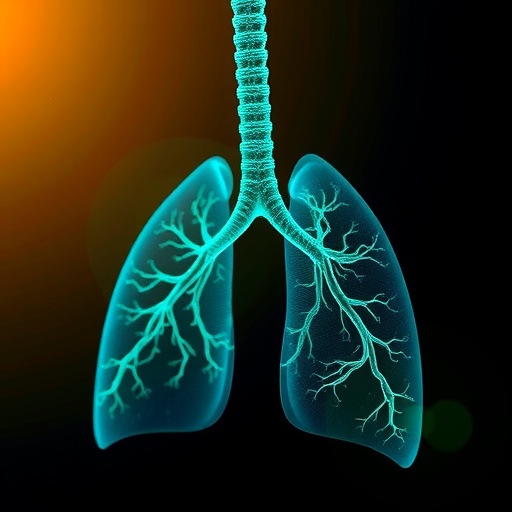
In a groundbreaking leap forward for pulmonary medicine, a team of researchers led by Li, C., Lu, G., Chen, H., and colleagues has developed an innovative nanosystem designed to tackle idiopathic pulmonary fibrosis (IPF) through continuous spatiotemporal therapy. Published in Nature Communications in 2026, this pioneering study introduces a novel approach to delivering targeted treatment by focusing on the tissue inhibitor of metalloproteinase-1 (TIMP-1), a critical regulator implicated in the progression of IPF. This breakthrough represents an unprecedented strategy to address the stubborn challenge of therapeutic delivery within the complex pulmonary microenvironment.
Idiopathic pulmonary fibrosis is a devastating interstitial lung disease characterized by relentless scarring of lung tissue, leading to progressive decline in respiratory function and ultimately, respiratory failure. The pathogenesis of IPF is multifaceted, involving aberrant wound healing responses, chronic inflammation, and extracellular matrix remodeling. Among the molecular players in this process, TIMP-1 stands out due to its pivotal role in modulating matrix metalloproteinase activity—enzymes that degrade the extracellular matrix—thus influencing fibrotic progression. However, clinical manipulation of TIMP-1 has been problematic due to difficulties in achieving targeted, controlled, and sustained delivery within the lung.
The innovative nanosystem presented in this study leverages nanotechnology to engineer a highly specific delivery vehicle that can continuously modulate TIMP-1 activity in both spatial and temporal dimensions. This capability is critical because IPF lesions are heterogeneously distributed and dynamically evolving across lung tissues. Traditional therapies often fail to maintain consistent pharmacological effects throughout the entirety of this complex terrain. By contrast, this nanosystem integrates a programmable release mechanism, enabling precise dosing synchronized to disease activity phases, thereby optimizing therapeutic efficacy while minimizing systemic side effects.
Technically, the nanosystem architecture comprises biocompatible polymeric nanoparticles encapsulating therapeutic agents capable of neutralizing aberrant TIMP-1 expression. Functionalization of these nanoparticles with lung-targeting ligands ensures selective accumulation in fibrotic regions. Moreover, the system incorporates a stimuli-responsive component activated by microenvironmental markers such as pH shifts and oxidative stress, hallmark features of fibrotic loci. This smart responsiveness allows for ‘on-demand’ therapeutic release, aligning with pathophysiological cues and offering a synchronized intervention.
Laboratory testing included rigorous in vitro assays using pulmonary fibroblast cultures derived from patients diagnosed with IPF. The nanosystem demonstrated robust internalization into target cells, efficiently attenuating TIMP-1 levels and restoring the balance of matrix metalloproteinase activity. This correction, in turn, mitigated excessive extracellular matrix deposition and reduced fibrotic marker expression. Importantly, cytotoxicity assays confirmed that the nanosystem exhibited minimal off-target effects, underscoring its safety profile.
Building on these promising results, the team conducted preclinical evaluations in animal models replicating human IPF pathology. Using advanced imaging modalities, researchers observed preferential localization of the nanoparticles within fibrotic lung segments, confirming the targeting efficacy. Longitudinal studies over several weeks demonstrated sustained attenuation of pulmonary fibrosis progression, marked by improved lung compliance and gas exchange parameters. These findings are highly encouraging, suggesting potential translational viability.
One of the remarkable features of this nanosystem is its capacity for real-time modulation of drug release kinetics. By integrating nanofabricated sensors within the particles, the system can dynamically adjust therapeutic output in response to evolving disease severity. This innovation redefines precision medicine paradigms in IPF treatment, which historically have relied on static dosing regimens with suboptimal outcomes. The ability to titrate therapy in situ promises to enhance patient prognosis and quality of life substantially.
While current anti-fibrotic treatments for IPF offer limited benefit and are often marred by systemic toxicities, the introduction of this TIMP-1-targeted nanosystem heralds a transformative shift. Its highly controlled and localized action might circumvent the drawbacks of conventional drugs by sparing healthy tissues from exposure and reducing the risk of adverse effects. Additionally, the continuous therapeutic presence addresses the chronic nature of IPF, potentially stabilizing or reversing fibrosis progression more effectively than intermittent dosing schedules.
The implications for broader pulmonary disease management are profound. This nanosystem’s platform technology could be adapted to other lung pathologies characterized by dysregulated protease activity or inflammatory processes, such as chronic obstructive pulmonary disease (COPD) or acute respiratory distress syndrome (ARDS). By fine-tuning ligand specificity and payload composition, customized therapies tailored to distinct molecular signatures could become a reality, ushering in a new era of personalized pulmonary care.
Despite the promising prospects, translation from bench to bedside will necessitate further optimization and rigorous clinical testing. Key challenges include scaling up manufacturing processes, ensuring long-term biostability of the nanoparticles, and thoroughly assessing immunogenicity in diverse patient populations. Regulatory hurdles also need to be navigated, requiring comprehensive demonstration of safety and efficacy in extensive clinical trials. The multidisciplinary collaboration between nanotechnologists, pulmonologists, and regulatory agencies will be pivotal to realize the full potential of this therapeutic innovation.
In parallel, exploration of combined modality approaches integrating the nanosystem with existing anti-fibrotic drugs or emerging cell-based therapies could amplify treatment synergism. The ability to spatially and temporally control drug release introduces new dimensions for combination regimens, targeting multiple pathogenic pathways simultaneously. Such integrated strategies may accelerate the journey toward delivering durable remission for IPF patients, a demographic historically faced with dismal outcomes.
Technological advancements in nanoparticle fabrication and bioengineering will likely inspire iterative improvements in the nanosystem’s design. Enhancements in targeting ligand affinity, payload encapsulation efficiency, and release profile precision are anticipated as researchers continue probing the interface between nanomaterials and pulmonary biology. As a consequence, the utility of this approach may extend beyond IPF, stimulating innovation across the biomedical field and inspiring novel treatment paradigms for complex chronic diseases.
In conclusion, the work by Li and colleagues represents a milestone accomplishment in the fight against idiopathic pulmonary fibrosis. By harnessing advanced nanosystems to deliver continuous, spatiotemporally targeted therapy against TIMP-1, they have opened a promising new frontier in pulmonary medicine. This sophisticated strategy epitomizes the cutting edge of translational research, blending nanotechnology with molecular pathogenesis insights to confront a clinical challenge long resistant to intervention. As this technology advances toward clinical application, it holds the potential not only to transform IPF management but also to redefine therapeutic possibilities across chronic lung diseases.
The future of IPF treatment appears brighter with the emergence of such innovative nanosystems capable of precise molecular targeting coupled with intelligent drug release control. Continued multidisciplinary research and investment will be critical to accelerate clinical translation and to expand the reach of these novel therapies to patients worldwide desperately awaiting effective options. The convergence of nanomedicine and pulmonary biology heralds an exciting era, redefining how we understand, target, and ultimately defeat devastating lung disorders like idiopathic pulmonary fibrosis.
Subject of Research:
Targeted nanosystem therapy for idiopathic pulmonary fibrosis via modulation of tissue inhibitor of metalloproteinase-1 (TIMP-1).
Article Title:
A nanosystem targeting tissue inhibitor of metalloproteinase-1 for continuous spatiotemporal idiopathic pulmonary fibrosis therapy.
Article References:
Li, C., Lu, G., Chen, H. et al. A nanosystem targeting tissue inhibitor of metalloproteinase-1 for continuous spatiotemporal idiopathic pulmonary fibrosis therapy. Nat Commun (2026). https://doi.org/10.1038/s41467-026-68398-0
Image Credits:
AI Generated
Tags: challenges in fibrosis treatmentcontinuous drug delivery for IPFextracellular matrix remodeling in IPFinnovative nanotechnology in medicineinterstitial lung disease therapiesmetalloproteinase regulation in lung diseasenanosystem for lung fibrosis therapynovel approaches in pulmonary medicinepulmonary fibrosis research advancementsspatiotemporal drug delivery systemstargeted therapies for respiratory conditionsTIMP-1 targeted treatment



