


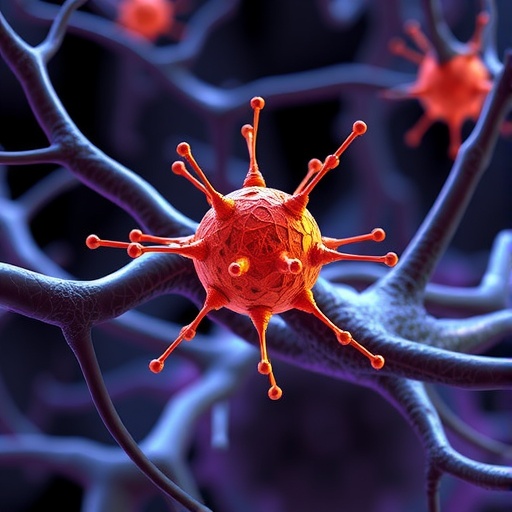
In a groundbreaking development that promises to transform the future of neural regeneration therapies, researchers have unveiled an innovative class of camouflaged nanorobots designed to precisely influence the behavior of macrophages within neural tissue. This pioneering work, spearheaded by Guo, Wang, Jiang, and their colleagues, marks an unprecedented convergence of nanotechnology, immunology, and regenerative medicine. By targeting subcellular organelle communication networks within macrophages, these nanorobots orchestrate cellular responses that dramatically enhance the nerve repair process. The implications of this discovery are profound, offering new hope for treating neurological injuries and degenerative disorders that have long eluded effective therapies.
Central to this research is the sophisticated design of the nanorobots, which are cloaked in biomimetic materials to evade immune detection and ensure targeted delivery. These microscopic machines are engineered to home in on macrophages—immune cells integral to inflammation and tissue remodeling—that reside at the sites of neural injury. Unlike conventional drug delivery systems that broadly modulate immune activity, the nanorobots intervene at an exceptionally refined level: the crosstalk among specific subcellular organelles within individual macrophages. This approach allows for precise modulation of intracellular signaling pathways that govern the macrophage phenotype, tipping the balance towards regenerative functions rather than pro-inflammatory behavior.
The concept of organelle crosstalk refers to the dynamic biochemical conversations between organelles such as mitochondria, endoplasmic reticulum, lysosomes, and peroxisomes. These interactions are crucial for maintaining cellular homeostasis and directing immune responses. The research team discovered that in the context of neural injury, maladaptive organelle crosstalk patterns in macrophages exacerbate tissue damage and inhibit regeneration. By engineering nanorobots that can intercept and recalibrate these organelle communications, the team effectively reprogrammed macrophages to adopt a pro-regenerative state, enhancing neural tissue repair and functional recovery.
Delving into the mechanism of action, the nanorobots deploy a suite of molecular modulators that can selectively influence specific organelles. For instance, by targeting mitochondria, the nanorobots restore metabolic balance and reduce oxidative stress within macrophages. Simultaneously, modulation of the endoplasmic reticulum alleviates cellular stress responses and fosters anti-inflammatory signaling cascades. This dual organelle modulation synergizes to pivot the macrophage phenotype from a destructive to a healing profile, underscoring the power of subcellular precision in immune regulation.
The fabrication of these nanorobots integrates cutting-edge advances in materials science and bioengineering. Their surfaces are coated with peptides and membrane fragments derived from neural and immune cells, granting them remarkable stealth capabilities and enhanced biocompatibility. This camouflaging strategy not only prolongs circulation time in vivo but also facilitates specific recognition and uptake by macrophages localized within injured neural tissue. Once internalized, the nanorobots navigate the complex cytoplasmic milieu to release their functional payloads precisely at target organelles.
To evaluate therapeutic efficacy, the research team conducted extensive in vitro and in vivo studies utilizing models of spinal cord injury and peripheral nerve damage. Treated animals exhibited accelerated axonal regrowth, reduced scar formation, and improved motor function compared to controls. Histological analyses revealed a significant shift in macrophage populations toward a regenerative phenotype, corroborated by gene expression profiles indicative of enhanced tissue remodeling and neuroprotection. These functional outcomes demonstrate the tremendous potential of nanorobot-mediated intracellular interventions in overcoming the substantial barriers to neural regeneration.
Beyond direct therapeutic effects, the study also provides valuable insights into the previously underexplored role of organelle crosstalk within macrophages in the central nervous system’s response to injury. The detailed mapping of these intracellular communication networks uncovers new targets for pharmaceutical development and offers a conceptual framework that bridges cell biology and immunology in regenerative medicine. This integrative perspective may inspire future innovations that leverage subcellular dynamics for controlling immune responses in diverse pathological contexts.
Addressing the challenge of scalability and clinical translation, the researchers emphasize the modularity of the nanorobot design. The platform’s flexibility allows for customization of surface ligands and payloads to accommodate different injury types and patient-specific conditions. Furthermore, the biocompatible materials employed minimize the risk of adverse immune reactions, a critical consideration for systemic administration in humans. Ongoing efforts aim to optimize manufacturing processes and establish safety profiles through rigorous preclinical studies, laying the groundwork for eventual human trials.
The inter-disciplinary nature of the project underscores the transformative potential of collaborative science in tackling complex biomedical challenges. The fusion of nanotechnology, cellular immunology, and neurobiology exemplifies how convergent approaches can unlock therapeutic avenues previously deemed unattainable. As the field moves forward, integration with emerging technologies such as single-cell omics and advanced imaging will likely enhance the precision and effectiveness of nanorobot-based interventions, fostering personalized regenerative therapies.
Moreover, the breakthrough raises exciting prospects for treating a wide array of neurological conditions characterized by impaired regeneration and chronic inflammation, including traumatic brain injury, stroke, multiple sclerosis, and neurodegenerative diseases like Parkinson’s and Alzheimer’s. By intelligently modulating the immune environment at the cellular and subcellular levels, these nanorobots hold the potential to recalibrate pathological processes and restore neural function, reshaping the paradigms of neurotherapeutics.
The team also explored the implications for aging populations, where diminished regenerative capacity and prolonged inflammation often hinder recovery from neural insults. The ability of nanorobots to restore youthful immune phenotypes within damaged regions could revolutionize treatments aimed at mitigating age-related neurological decline. This aspect of the technology aligns with growing demands for novel interventions to enhance healthy aging and quality of life in elderly individuals.
Notably, the study’s advanced imaging and tracking techniques enabled real-time visualization of nanorobot-macrophage interactions, providing mechanistic clarity and fostering rational design iterations. Employing high-resolution electron microscopy and fluorescence resonance energy transfer, researchers mapped the nanorobot trafficking pathways and the temporal dynamics of organelle targeting. This in-depth understanding supports the refinement of nanorobot function and safety, ensuring controlled and predictable therapeutic effects.
Ethical considerations remain at the forefront of development, with researchers committed to thorough assessment of potential off-target effects and long-term consequences of nanorobot deployment. Strategies for biodegradation and clearance of nanorobots from the body are integral to the design philosophy, mitigating risks of accumulation and toxicity. Collaborative regulatory frameworks and transparent communication with the public and clinical stakeholders will be paramount to advancing clinical adoption.
In conclusion, the advent of camouflaged nanorobots that manipulate macrophage organelle crosstalk heralds a new era in neural regeneration research. By harnessing nanotechnology to achieve unprecedented control over immune cell function at the subcellular level, this approach offers transformative potential for healing the damaged nervous system. As research progresses towards clinical validation, these innovations promise to reshape rehabilitation strategies and inspire new therapeutic frontiers across regenerative medicine.
Subject of Research: Nanorobotic modulation of macrophage subcellular organelle communication to enhance neural regeneration.
Article Title: Camouflaged nanorobots target and regulate macrophage subcellular organelle crosstalk patterns to promote neural regeneration.
Article References: Guo, Q., Wang, W., Jiang, X. et al. Camouflaged nanorobots target and regulate macrophage subcellular organelle crosstalk patterns to promote neural regeneration. Nat Commun (2026). https://doi.org/10.1038/s41467-026-68636-5
Image Credits: AI Generated
Tags: advanced therapies for degenerative disorderscamouflaged nanotechnologyimmune evasion strategiesmacrophage behavior modulationmacrophage phenotype regulationnanorobots in neural repairnanotechnology in immunologyneural injury treatment advancementsneuroinflammation and tissue remodelingregenerative medicine innovationssubcellular organelle communicationtargeted drug delivery systems



