In the rapidly evolving field of nanomedicine, the interaction between nanoparticles and biological systems remains a puzzle critical to advancing targeted therapies. A groundbreaking study published in Nature Communications by Wu, Ni, Xing, and colleagues in 2026 reveals pivotal insights into how the physicochemical properties of nanoparticles—specifically surface hydrophobicity and rigidity—dictate the formation of the protein corona on orally administered nanoparticles aimed at treating colitis. This discovery is set to redefine the design criteria for nano-based drug delivery systems, offering a transformative framework for improving therapeutic outcomes in chronic inflammatory bowel diseases.
The oral delivery of nanoparticles has long presented challenges due to the complex environment of the gastrointestinal tract, where diverse proteins and biological fluids rapidly adsorb onto nanoparticle surfaces, forming a “protein corona.” This dynamic and complex assembly significantly influences the biological identity, fate, and therapeutic efficacy of nanoparticles. Until now, the specific material properties governing protein corona formation have remained elusive. Wu and colleagues employ a meticulous experimental approach combined with advanced characterization techniques to unravel how the interplay of hydrophobicity and rigidity orchestrates protein adsorption profiles.
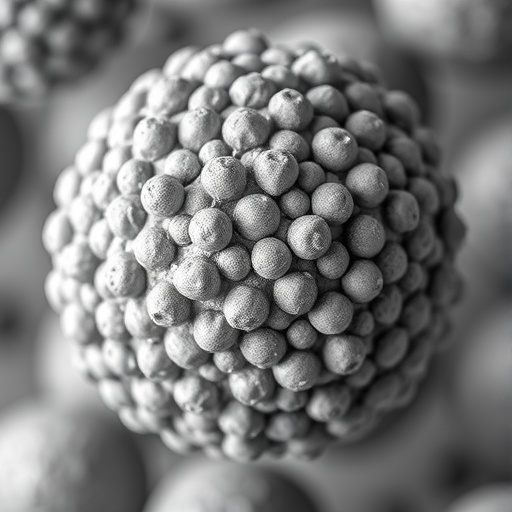
Their findings indicate that nanoparticles engineered with higher surface hydrophobicity demonstrate enhanced protein corona formation, altering the nanoparticle’s interaction landscape within the gut milieu. This contrasts with particles possessing more hydrophilic surfaces, which exhibit reduced protein binding. Notably, the surface rigidity of nanoparticles emerges as an equally crucial determinant, modulating how proteins conform and attach to the nanoparticle surface. The team used a series of nanoparticles with tunable rigidity and hydrophobicity parameters, observing that a delicate balance between these factors optimizes protein corona composition.
The study’s amalgamation of surface chemistry and mechanical properties into the predictive framework for protein corona formation introduces a paradigm shift in oral nanomedicine. Such nuanced control over nanoparticle design is essential for creating drug delivery vehicles that can protect therapeutic payloads from premature degradation, enhance mucosal adhesion, and facilitate targeted release precisely at inflamed sites characteristic of colitis.
Delving deeper into the molecular scale, the researchers utilized advanced proteomic analyses to detail the composition of the corona formed under varying physicochemical conditions. Their proteomic mapping revealed selective enrichment of specific proteins known to influence immune modulation and cellular uptake pathways. This suggests that the corona is not merely a passive shell but an active interface translating nanoparticle properties to biological responses, a concept with profound implications for tuning immune tolerability and therapeutic targeting.
Colitis, a debilitating chronic inflammatory condition of the colon, demands innovative treatments capable of modulating immune responses without systemic side effects. Oral nanoparticle delivery systems offer a promising solution due to their direct contact with the gastrointestinal tract and potential for localized drug action. The insights from this research provide a critical foundation for engineering nanoparticles that navigate the hostile intestinal environment more effectively while minimizing unintended immunogenicity.
Moreover, the mechanistic understanding of corona formation presented by Wu et al. unearths opportunities to exploit surface rigidity as a parameter to engineer nanoparticles with personalized interaction profiles. By designing particles whose mechanical stiffness can be precisely tuned, researchers could customize protein corona compositions to enhance targeting of specific immune cell subsets or epithelial barriers, thereby increasing therapeutic precision in colitis and potentially other gastrointestinal diseases.
The implications of this research extend beyond the gut, as protein corona formation is a universal biomolecular phenomenon influencing nanoparticle applications across many biological systems. The elucidation of hydrophobicity and rigidity as key modulators invites broader exploration into biomaterial design for oncology, vaccine delivery, and regenerative medicine. This unified view bridges surface chemistry and nanomechanics, providing a holistic approach to rational nanoparticle engineering.
In the experimentation, the authors systematically varied hydrophobic and rigid characteristics through chemical modifications and polymer crosslinking strategies, validating their hypotheses with an array of biophysical techniques including atomic force microscopy, dynamic light scattering, and surface plasmon resonance. The robust experimental design not only establishes causality but also offers a versatile toolkit for future investigations into nano-bio interfaces.
Their work also highlights the necessity of considering dynamic biological environments, as the interaction dynamics observed physically and temporally fluctuate, affecting corona stability and evolution during transit through the gastrointestinal tract. Future research inspired by this study may focus on real-time in vivo tracking of corona formation and displacement, deepening understanding of nanoparticle behavior within complex biological fluids.
This advancement in nanomedicine is poised to catalyze the development of next-generation oral therapeutics that are both more effective and safer. By leveraging the principles elucidated here, pharmaceutical development pipelines can be recalibrated to include parameters of surface hydrophobicity and rigidity early in the design process, expediting the translation of nanotechnology innovations from bench to bedside.
The research by Wu and colleagues represents a crucial step in bridging material science with immunology and gastrointestinal biology, opening avenues for interdisciplinary collaboration. The integration of these fields is key to overcoming longstanding barriers in oral drug delivery and achieving precision medicine tailored to individual patients suffering from colitis and other inflammatory conditions.
In conclusion, this study illuminates the path forward for nanotherapeutic design, indicating that controlling surface hydrophobicity and rigidity is paramount for dictating how nanoparticles interact with biological systems at the molecular level. The strategic engineering of these properties could revolutionize oral nanoparticle delivery platforms, ultimately improving patient outcomes in inflammatory bowel diseases and beyond.
The innovative paradigm set forth by this research offers exciting prospects not only for therapeutic intervention but also for the fundamental understanding of nano-bio interactions. As the field continues to evolve, integrating such mechanistic insights will be indispensable for designing efficacious, targeted, and safe nanomedicine solutions.
The landmark publication is thus a testament to the power of multidisciplinary approaches, uniting chemistry, physics, biology, and medicine to confront complex challenges in human health. It exemplifies how detailed physicochemical characterization informs biological translation, marking a milestone in nanotechnology-enabled medical science.
This work will undoubtedly stimulate further studies exploring how subtle modulations of nanoparticle surface properties can be harnessed to orchestrate desired biological effects, paving the way for a new generation of smart, responsive, and highly effective nanotherapeutics.
Subject of Research: Nanoparticle-protein interactions governing oral drug delivery systems for colitis treatment.
Article Title: Surface hydrophobicity and rigidity determines protein corona on orally delivered nanoparticles treating colitis.
Article References:
Wu, J., Ni, M., Xing, L. et al. Surface hydrophobicity and rigidity determines protein corona on orally delivered nanoparticles treating colitis. Nat Commun 17, 2497 (2026). https://doi.org/10.1038/s41467-026-70453-9
Image Credits: AI Generated
DOI: https://doi.org/10.1038/s41467-026-70453-9
Tags: advanced characterization of nanoparticle surfacesnanomedicine for inflammatory bowel diseasenanoparticle design criteria for improved drug efficacynanoparticle rigidity effects on protein adsorptionnanoparticle surface hydrophobicity in drug deliverynanoparticle-protein interactions in gastrointestinal tractnanotechnology in gastrointestinal disease treatmentoral nanoparticle delivery for colitis treatmentphysicochemical properties of therapeutic nanoparticlesprotein corona formation on nanoparticlesprotein corona impact on nanoparticle biodistributiontargeted nanotherapy for chronic colitis