

• HOME
  • NEWS
  • EXPLORE
    • CAREER
      • Companies
      • Jobs
    • EVENTS
    • iGEM
      • News
      • Team
    • PHOTOS
    • VIDEO
    • WIKI
  • BLOG
  • COMMUNITY
    • FACEBOOK
    • INSTAGRAM
    • TWITTER
Thursday, January 1, 2026
BIOENGINEER.ORG
No Result
View All Result
  • Login
  • HOME
  • NEWS
  • EXPLORE
    • CAREER
      • Companies
      • Jobs
        • Lecturer
        • PhD Studentship
        • Postdoc
        • Research Assistant
    • EVENTS
    • iGEM
      • News
      • Team
    • PHOTOS
    • VIDEO
    • WIKI
  • BLOG
  • COMMUNITY
    • FACEBOOK
    • INSTAGRAM
    • TWITTER
  • HOME
  • NEWS
  • EXPLORE
    • CAREER
      • Companies
      • Jobs
        • Lecturer
        • PhD Studentship
        • Postdoc
        • Research Assistant
    • EVENTS
    • iGEM
      • News
      • Team
    • PHOTOS
    • VIDEO
    • WIKI
  • BLOG
  • COMMUNITY
    • FACEBOOK
    • INSTAGRAM
    • TWITTER
No Result
View All Result
Bioengineer.org
No Result
View All Result
Home NEWS Science News Science

N.C. children in rural counties, high poverty schools face obesity risk

Bioengineer by Bioengineer
November 10, 2016
in Science
Reading Time: 2 mins read
0
Share on FacebookShare on TwitterShare on LinkedinShare on RedditShare on Telegram

DURHAM, N.C. — North Carolina children who live in rural counties or attend high poverty schools are more likely to be obese, a newly published study finds.

The research, available online this week in the Journal of School Health, analyzed Body Mass Index data from 74,665 third through fifth grade students from 317 urban and rural schools. The researchers looked at whether the socioeconomic and racial composition of a school affected the likelihood of children being obese.

Overall, 20 percent of the students in the study were obese, a somewhat higher rate than among their peers nationally. However, students living in a rural county were 1.25 times more likely to be obese than their urban counterparts, even when researchers accounted for the county's socioeconomic and racial composition. Obesity was defined as having a Body Mass Index at or above the 95th percentile for students of the same age and sex.

"There are a lot of unique features in rural areas that could lead to higher levels of obesity," said Joy Piontak, a research analyst at Duke University's Center for Child and Family Policy who co-authored the article with Michael D. Schulman, a professor at N.C. State University. "Food insecurity, poverty, the inability to recover from economic recession or a lack of access to grocers could all potentially affect obesity rates."

Researchers also found that a student who attends a high-poverty school is 1.5 times more likely to be obese than a student attending a low-poverty school.

Higher rates of obesity were also found in schools with a high minority population. However, once researchers took into account whether the schools had high levels of poverty, it became clear that poverty, not race, was driving the outcome.

The researchers said public school initiatives could hold the key to lowering obesity rates in both rural areas and schools with higher rates of poverty.

"We should look at interventions in schools and not just target individual kids," Piontak said. "We can teach a kid how to eat better or exercise more, but if we know that particular schools or places are more likely to have higher rates of obesity, we can look at the food or the types of physical education opportunities available there."

Piontak said more research is needed to understand differences in urban and rural obesity rates.

###

Schulman's work was supported by USDA National Institute of Food and Agriculture Hatch Project and by the North Carolina Agricultural Research Service.

CITATION: "School Context Matters: The Impacts of Concentrated Poverty and Racial Segregation on Childhood Obesity," Joy R. Piontak and Michael D. Schulman. Journal of School Health, December 2016. DOI: 10.1111/josh.12458

Media Contact

Amy Dominello Braun
[email protected]
919-681-8504
@DukeU

http://www.duke.edu
Share12Tweet8Share2ShareShareShare2

Related Posts

Five or more hours of smartphone usage per day may increase obesity

July 25, 2019
IMAGE

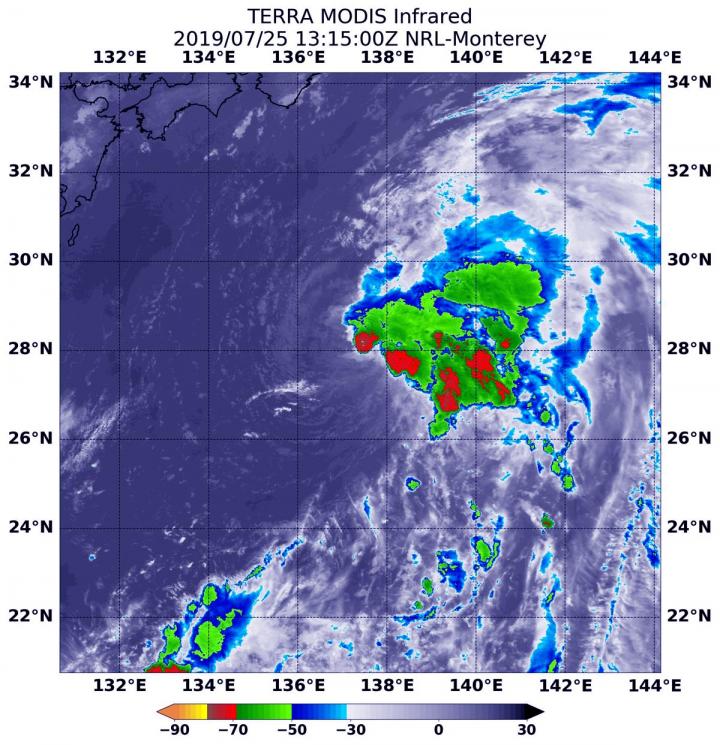
NASA’s terra satellite finds tropical storm 07W’s strength on the side

July 25, 2019

NASA finds one burst of energy in weakening Depression Dalila

July 25, 2019

Researcher’s innovative flood mapping helps water and emergency management officials

July 25, 2019
Please login to join discussion

POPULAR NEWS

  • blank

    PTSD, Depression, Anxiety in Childhood Cancer Survivors, Parents

    107 shares
    Share 43 Tweet 27
  • NSF funds machine-learning research at UNO and UNL to study energy requirements of walking in older adults

    71 shares
    Share 28 Tweet 18
  • Exploring Audiology Accessibility in Johannesburg, South Africa

    52 shares
    Share 21 Tweet 13
  • SARS-CoV-2 Subvariants Affect Outcomes in Elderly Hip Fractures

    44 shares
    Share 18 Tweet 11

About

We bring you the latest biotechnology news from best research centers and universities around the world. Check our website.

Follow us

Recent News

Bioinspired Phototransistor Tunes Sensitivity for Detection

Full-Parameter Modulated 3D Vectorial Vortex Arrays

Metabolic Classification of Gliomas Revealed by Multi-Omics

Subscribe to Blog via Email

Enter your email address to subscribe to this blog and receive notifications of new posts by email.

Join 71 other subscribers
  • Contact Us

Bioengineer.org © Copyright 2023 All Rights Reserved.

Welcome Back!

Login to your account below

Forgotten Password?

Retrieve your password

Please enter your username or email address to reset your password.

Log In
No Result
View All Result
  • Homepages
    • Home Page 1
    • Home Page 2
  • News
  • National
  • Business
  • Health
  • Lifestyle
  • Science

Bioengineer.org © Copyright 2023 All Rights Reserved.
