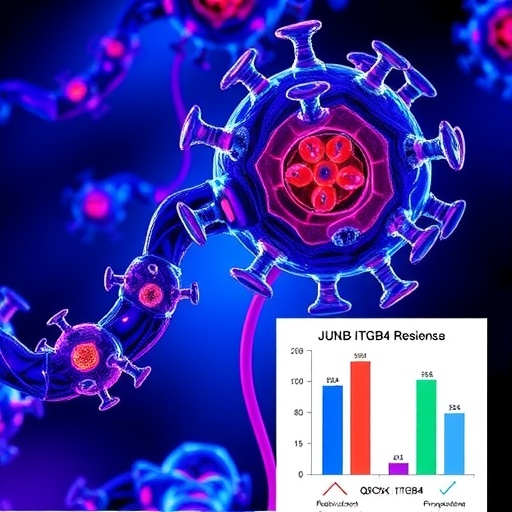
In a groundbreaking study published in Nature Communications, researchers have unveiled the intricate mechanisms by which Mycoplasma pneumoniae—a pathogen implicated in diverse respiratory illnesses—procures essential lipids critical for its survival and pathogenicity. This advancement not only deepens our understanding of the molecular parasitism employed by minimalist bacteria but also opens novel therapeutic vistas for combating chronic infections and their cardiovascular sequelae.
At the heart of this investigation lies the protein P116, a previously underappreciated lipid acquisition factor within M. pneumoniae. Unlike conventional bacteria, M. pneumoniae lacks a robust biosynthetic pathway for membrane lipid production, rendering it heavily reliant on exogenous lipid sources from its host environment. The study meticulously delineates how P116 functions as a sophisticated molecular conduit, selectively recognizing, binding, and importing essential lipids from host tissues. This targeted uptake mechanism elucidates how the pathogen navigates the host milieu to satisfy its stringent lipid requirements, essential for maintaining membrane integrity and executing pathogenic processes.
The researchers employed advanced structural biology techniques, including cryo-electron microscopy, to capture high-resolution images revealing the conformation of P116 in complex with various host lipids. This structural insight sheds light on the protein’s specificity and affinity, demonstrating a tailored evolutionary adaptation to hijack critical lipids directly from host plasma membranes. Such host-pathogen interactions exemplify a finely tuned evolutionary arms race, wherein M. pneumoniae customizes its molecular toolkit to thrive within lipid-scarce niches.
Moreover, the study transcends microbiology to interlink infectious disease with chronic non-communicable pathology. Intriguingly, P116-mediated lipid acquisition was found to preferentially target lipids abundant in hepatic and atherosclerotic tissues, suggesting a mechanistic bridge between M. pneumoniae infections and atherogenesis. These findings fuel a compelling hypothesis: that persistent M. pneumoniae colonization may exacerbate or contribute to cardiovascular pathology by modulating lipid homeostasis within vascular lesions.
This multifaceted discovery was enabled by innovative in vivo and in vitro approaches, integrating lipidomics profiling, molecular genetics, and pathogen-host interaction assays. The functional characterization of P116 mutants underscored the protein’s indispensability; loss-of-function variants exhibited marked reductions in lipid uptake capacity and attenuated virulence. Such data position P116 as an attractive target for antimicrobial intervention strategies—pharmacological blockade of lipid acquisition pathways could impair bacterial viability without conventional antibiotic pressures.
Beyond infectious pathogen biology, the broader implications for human health are profound. Atherosclerosis remains a leading cause of morbidity globally, and the linkage of infectious agents with chronic inflammation and plaque instability is a burgeoning area of cardiometabolic research. The precise role of M. pneumoniae, facilitated by P116, in modulating lipid profiles and inflammatory cascades within vascular tissues demands further mechanistic dissection but promises to reshape paradigms in our approach to cardiovascular disease.
Furthermore, the hepatic tropism revealed through P116’s lipid sourcing underscores potential impacts on liver function and systemic lipid metabolism during M. pneumoniae infection. The liver’s centrality in lipid regulation, combined with pathogen-mediated perturbations, may contribute synergistically to metabolic dysregulation observed in chronic infections. This intersection between microbial pathogenesis and host metabolic pathways exemplifies the growing recognition of infection as a modulator of non-infectious diseases.
The pathogen’s minimalist genome had long puzzled scientists in terms of its survival strategies. The identification of P116 as a pivotal lipid transporter resolves longstanding enigmas regarding how M. pneumoniae circumvented its biosynthetic limitations. This insight offers a template for assessing other minimalistic pathogens and their reliance on host-derived metabolites, revealing a conserved survival paradigm that transcends bacterial species boundaries.
From a translational perspective, the structural and functional elucidation of P116 opens avenues for rational drug design. Molecules that mimic substrate lipids or block P116’s binding sites could serve as molecular decoys, starving the pathogen of essential membrane components. Additionally, the therapeutic targeting of this pathway might circumvent resistance mechanisms rampant in classical antibiotic treatments, offering a novel angle of attack that exploits the pathogen’s Achilles’ heel.
The study also leveraged animal models recapitulating human atherosclerosis, demonstrating in vivo relevance of P116-mediated lipid acquisition in disease contexts. Through these models, the researchers provided compelling evidence that intervention strategies disrupting P116 functions could attenuate pathogen colonization and subsequent lesion progression. This translational bridge from molecular insight to therapeutic potential illustrates the profound clinical relevance of the findings.
In addition to therapeutic implications, these discoveries raise important diagnostic considerations. Biomarkers reflecting P116 activity or M. pneumoniae lipid uptake profiles might serve as indicators of infection-associated cardiovascular risk. Early identification of individuals harboring such infections could pave the way for preemptive interventions, blending infectious disease management with cardiovascular risk reduction strategies.
The broader scientific community has greeted this work as a seminal contribution to the field of host-pathogen metabolism. By elucidating how a minimalist bacterium commandeers host lipid resources via a dedicated protein, the study challenges traditional definitions of bacterial autonomy and exposes vulnerabilities that can be exploited in antimicrobial development.
Looking forward, questions remain regarding the regulation of P116 expression, the full range of lipid substrates it accommodates, and the interplay between lipid acquisition and immune evasion strategies. Investigations aiming to map the temporal dynamics of P116 activity during infection and its impact on host cell biology will elaborate on the complex symbiosis M. pneumoniae establishes with its host.
In summary, this study represents a monumental leap in understanding Mycoplasma pneumoniae biology. By unmasking the molecular details of lipid procurement through P116 and linking this process to liver and atherosclerotic lesion targeting, researchers have unearthed a novel frontier at the intersection of infectious disease, lipid metabolism, and cardiovascular pathology. The therapeutic and diagnostic potential stemming from these insights offers hope for innovative approaches to combatting chronic infections and their systemic consequences.
Subject of Research: The mechanisms by which Mycoplasma pneumoniae acquires essential lipids from the host, specifically focusing on the role of the P116 protein and its implications in targeting liver and atherosclerotic lesions.
Article Title: Sources of essential lipids for Mycoplasma pneumoniae via P116 to target liver and atherosclerotic lesions.
Article References:
Vizarraga, D., Marcos, M., Rotllan, N. et al. Sources of essential lipids for Mycoplasma pneumoniae via P116 to target liver and atherosclerotic lesions. Nat Commun 16, 11159 (2025). https://doi.org/10.1038/s41467-025-66129-5
Image Credits: AI Generated
DOI: https://doi.org/10.1038/s41467-025-66129-5
Tags: advanced microscopy techniques in researchatherosclerosis and infections linkcardiovascular consequences of infectionschronic respiratory infectionsexogenous lipid sources in bacteriahost-pathogen interactionslipid metabolism in pathogensmolecular parasitism in bacteriaMycoplasma pneumoniae lipid acquisitionP116 protein functionstructural biology in microbiologytherapeutic targets for chronic infections