• HOME
  • NEWS
  • EXPLORE
    • CAREER
      • Companies
      • Jobs
    • EVENTS
    • iGEM
      • News
      • Team
    • PHOTOS
    • VIDEO
    • WIKI
  • BLOG
  • COMMUNITY
    • FACEBOOK
    • INSTAGRAM
    • TWITTER
Sunday, May 10, 2026
BIOENGINEER.ORG
No Result
View All Result
  • Login
  • HOME
  • NEWS
  • EXPLORE
    • CAREER
      • Companies
      • Jobs
        • Lecturer
        • PhD Studentship
        • Postdoc
        • Research Assistant
    • EVENTS
    • iGEM
      • News
      • Team
    • PHOTOS
    • VIDEO
    • WIKI
  • BLOG
  • COMMUNITY
    • FACEBOOK
    • INSTAGRAM
    • TWITTER
  • HOME
  • NEWS
  • EXPLORE
    • CAREER
      • Companies
      • Jobs
        • Lecturer
        • PhD Studentship
        • Postdoc
        • Research Assistant
    • EVENTS
    • iGEM
      • News
      • Team
    • PHOTOS
    • VIDEO
    • WIKI
  • BLOG
  • COMMUNITY
    • FACEBOOK
    • INSTAGRAM
    • TWITTER
No Result
View All Result
Bioengineer.org
No Result
View All Result
Home NEWS Science News Health

Music captivates listeners and synchronizes their brainwaves

Bioengineer by Bioengineer
March 8, 2019
in Health
Reading Time: 2 mins read
0
IMAGE
Share on FacebookShare on TwitterShare on LinkedinShare on RedditShare on Telegram

IMAGE

Credit: Jens Madsen

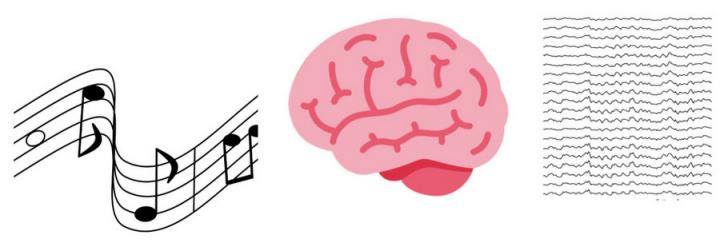
Music has the ability to captivate us; when listeners engage with music, they follow its sounds closely, connecting to what they hear in an affective and invested way. But what is it about music that keeps the audience engaged? A study by researchers from The City College of New York and the University of Arkansas charts new ground in understanding the neural responses to music.

Despite the importance, it has been difficult to study engagement with music given the limits of self-report. This led Jens Madsen and Lucas Parra, from CCNY’s Grove School of Engineering, to measure the synchronization of brainwaves in an audience. When a listener is engaged with music, their neural responses are in sync with that of other listeners, thus inter-subject correlation of brainwaves is a measure of engagement.

According to their findings, published in the latest issue of “Scientific Reports,” a listener’s engagement decreases with repetition of music, but only for familiar music pieces. However, unfamiliar musical styles can sustain an audience’s interest, in particular for individuals with some musical training.

“Across repeated exposures to instrumental music, inter-subject correlation decreased for music written in a familiar style,” Parra and his collaborators write in “Scientific Reports.”

In addition, participants with formal musical training showed more inter-subject correlation, and sustained it across exposures to music in an unfamiliar style. This distinguishes music from other domains, where interest drops with repetition.

“What is so cool about this, is that by measuring people’s brainwaves we can study how people feel about music and what makes it so special.” says Madsen.

###

Click here to listen to the musical pieces played for the participants and what was measured. Click here to read the paper, entitled: “Music synchronizes brainwaves across listeners with strong effects of repetition, familiarity and training,” in Scientific Reports. To learn more about the research activities of Parra and Madsen and connect with them on Twitter, follow @lucas_c_parra and @cogniemotion.

Elizabeth Hellmuth Margulis and Rhimmon Simchy-Gross, both from the University of Arkansas, were among the other researchers. The study involved 60 graduate and undergraduate students from City College of New York and University of Arkansas.

Media Contact
Jay Mwamba
[email protected]

Original Source

https://www.ccny.cuny.edu/news/music-captivates-listeners-and-synchronizes-their-brainwaves

Related Journal Article

http://dx.doi.org/10.1038/s41598-019-40254-w

Tags: AcousticsBiomechanics/BiophysicsHearing/SpeechMemory/Cognitive ProcessesNeurochemistryPerception/AwarenessSocial/Behavioral Science
Share14Tweet8Share2ShareShareShare2

Related Posts

Evaluating Digoxin Use in Patients with Symptomatic Rheumatic Heart Disease

May 10, 2026

Evaluating the Effectiveness and Safety of Digitalis Glycosides in Treating Heart Failure

May 10, 2026

Urdu Fall Risk Questionnaire Adapted for Elderly

May 10, 2026

Key Pharmacological Markers for HIV Prevention in MSM

May 10, 2026
Please login to join discussion

POPULAR NEWS

  • Research Indicates Potential Connection Between Prenatal Medication Exposure and Elevated Autism Risk

    840 shares
    Share 336 Tweet 210
  • New Study Reveals Plants Can Detect the Sound of Rain

    727 shares
    Share 290 Tweet 181
  • Scientists Investigate Possible Connection Between COVID-19 and Increased Lung Cancer Risk

    68 shares
    Share 27 Tweet 17
  • Salmonella Haem Blocks Macrophages, Boosts Infection

    61 shares
    Share 24 Tweet 15

About

We bring you the latest biotechnology news from best research centers and universities around the world. Check our website.

Follow us

Recent News

Evaluating Digoxin Use in Patients with Symptomatic Rheumatic Heart Disease

Evaluating the Effectiveness and Safety of Digitalis Glycosides in Treating Heart Failure

Urdu Fall Risk Questionnaire Adapted for Elderly

Subscribe to Blog via Email

Enter your email address to subscribe to this blog and receive notifications of new posts by email.

Join 82 other subscribers
  • Contact Us

Bioengineer.org © Copyright 2023 All Rights Reserved.

Welcome Back!

Login to your account below

Forgotten Password?

Retrieve your password

Please enter your username or email address to reset your password.

Log In
No Result
View All Result
  • Homepages
    • Home Page 1
    • Home Page 2
  • News
  • National
  • Business
  • Health
  • Lifestyle
  • Science

Bioengineer.org © Copyright 2023 All Rights Reserved.