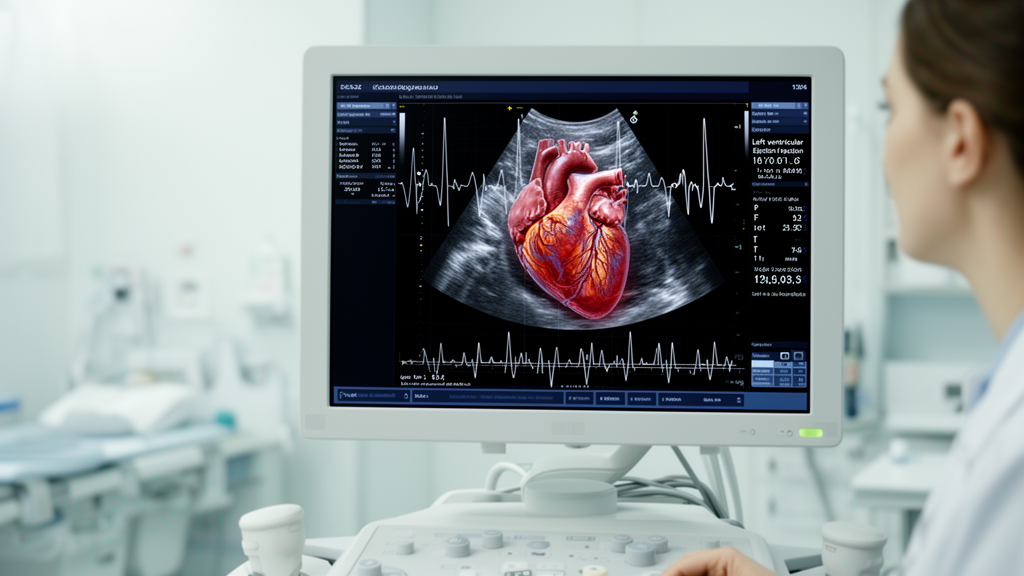
A multicenter retrospective cohort study published in BMC Emergency Medicine has developed and validated a clinical nomogram model capable of predicting left ventricular ejection fraction at 72 hours after the initiation of venous-arterial extracorporeal membrane oxygenation in patients suffering out-of-hospital cardiac arrest treated with extracorporeal cardiopulmonary resuscitation. Investigated by Hanzhi Dai, Xian Zhang, Xijiang Zhang, and colleagues across six medical institutions, the clinical prediction tool was designed to provide clinicians with an objective quantitative framework for assessing cardiac recovery during critical post-resuscitation care.
The research team conducted a multicenter investigation examining patient records collected between January 2017 and June 2025 across six medical centers. To develop and assess the predictive tool, the investigators enrolled out-of-hospital cardiac arrest patients who received extracorporeal cardiopulmonary resuscitation and survived for at least 72 hours following treatment initiation. From this selected population, a total of 274 patients were included for model development and internal validation procedures, while an additional independent cohort of 21 patients from the medical centers was assembled to perform external extrapolation validation.
Using data gathered from the primary training cohort, the researchers performed systematic screening to isolate independent variables significantly associated with left ventricular ejection fraction measured on the third post-treatment day. Through multivariate regression analysis, the investigators identified five distinct clinical variables as independent predictors of cardiac performance: acute kidney injury, an elevated vasoactive-inotropic score equal to or exceeding 70, a blood lactate level equal to or exceeding 10 millimoles per liter, the presence of pulmonary embolism, and the baseline left ventricular ejection fraction measured on the first day following the initiation of extracorporeal membrane oxygenation.
The multivariate regression analysis established specific statistical relationships and coefficients for each of the five identified predictors. Acute kidney injury demonstrated a negative association with third-day left ventricular ejection fraction, recording a regression coefficient beta of -0.037 with a significance level of P less than 0.05. A vasoactive-inotropic score of at least 70 similarly displayed a negative correlation, showing an identical regression coefficient beta of -0.037 and P less than 0.05. Serum lactate concentrations equal to or surpassing 10 millimoles per liter showed an inverse association with a beta coefficient of -0.048 and P less than 0.01. Conversely, the occurrence of pulmonary embolism demonstrated a positive coefficient beta of 0.082 with P less than 0.05, while the first-day left ventricular ejection fraction emerged as the strongest positive predictor, recording a beta of 0.708 with P less than 0.001.
Based on these five independent prognostic variables, the researchers constructed a clinical nomogram model and evaluated its internal performance within the primary cohort. In the internal development dataset, the model demonstrated a coefficient of determination R-squared of 0.5685 alongside an adjusted R-squared of 0.5563. To rigorously verify the stability and precision of the model against potential overfitting, the team conducted leave-one-out cross-validation across the cohort, which demonstrated favorable internal consistency with a root mean square error of 0.0981.
Extrapolation validation conducted in the separate external cohort of 21 patients further supported the model’s predictive capabilities across independent clinical environments. Within this external group, the nomogram achieved a coefficient of determination R-squared of 0.696 and an adjusted R-squared of 0.595, accompanied by a low mean absolute error of 0.012. These internal and external validation findings demonstrated that the multivariable model maintains favorable predictive performance, establishing a reliable quantitative tool for assessing post-resuscitation cardiac functional recovery.
The investigators concluded that although the validated nomogram provides clinicians with an effective quantitative tool to evaluate cardiac recovery at 72 hours in out-of-hospital cardiac arrest patients supported by venous-arterial extracorporeal membrane oxygenation, the study possesses methodological boundaries. Because the findings were derived from a retrospective observational cohort, the authors emphasized that prospective investigations involving larger patient samples remain necessary to confirm the external validity and generalizability of the predictive model across broader critical care populations.
Subject of Research: Predicting left ventricular ejection fraction following extracorporeal cardiopulmonary resuscitation
Article Title: Development and validation of a multivariable model predictive of left ventricular ejection fraction in patients undergoing ECPR
Article References: Dai, H., Zhang, X., Zhang, X., Shen, T., Yang, X., Shan, R., Sun, R., Chen, F., Zhang, S., Lin, R., Xu, Y., & Jiang, Y. (2026). Development and validation of a multivariable model predictive of left ventricular ejection fraction in patients undergoing ECPR. BMC Emergency Medicine. https://doi.org/10.1186/s12873-026-01829-9
Image Credits: AI Generated
DOI: 10.1186/s12873-026-01829-9
Keywords: extracorporeal cardiopulmonary resuscitation, ECPR, left ventricular ejection fraction, LVEF, out-of-hospital cardiac arrest, OHCA, venous-arterial extracorporeal membrane oxygenation, VA-ECMO, nomogram prediction model, multivariate regression analysis, acute kidney injury, vasoactive-inotropic score, serum lactate, pulmonary embolism, Day 1 LVEF, cardiac recovery, retrospective cohort study, external validation cohort
News Source: Ophelia Keating. (November 26, 2026). Multivariable Model Predicts Left Ventricular Ejection Fraction After Cardiac Arrest Resuscitation. Scienmag.