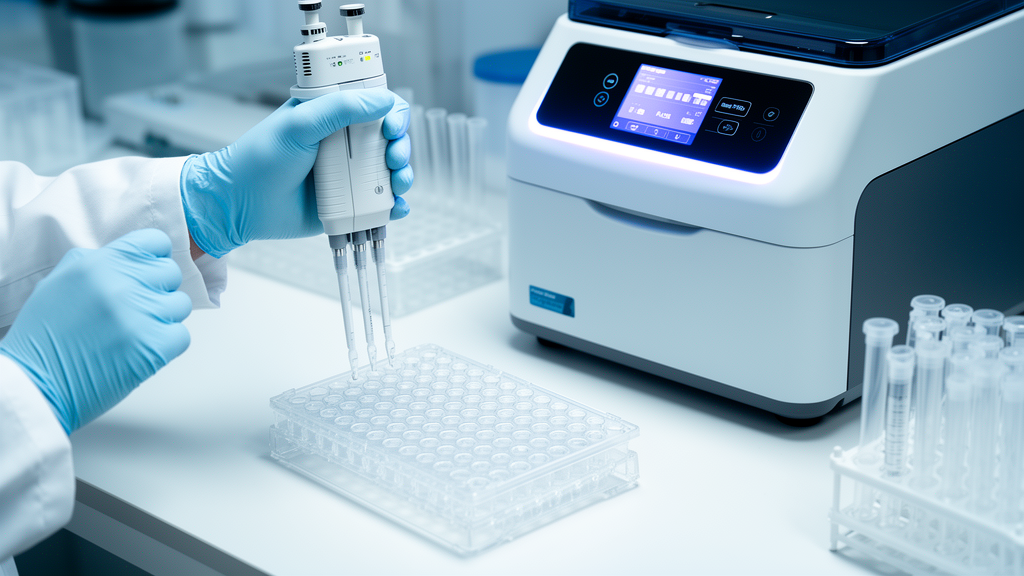
Overall pathogen detection in pediatric stool samples was significantly higher using the GastroFinder 2SMART multiplexed real-time PCR assay at 81 percent, compared to 43.1 percent achieved by conventional microbiological methods. This substantial difference in overall pathogen detection reflected variations in both diagnostic sensitivity and pathogen panel breadth between the two diagnostic strategies. The comparative clinical investigation directly evaluated the diagnostic performance of conventional microbiological methods and the GastroFinder 2SMART multiplexed real-time PCR assay for detecting enteric pathogens in pediatric stool samples. Timely identification of these causative pathogens is important in clinical settings for the proper management of infection, as diarrhea remains a leading cause of pediatric morbidity and mortality worldwide, frequently caused by diverse bacterial, viral, and protozoan pathogens.
Conventional stool culture technique is time-consuming for the detection of diarrheagenic pathogens. In addition, these traditional laboratory procedures lack sensitivity, require a specific laboratory structure, and necessitate well-trained staff to perform accurately. Conversely, multiplex molecular detection methods offer rapid results with less hands-on time and more sensitivity for clinical diagnostic laboratories. In the evaluated pediatric stool samples, rotavirus, adenovirus, Shigella, and Giardia lamblia were frequently identified by conventional methods. In contrast, the GastroFinder 2SMART multiplexed real-time PCR assay commonly detected adenovirus, Campylobacter, enteropathogenic Escherichia coli (EPEC), enterotoxigenic Escherichia coli (ETEC), and norovirus.
Certain pathogens such as Yersinia enterocolitica, Clostridioides difficile, Shiga toxin-producing Escherichia coli (STEC), and Dientamoeba fragilis were not tested in the conventional panel and therefore excluded for comparison. Among the remaining shared pathogens, sensitivity estimates varied across organisms, with lower sensitivity observed for EPEC, Cryptosporidium, Giardia lamblia, and rotavirus. The investigators noted that these lower sensitivity figures were partly due to the small sample numbers and wide confidence intervals observed in the evaluation. Specificity exceeded 90 percent for most pathogens evaluated, and overall diagnostic accuracy was greater than 90 percent for Shigella/EIEC, Salmonella, Cryptosporidium, Giardia lamblia, and astrovirus.
Bayesian latent class analysis demonstrated the highest sensitivity for Shigella/EIEC at 93.2 percent, followed by norovirus and adenovirus. Furthermore, overall test performance, measured by the Youden Index, was greatest for Shigella/EIEC among all analyzed pathogens. The authors emphasized that these findings highlight the diagnostic use of real-time PCR and support its integration into routine diarrheal diagnostics to improve pathogen detection and clinical management.
Subject of Research: Diagnostic performance of multiplex real-time PCR for pediatric enteric pathogens
Article Title: Enhancing pathogen detection in pediatric diarrheal stools: The case of molecular multiplexing with a real-time PCR assay
Article References: Chowdhury, G., Lewis, M. G., Deb, A., Chawla-Sarkar, M., Ganguly, S., Dutta, P., Das, S., Mukhopadhyay, A. K., & Ramamurthy, T. (2026). Enhancing pathogen detection in pediatric diarrheal stools: The case of molecular multiplexing with a real-time PCR assay. PLOS Neglected Tropical Diseases, 20(11), e0014823. https://doi.org/10.1371/journal.pntd.0014823
Image Credits: AI Generated
DOI: 10.1371/journal.pntd.0014823
Keywords: multiplex real-time PCR, pediatric diarrhea, pathogen detection, stool diagnostics, diagnostic accuracy, enteric pathogens, Bayesian latent class analysis, GastroFinder 2SMART, Enhancing, pathogen, detection, pediatric
News Source: Harold Sullivan. (November 9, 2026). Multiplex Real-Time PCR Enhances Enteric Pathogen Detection in Pediatric Diarrheal Stools. Scienmag.