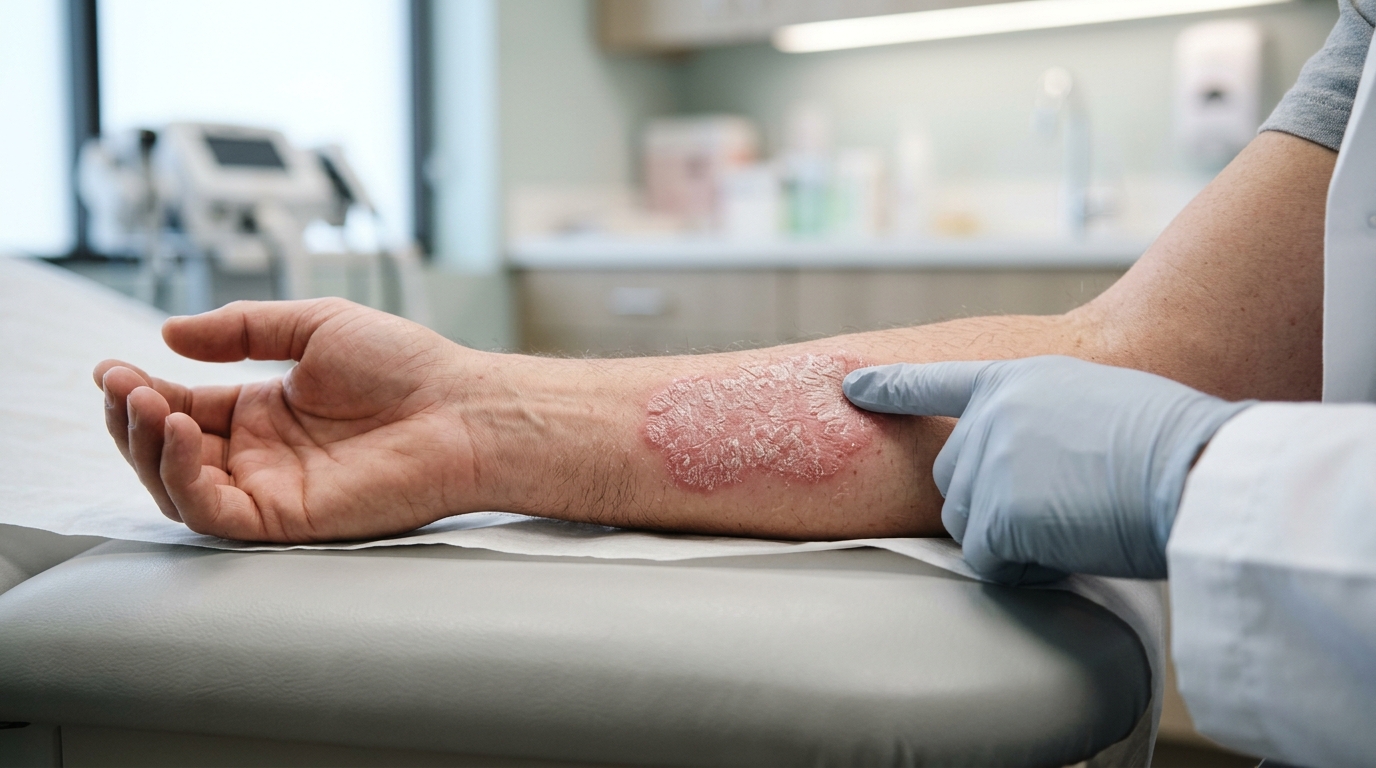
Researchers have developed a multiomics-clinical model designed to predict which patients with psoriasis will achieve a significant reduction in disease severity following biologic therapy. The study, published in BMC Immunology, addresses the clinical challenge of highly variable responses to these treatments by integrating demographic, clinical, and multi-omics variables. By combining genetic and serum markers with traditional clinical data, the model aims to guide personalized treatment decisions in a field where current predictive tools remain an unmet need.
The study was a retrospective analysis involving 342 patients diagnosed with moderate-to-severe plaque psoriasis. To ensure the robustness of the findings, the researchers randomly assigned the participants into two distinct groups: a training set of 240 patients and a validation set of 102 patients. The candidate predictors included a wide range of variables, such as demographic factors, clinical characteristics, and specific multi-omics markers like the HLA-Cw6 genotype and serum levels of interleukin-17 A.
The team first performed univariate screening to narrow down the initial list of variables. Following this selection process, a multivariable logistic regression model was constructed to estimate the probability of achieving the PASI 75 response. The performance of this model was then assessed using several metrics, including the area under the curve, calibration, and decision curve analysis.
The model identified six variables as independent predictors of treatment response. Among these, the HLA-Cw6 genotype and serum IL-17 A levels emerged as the strongest contributors to the model’s predictive power.
In the validation set, the model demonstrated an area under the curve of 0.806, with a 95% confidence interval ranging from 0.683 to 0.919. The model also showed good calibration, as indicated by a Hosmer-Lemeshow test with a P-value greater than 0.05.
The decision curve analysis further supported the clinical utility of the model by demonstrating a net benefit for patients. The odds ratio for the HLA-Cw6 genotype was 3.165, indicating a strong association between this genetic marker and the likelihood of a positive treatment response.
The study highlights the potential of integrating multi-omics data with clinical variables to improve the precision of treatment selection in psoriasis. By identifying specific genetic and serum markers that predict response, the model offers a pathway toward more personalized therapy. However, the authors note that external validation is warranted to confirm the model’s generalizability across different populations and clinical settings. The retrospective nature of the study and the specific cohort of patients with moderate-to-severe plaque psoriasis are important considerations when interpreting the results.
Despite these limitations, the findings provide a promising foundation for the development of predictive tools in dermatology.
Subject of Research: Development and validation of a multiomics-clinical model for predicting PASI 75 treatment response in psoriasis.
Article Title: A multiomics-clinical model to predict treatment response in psoriasis
Article References: Zhou, A., & Tian, W. (2026). A multiomics-clinical model to predict treatment response in psoriasis. BMC Immunology. https://doi.org/10.1186/s12865-026-00901-0
Image Credits: AI Generated
DOI: 10.1186/s12865-026-00901-0
Keywords: psoriasis, multiomics, treatment response, PASI 75, HLA-Cw6, IL-17 A, predictive model, biologic therapy, personalized medicine, dermatology, multiomics-clinical, model
News Source: Ophelia Keating. (November 8, 2026). Multiomics Model Predicts Psoriasis Treatment Response. Scienmag.