A prospective, quasi-experimental study conducted across eight Spanish hospitals found that a multimodal intervention program was associated with a lower incidence of catheter-related bacteremia in conventional hospital wards. The research, published in Antimicrobial Resistance & Infection Control, evaluated the impact of specific preventive measures in non-intensive care unit settings, where the reduction of catheter-related infections has historically remained limited compared to intensive care environments.
The study design involved a before-and-after interventional approach, defining three distinct periods to isolate the effects of the new protocols. The first period, lasting twelve months, served as the pre-intervention phase during which standard clinical practices were maintained without additional structured interventions. The second period, spanning six months, constituted the intervention phase, during which staff training was conducted and specific insertion and maintenance bundles were implemented. The final period, another twelve months, acted as the post-intervention phase, allowing researchers to monitor whether the observed benefits were sustained over time after the active implementation period concluded.
The intervention targeted a broad population of patients admitted to medical and surgical wards. During the intervention phase, a total of 7,737 vascular catheters were placed in 4,557 patients. The majority of these admissions, approximately 72 percent, were to medical wards, while the remaining 28 percent were to surgical wards. The mean dwell time for these catheters was recorded at 3.0 days, indicating that the devices were typically used for short-term care rather than long-term maintenance in this specific cohort.
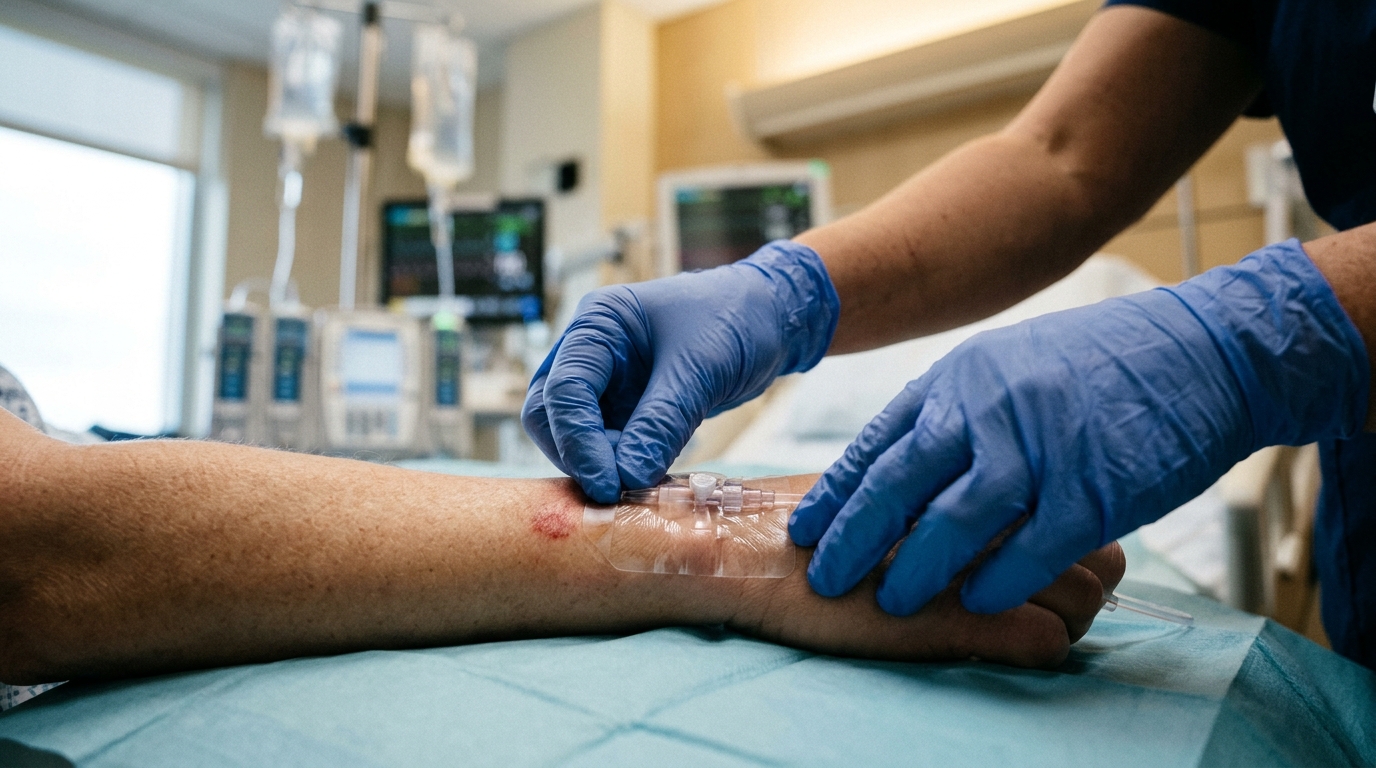
The types of vascular catheters used in the study were predominantly short peripheral catheters, which accounted for 90.1 percent of the devices placed. Midlines represented 6.6 percent of the total, while peripherally inserted central catheters made up 3.2 percent. Central lines were the least common, comprising only 0.2 percent of the devices. The primary indication for catheter placement was medication administration, which was cited in 98 percent of cases, highlighting the routine nature of these procedures in conventional ward settings.
The primary outcome measured was the incidence of catheter-related bacteremia, expressed as crude rates per 1,000 patient-days. The data showed a decline in incidence across the study periods. The rate was 0.22 per 1,000 patient-days during the pre-intervention period. This figure decreased to 0.16 per 1,000 patient-days during the intervention phase and further dropped to 0.13 per 1,000 patient-days in the post-intervention period. These figures suggest a progressive reduction in infection rates as the intervention was implemented and subsequently maintained.
Statistical analysis was performed using Poisson regression models, with patient-days included as the offset to account for the varying duration of patient exposure. The comparison of crude incidence rates revealed a statistically significant lower incidence of catheter-related bacteremia during both the intervention and post-intervention periods compared to the pre-intervention period. The calculated incidence rate ratio was 0.59, with a 95 percent confidence interval ranging from 0.35 to 0.98. This statistical association indicates that the period following the introduction of the multimodal program was linked to a nearly 41 percent reduction in the incidence rate of bacteremia relative to the baseline period.
The study highlights the potential for extending infection prevention strategies beyond intensive care units, where such measures have previously shown more pronounced success. The findings suggest that structured programs involving staff training and standardized bundles for catheter insertion and maintenance can be effective in conventional wards. The maintenance of the lower incidence rate during the twelve-month post-intervention follow-up period is a notable aspect of the results, implying that the benefits of the intervention may be durable rather than transient.
However, the quasi-experimental nature of the study design imposes certain limitations on the interpretation of the results. Because the study was not a randomized controlled trial, it is difficult to definitively attribute the reduction in bacteremia solely to the multimodal intervention. The study was conducted in a specific geographic and healthcare context, namely eight hospitals in Spain, which may limit the generalizability of the findings to other healthcare systems with different resource levels or patient populations.
Despite these limitations, the study provides valuable evidence for the implementation of multimodal prevention programs in non-ICU settings. The detailed characterization of the patient population and the types of catheters used offers specific insights into the clinical contexts where such interventions may be most relevant. The significant reduction in incidence rates, sustained over a year, supports the argument that targeted, bundle-based approaches can yield meaningful improvements in patient safety in conventional hospital wards.
Subject of Research: Effectiveness of a multimodal intervention program in preventing catheter-related bacteremia in non-ICU hospital wards.
Article Title: Successful multimodal intervention to prevent vascular catheter-related bacteremia in conventional wards (PREVCATH)
Article References: Gasch, O., Ortega-Raya, M., López-Sánchez, M., Andrés, M., Pomar, V., Vaqué, M., Hornero, A., García-Quesada, M. J., García-Alarcon, X., Peñafiel, J., Marron, A., Píriz, M., Martínez, E. J., Domènech, M. D., Gomila-Grange, A., Gómez-Cordoba, S., Fernández- Moreno, J. L., García-Lucas, M., Alvarez-Viciana, S., … Giménez, M. (2026). Successful multimodal intervention to prevent vascular catheter-related bacteremia in conventional wards (PREVCATH). Antimicrobial Resistance & Infection Control. https://doi.org/10.1186/s13756-026-01815-7
Image Credits: AI Generated
DOI: 10.1186/s13756-026-01815-7
Keywords: catheter-related bacteremia, infection control, hospital wards, multimodal intervention, quasi-experimental study, vascular catheters, healthcare-associated infections, clinical practice, Successful, multimodal, intervention, prevent
News Source: Ophelia Keating. (November 9, 2026). Multimodal Program Linked to Lower Catheter Infections. Scienmag.