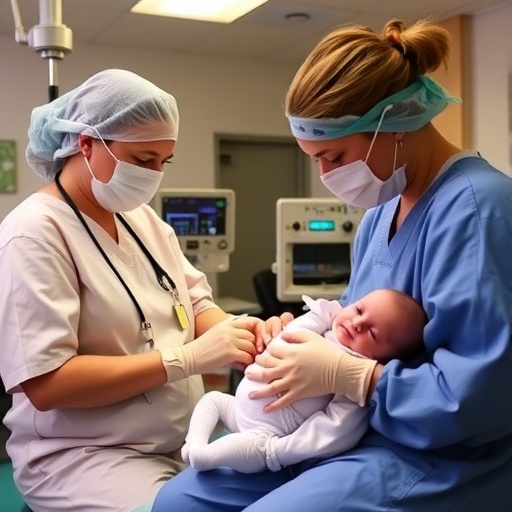
In a groundbreaking advancement in perinatal medicine, a recent study has illuminated the profound benefits of a multidisciplinary cesarean counseling clinic, demonstrating significant improvements in both maternal and neonatal outcomes. Published in the prestigious Journal of Perinatology, this research marks a pivotal moment in how cesarean deliveries are approached, planned, and managed—redefining care paradigms from prenatal consultation through postpartum recovery.
Cesarean delivery, while often lifesaving, carries inherent risks for both mother and child, including surgical complications, extended hospitalization, and complex neonatal adaptation issues. Recognizing these challenges, the research team led by Marom, Mor, and Weiner established a dedicated counseling clinic that integrates obstetricians, anesthesiologists, neonatologists, midwives, and mental health professionals, thereby providing a comprehensive, coordinated approach to cesarean care.
Central to this initiative is the concept of multidisciplinary engagement, which allows for tailored counseling that addresses individual medical histories, psychological readiness, and social factors influencing delivery decisions. The study elaborates on how this holistic framework enhances patient understanding, reduces anxiety, and promotes informed, shared decision-making. This personalized pathway is crucial, as it helps mitigate the occurrence of unnecessary cesareans while optimizing those that are medically indicated.
The clinic’s design emphasizes early engagement during the prenatal period, where expectant mothers undergo extensive evaluations that include fetal health assessments and maternal risk profiling. This preemptive strategy enables clinicians to identify patients who would derive the most benefit from cesarean delivery, ensuring that the timing and technique are optimized for maximal safety and efficacy. The integration of cutting-edge imaging and biometric analytics further refines this stratification process, allowing for precision medicine approaches in obstetrics.
One of the most compelling findings in this work is the impact on neonatal outcomes. The collaboration between the counseling team and neonatology specialists leads to anticipatory guidelines for newborn care immediately following delivery, particularly in cases where early respiratory support or neonatal intensive care unit (NICU) admission may be necessary. This level of preparedness translates to reduced neonatal morbidity and shorter NICU stays, which collectively lower healthcare costs and improve long-term developmental trajectories for infants.
Moreover, the study underscores improvements in maternal psychological health linked to the clinic’s intervention. Traditional cesarean deliveries can be associated with increased risks of postpartum depression and anxiety. However, by foregrounding mental health support as part of the care continuum, the clinic fosters resilience and emotional well-being. Patients reported higher satisfaction levels with their birth experiences, which is a crucial component of holistic postpartum recovery.
Surgical outcomes also show notable enhancement. The precision planning and inter-team communication facilitated by the clinic reduce intraoperative complications, such as excessive blood loss and infection rates. The research details the clinic’s role in optimizing anesthesia plans tailored to each patient’s physiological and psychological profile, highlighting safer anesthesia practices and quicker maternal recovery times.
Another innovative element of the counseling clinic model is its incorporation of emerging digital health technologies. Telemedicine platforms enable continuous support and education, making the counseling accessible to a broader patient population, including those in underserved areas. Virtual consultations create a dynamic patient-provider dialogue, ensuring sustained engagement from prenatal stages to post-discharge.
The study positions this multidisciplinary model as an exemplar for future obstetric care redesign. It emphasizes scalability and adaptability of the clinic’s framework, promoting its replication across diverse healthcare settings. By demonstrating measurable improvements in clinical metrics and patient-reported outcomes, this approach challenges the standard episodic models of cesarean care, advocating instead for integrated, longitudinal care pathways.
Furthermore, the economic implications described are significant. The reduction in adverse outcomes and hospital readmissions attributed to this model presents a compelling case for policymakers and healthcare administrators. Investing in such specialized counseling clinics might yield not only improved health metrics but also cost savings that benefit the entire healthcare ecosystem.
In essence, the research heralds a major shift toward personalized, anticipatory, and collaborative cesarean care. It blends clinical excellence with compassionate patient engagement, leveraging technological advances along with traditional medical expertise. Such holistic innovation is crucial in addressing the growing global trends of cesarean deliveries and enhancing both maternal and neonatal health outcomes in the 21st century.
As cesarean delivery rates continue to ascend worldwide, partly due to changing maternal demographics and evolving clinical practices, this multidisciplinary counseling clinic offers a blueprint for safe, patient-centered, and effective management. Its emphasis on education, psychological support, and individualized surgical planning sets new standards for cesarean delivery protocols.
This pivotal study paves the way for future research into the long-term impacts of multidisciplinary cesarean counseling, including mother-infant bonding, breastfeeding success rates, and maternal health in subsequent pregnancies. It also opens avenues for cross-disciplinary innovations integrating genetics, pharmacology, and artificial intelligence to further optimize delivery outcomes.
Ultimately, the advent of this counseling model represents a profound leap forward in obstetrics. It embodies the confluence of science, empathy, and technology to transform cesarean care from a reactive, fragmented process into a seamless, proactive journey aimed at safeguarding the health and well-being of mothers and their newborns alike.
Subject of Research: Effects of a multidisciplinary cesarean counseling clinic on maternal and neonatal outcomes.
Article Title: From planning to postpartum: effects of a multidisciplinary cesarean counseling clinic on maternal and neonatal outcomes.
Article References: Marom, O., Mor, L., Weiner, E. et al. From planning to postpartum: effects of a multidisciplinary cesarean counseling clinic on maternal and neonatal outcomes. J Perinatol (2025). https://doi.org/10.1038/s41372-025-02537-1
Image Credits: AI Generated
DOI: 10.1038/s41372-025-02537-1
Tags: cesarean delivery risks and benefitscomprehensive evaluations during pregnancyenhancing patient understanding in maternity careholistic approach to cesarean careintegrated care team for childbirthmaternal neonatal outcomes improvementmultidisciplinary cesarean counseling clinicprenatal consultation and planningpsychological readiness for cesarean deliveryreducing unnecessary cesarean sectionsshared decision-making in obstetricstailored counseling for expectant mothers