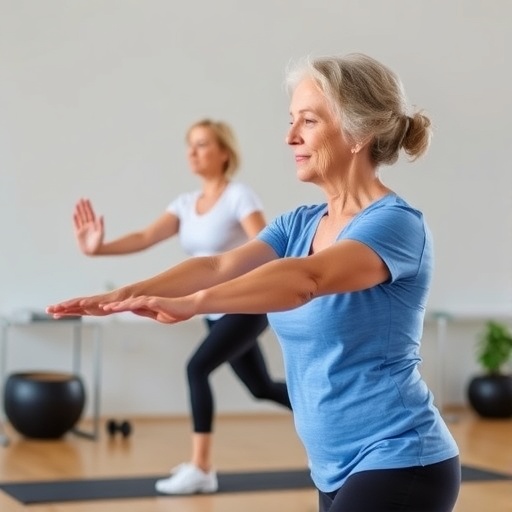
In an era where the global population is aging at an unprecedented rate, ensuring the mental and physical well-being of elderly individuals becomes a paramount public health challenge. New research published in BMC Geriatrics shines an illuminating light on how structured multicomponent exercise programs can profoundly influence not only the physical health but also the psychological resilience and overall quality of life in aged women. This randomized controlled trial, conducted by researchers Çaynak, Boyacıoğlu, Oruç, and colleagues, offers groundbreaking insights into the intricate interplay between physical activity and mental health in postmenopausal women, a demographic often overlooked in clinical research.
The study addresses a critical gap in geriatric health management by meticulously evaluating how combined exercise regimens affect coping mechanisms against stress and psychological well-being metrics in elderly female participants. Prior literature has frequently underscored isolated benefits of individual exercise types—be it aerobic training, strength conditioning, or flexibility drills—but this investigation departs from conventional paradigms by integrating multiple exercise modalities, thereby simulating a holistic physical intervention. Such a multicomponent approach mimics the complex demands of daily physical activity more accurately, potentially yielding greater effectiveness in attenuating age-related functional decline.
Employing a rigorous randomized controlled design, the researchers enrolled aged women, ensuring they represented a broad spectrum of functional statuses and psychological baselines. This methodological strategy allowed for a robust comparison between participants subjected to the multicomponent exercise intervention and those in a control group receiving standard care or low-intensity activity advice. Over the course of the intervention, participants engaged in regimented sessions combining aerobic, resistance, balance, and flexibility exercises. This comprehensive physical challenge was tailored to their capacity, striking a critical balance between intensity and safety, a vital consideration in geriatric exercise prescription.
One of the paramount findings elucidated by the trial was a statistically significant enhancement in the quality of life indices among the exercise group compared to controls. This improvement transcended physical metrics, encompassing emotional well-being, social engagement, and perceived health status. Such multidimensional benefits underscore the critical role of physical activity in modulating not only somatic health but also psychosocial elements that dictate overall life satisfaction. The data strongly suggest that multicomponent exercise regimes serve as a potent, non-pharmacological strategy to enrich the lived experience of elderly women.
Moreover, the trial delivered compelling evidence regarding the effect of structured exercise on stress coping mechanisms. Psychological stress, often exacerbated in aging populations due to various biopsychosocial factors, was measurably attenuated in participants adhering to the multicomponent exercise schedule. The researchers attribute this amelioration to exercise-induced modulations in neuroendocrine function, enhancement of cognitive flexibility, and increased resilience. These physiological and psychological adaptations collectively fortify the individual’s capacity to manage and mitigate stress, thereby potentially reducing the burden of stress-related disorders.
The psychological well-being outcomes further reinforce the central thesis of the study. Improvements were documented in mood, reduction of anxiety and depressive symptoms, and better sleep quality, all essential parameters contributing to mental health in the elderly. The neurobiological mechanisms orchestrating these changes likely involve exercise-induced neurogenesis, synaptic plasticity, and upregulation of neurotrophic factors such as brain-derived neurotrophic factor (BDNF). These biological substrates foster enhanced neuronal connectivity and functionality, which translate into improved cognitive and emotional health profiles.
Crucially, the study’s longitudinal design captured the durability of these benefits, demonstrating that sustained engagement in multicomponent exercise maintained or furthered psychological and physical gains over time. This long-term perspective is invaluable, as transient benefits often fail to induce meaningful changes in chronic conditions common in aged populations. The persistence of positive outcomes advocates for the implementation of consistent, community-accessible exercise programs tailored to elderly women as a public health priority.
In addition to quantitative measures, qualitative feedback from participants highlighted increased self-efficacy and social connectedness as vital byproducts of the exercise regimen. Group-based activities facilitated social interaction and community support, which are critical determinants of psychological well-being. These interpersonal dimensions may synergistically amplify the physiologic advantages of exercise, creating a virtuous cycle enhancing overall health outcomes.
Beyond immediate health implications, the research paves the way for future translational applications, including the development of personalized exercise prescriptions integrating physiological assessments and psychological profiling. Advances in wearable technology and digital health platforms can optimize adherence and monitor progress in real-time, enhancing the scalability and efficacy of such interventions. Policy-makers and healthcare providers are urged to leverage these findings to address the growing burden of chronic disease and mental health issues among elderly women through accessible, evidence-based exercise programs.
Moreover, this study challenges entrenched ageist stereotypes that often underestimate the capacity of aged women to engage in and benefit from physical activity. It underscores the plasticity of the aging brain and body, reinforcing the paradigm that health decline is not an inevitable consequence of aging but can be modulated through lifestyle interventions. This message empowers elderly women, urging them to reclaim agency over their health trajectories through structured exercise.
From a mechanistic standpoint, further research is warranted to delve deeper into molecular pathways mediating these benefits. Investigations targeting inflammatory cytokines, oxidative stress markers, and mitochondrial biogenesis in response to multicomponent exercise could elucidate cellular processes underlying observed clinical effects. Such biochemical insights will enhance the precision of interventions and may identify novel therapeutic targets intersecting exercise and pharmacology.
The study’s implications extend into the realm of mental health economics. By improving coping strategies and reducing psychological distress, multicomponent exercise may lower healthcare utilization, diminish pharmacotherapy dependence, and reduce hospitalization rates among elderly women. These outcomes can inform cost-effectiveness analyses, potentially driving insurance coverage policies favoring preventive exercise programs and facilitating their integration into geriatric care models.
Critically, the trial addressed safety concerns meticulously, reporting minimal adverse events related to exercise. This reassurance is fundamental to fostering participation among elderly women and healthcare provider endorsement, underpinning confidence in multicomponent exercise as a viable intervention. Future studies may further refine risk stratification to optimize safety protocols and maximize benefit-risk ratios.
In conclusion, the study by Çaynak and colleagues represents a landmark contribution to geriatric health literature. It definitively demonstrates that multicomponent exercise not only enhances physical fitness but significantly improves psychological resilience, stress coping, and overall quality of life in aged women. These findings advocate for a paradigm shift in how aging populations are managed, emphasizing proactive, multifaceted physical activity regimens as a cornerstone of holistic health maintenance. As global demographics shift toward older populations, such evidence-based strategies are indispensable for sustaining health and vitality in later life, ultimately transforming aging from a period of decline into one of opportunity and well-being.
Subject of Research: Effects of multicomponent exercise on quality of life, coping with stress, and psychological well-being in aged women.
Article Title: Effects of multicomponent exercise on quality of life, coping with stress, and psychological well-being in aged women: a randomized controlled trial.
Article References:
Çaynak, S., Boyacıoğlu, N.E., Oruç, M. et al. Effects of multicomponent exercise on quality of life, coping with stress, and psychological well-being in aged women: a randomized controlled trial. BMC Geriatr (2026). https://doi.org/10.1186/s12877-026-07166-7
Image Credits: AI Generated
Tags: age-related functional decline preventioncombined aerobic and strength training benefitsexercise impact on postmenopausal womengeriatric health and physical activityholistic exercise interventions for seniorsmental health benefits of exercise in elderly womenmulticomponent exercise programs for elderly womenphysical and mental well-being in aged womenpsychological resilience in elderly femalesquality of life improvement through exerciserandomized controlled trial on elderly exercisestress coping mechanisms in aged women