An international multicentre research initiative has established a study protocol to evaluate the feasibility of assembling linked clinical and intraoperative visual datasets during emergency surgery for complicated acute diverticulitis. In non-elective minimally invasive surgical management of this condition, the choice between performing a primary colorectal anastomosis and proceeding with Hartmann’s procedure remains variable across surgical practice. According to the investigators, this critical operative choice currently depends mostly on the intraoperative judgment of the operating surgeon in emergency settings.
The observational project, designated as the AIDE/OBS study, seeks to address this clinical variability by gathering standardized clinical and visual information from emergency surgical interventions. By capturing standardized records alongside operative visual media, the investigators aim to characterize the specific intraoperative findings associated with this operative decision. These standardized datasets are intended to establish a foundational resource to support future artificial intelligence research and exploratory image analysis in emergency surgical care.
According to the published study protocol, AIDE/OBS is designed as an international, multicenter, observational study that incorporates both retrospective and prospective cases of adult patients. Eligible participants are adults undergoing non-elective surgery for complicated acute diverticulitis in whom a minimally invasive surgical approach is attempted. Specifically, the study protocol includes clinical cases in which operating surgical teams attempt either a laparoscopic or a robotic surgical approach during the non-elective procedure.
The protocol defines the spectrum of eligible operations to include Hartmann’s procedure as well as sigmoidectomy or left colectomy with primary anastomosis. For patients undergoing sigmoidectomy or left colectomy with primary anastomosis, the protocol accommodates surgical procedures performed either with or without a protective diversion. Participating hospital centers will collect pseudonymized data spanning clinical records, radiological findings, operative details, surgeon-reported observations, and postoperative documentation.
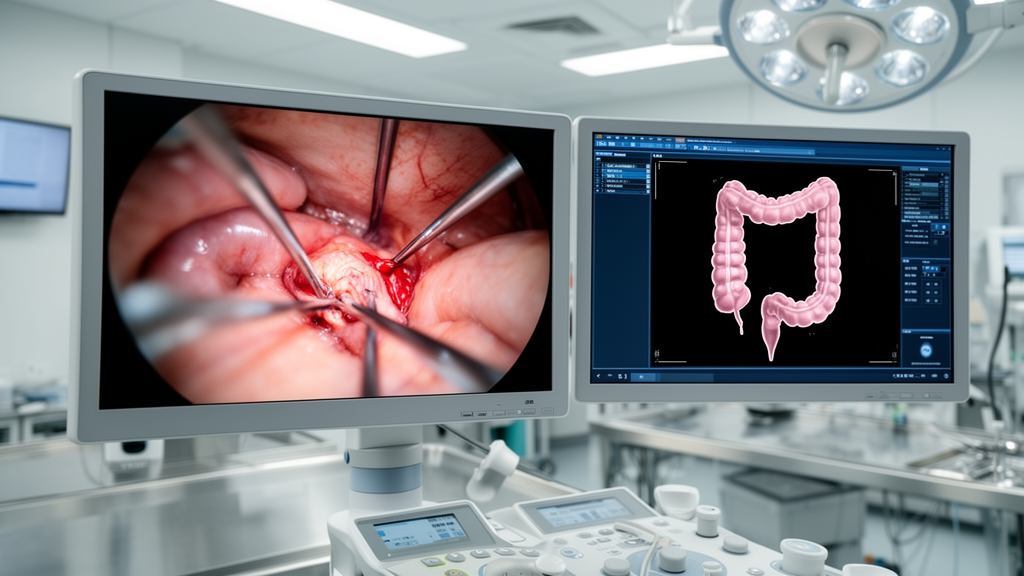
In addition to clinical variables, participating hospital centers will submit de-identified intraoperative visual materials from these procedures. These submissions will consist of recorded intraoperative videos, sets of still images, or combinations of both visual formats. All submitted intraoperative visual recordings and still images will be labelled according to predefined operative phases. Furthermore, the study protocol specifies that intraoperative video recordings and still-image sets will be assessed separately throughout the investigation.
The primary outcome established for the AIDE/OBS study is the overall feasibility of assembling linked clinical and intraoperative visual datasets in this emergency surgical setting. The research team will assess this primary feasibility endpoint through measures of clinical data completeness, alongside the yield, analyzability, and operative-phase coverage achieved by submitted videos and still-image sets. The protocol explicitly mandates that these feasibility metrics will be evaluated and reported separately for intraoperative videos and still-image sets.
In addition to primary feasibility outcomes, the protocol defines several secondary clinical endpoints. Investigators will evaluate factors associated with the observed operative strategy, the rate of stoma creation at the index operation, and the occurrence of anastomotic leaks. Additional secondary outcomes encompass postoperative morbidity graded according to the Clavien–Dindo classification, the need for unplanned reoperation, and all-cause mortality recorded within 30 days following the index surgical intervention.
The resulting phase-annotated datasets may help inform exploratory image analysis and guide the subsequent development of future artificial intelligence tools.
Subject of Research: Feasibility protocol for linked clinical and visual data collection in emergency diverticulitis surgery
Article Title: Primary anastomosis or Hartmann’s procedure in complicated diverticulitis: the AIDE/OBS multicentre feasibility protocol for clinical and visual data in AI research
Article References: De Simone, B., Arnesano, M., Vecchio, F., Annessi, A., Kasongo, L., Gumbs, A. A., Abu-Zidan, F., & Catena, F. (2026). Primary anastomosis or Hartmann’s procedure in complicated diverticulitis: the AIDE/OBS multicentre feasibility protocol for clinical and visual data in AI research. World Journal of Emergency Surgery. https://doi.org/10.1186/s13017-026-00741-8
Image Credits: AI Generated
DOI: 10.1186/s13017-026-00741-8
Keywords: complicated acute diverticulitis, Hartmann’s procedure, primary colorectal anastomosis, emergency surgery, minimally invasive surgery, laparoscopic surgery, robotic surgery, AIDE/OBS study, multicentre study protocol, intraoperative video, surgical still images, operative phase annotation, artificial intelligence research, Clavien–Dindo classification, anastomotic leak, sigmoidectomy, left colectomy
News Source: Ophelia Keating. (November 24, 2026). Multicentre Protocol Evaluates Linked Surgical and Visual Data in Complicated Diverticulitis. Scienmag.