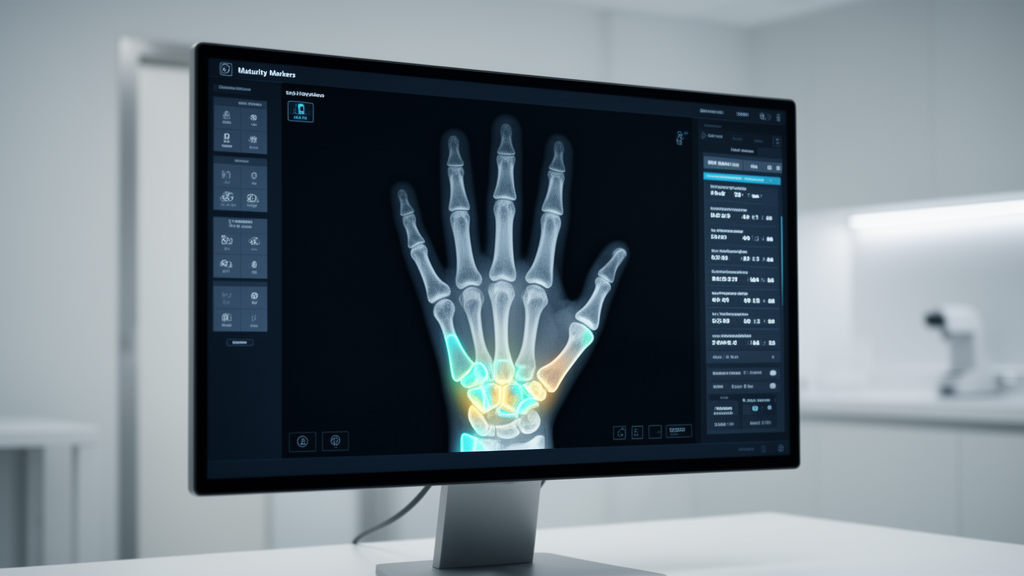
An artificial intelligence system achieved an overall exact agreement rate of 0.73 and a plus-or-minus one-stage agreement of 0.96 when staging skeletal maturity indicators from hand-wrist radiographs across multiple clinical centers. Accurate skeletal maturity assessment is essential for determining optimal orthodontic treatment timing in growing patients. To evaluate diagnostic capabilities in real-world clinical environments, researchers conducted an evaluation of the commercialized automated skeletal maturity indicator prediction platform using multicenter patient data.
The retrospective investigation reviewed radiographic records from 595 subjects aged 6 to 18 years gathered across two separate clinical institutions. The total study sample comprised 220 subjects from Yonsei University Dental Hospital alongside 375 subjects from Yonsei University Wonju Severance Christian Hospital. By analyzing subjects across these distinct clinical facilities, the investigation examined whether the automated system maintains consistent diagnostic performance across varying clinical environments.
To establish reference standard skeletal maturity indicator stages from 0 to 11, the researchers used a sequential cross-verification process. This reference protocol cross-verified the skeletal maturity indicator values originally recorded in patient medical charts with the independent diagnostic evaluations of three orthodontic specialists. All hand-wrist radiographs in the multicenter sample were then analyzed using MediAI-BA, an artificial intelligence software program designed for automated skeletal maturity staging.
The diagnostic evaluation assessed several performance metrics, specifically exact agreement, agreement within plus-or-minus one stage, mean absolute error, root mean square error, and linear weighted kappa values. Overall, the artificial intelligence platform yielded a total mean absolute error of 0.32, a root mean square error of 0.64, and a linear weighted kappa of 0.93. The analysis revealed no statistically significant performance difference between the two participating medical institutions, including after statistical adjustment for patient age, sex, and skeletal maturity stage.
Despite consistent cross-institutional results, exact diagnostic agreement varied substantially across the individual skeletal maturity indicator stages. Predictive accuracy ranged from a low of 0.24 at stage 1 to a high of 0.99 at stage 0. These findings show that while the majority of predictions are within one developmental stage, the exact agreement of the automated platform fluctuates considerably depending on the specific developmental stage being analyzed.
Multivariable logistic regression was utilized to evaluate factors associated with artificial intelligence accuracy. Female subjects displayed a higher exact agreement of 0.76 compared to 0.69 in male subjects, and post-menarcheal individuals reached 0.84 exact agreement compared to 0.69 in pre-menarcheal individuals. However, these observed differences were not statistically significant after adjustment for skeletal maturity stage. In addition, skeletal patterns did not significantly influence the diagnostic accuracy of the artificial intelligence software.
The study concluded that the artificial intelligence system demonstrated similar diagnostic performance across both medical centers, with most classification discrepancies remaining within a single stage. Because diagnostic accuracy varied across skeletal maturity stages, the authors noted that the system can serve effectively as a supportive clinical tool, though orthodontists should review all automated results. The researchers emphasized that further validation in other patient populations is needed.
Subject of Research: Diagnostic performance of artificial intelligence in skeletal maturity indicator staging
Article Title: Multicenter evaluation of the diagnostic performance of an artificial intelligence-based system for skeletal maturity indicator staging
Article References: Jeon, S. Y., Kim, H., Choi, E.-H. A., Kim, B., Kang, H., Cha, J.-Y., & Choi, S.-H. (2026). Multicenter evaluation of the diagnostic performance of an artificial intelligence-based system for skeletal maturity indicator staging. BMC Oral Health. https://doi.org/10.1186/s12903-026-10499-9
Image Credits: AI Generated
DOI: 10.1186/s12903-026-10499-9
Keywords: artificial intelligence, skeletal maturity indicator, orthodontic treatment, hand-wrist radiographs, MediAI-BA, multicenter study, diagnostic performance, exact agreement, weighted kappa, Yonsei University Dental Hospital, Wonju Severance Christian Hospital, mean absolute error, root mean square error, skeletal patterns, growing patients, orthodontics
News Source: Blake Davidson. (November 26, 2026). Multicenter Study Evaluates Artificial Intelligence for Skeletal Maturity Staging. Scienmag.