• HOME
  • NEWS
  • EXPLORE
    • CAREER
      • Companies
      • Jobs
    • EVENTS
    • iGEM
      • News
      • Team
    • PHOTOS
    • VIDEO
    • WIKI
  • BLOG
  • COMMUNITY
    • FACEBOOK
    • INSTAGRAM
    • TWITTER
Monday, November 16, 2026
BIOENGINEER.ORG
No Result
View All Result
  • Login
  • HOME
  • NEWS
  • EXPLORE
    • CAREER
      • Companies
      • Jobs
        • Lecturer
        • PhD Studentship
        • Postdoc
        • Research Assistant
    • EVENTS
    • iGEM
      • News
      • Team
    • PHOTOS
    • VIDEO
    • WIKI
  • BLOG
  • COMMUNITY
    • FACEBOOK
    • INSTAGRAM
    • TWITTER
No Result
View All Result
Bioengineer.org
No Result
View All Result
Home NEWS Science News Health

Multi-Task AI Matches Separate Models in Breast Ultrasound Analysis

by
November 5, 2026
in Health
Reading Time: 2 mins read
0
Multi-Task AI Matches Separate Models in Breast Ultrasound Analysis

Multi-Task AI Matches Separate Models in Breast Ultrasound Analysis

Share on FacebookShare on TwitterShare on LinkedinShare on RedditShare on Telegram

Researchers have demonstrated that an attention-gated multi-task deep-learning model can jointly classify and segment breast ultrasound lesions with performance statistically comparable to dedicated single-task networks while cutting parameter requirements by 46 percent. On a held-out test set of 117 images from the publicly available BUSI dataset, the unified model achieved a classification accuracy of 93.16 percent, a macro F1-score of 0.931, and a macro area under the receiver operating characteristic curve of 0.984. These classification outcomes were statistically comparable to a dedicated classification-only baseline that recorded an accuracy of 91.45 percent, yielding a paired McNemar test p-value of 0.63.

For lesion segmentation, the unified architecture achieved a mean Dice similarity coefficient of 0.766, with a bootstrap 95 percent confidence interval spanning 0.710 to 0.819 across 1,000 resamples. This segmentation performance proved statistically comparable to the dedicated segmentation-only baseline’s Dice score of 0.810 (paired Wilcoxon signed-rank test p = 0.22). Incorporating attention gates into the segmentation-only baseline did not produce a statistically significant change in segmentation accuracy, resulting in a Dice score of 0.813 versus 0.810 (p = 0.50). Furthermore, the unified network demonstrated 100 percent recall for normal scans and misclassified no malignant cases as normal.

Built upon a shared ResNet-34 encoder, the multi-task framework simultaneously executes three-class classification across normal, benign, and malignant cases alongside lesion segmentation within a single forward pass. The researchers developed and evaluated the architecture using the 780-image BUSI dataset split into stratified subsets of 70 percent for training, 15 percent for validation, and 15 percent for testing using a fixed random seed for reproducibility. The unified model was compared directly against three dedicated baselines: a classification-only model, a segmentation-only model, and an attention-gated segmentation-only model.

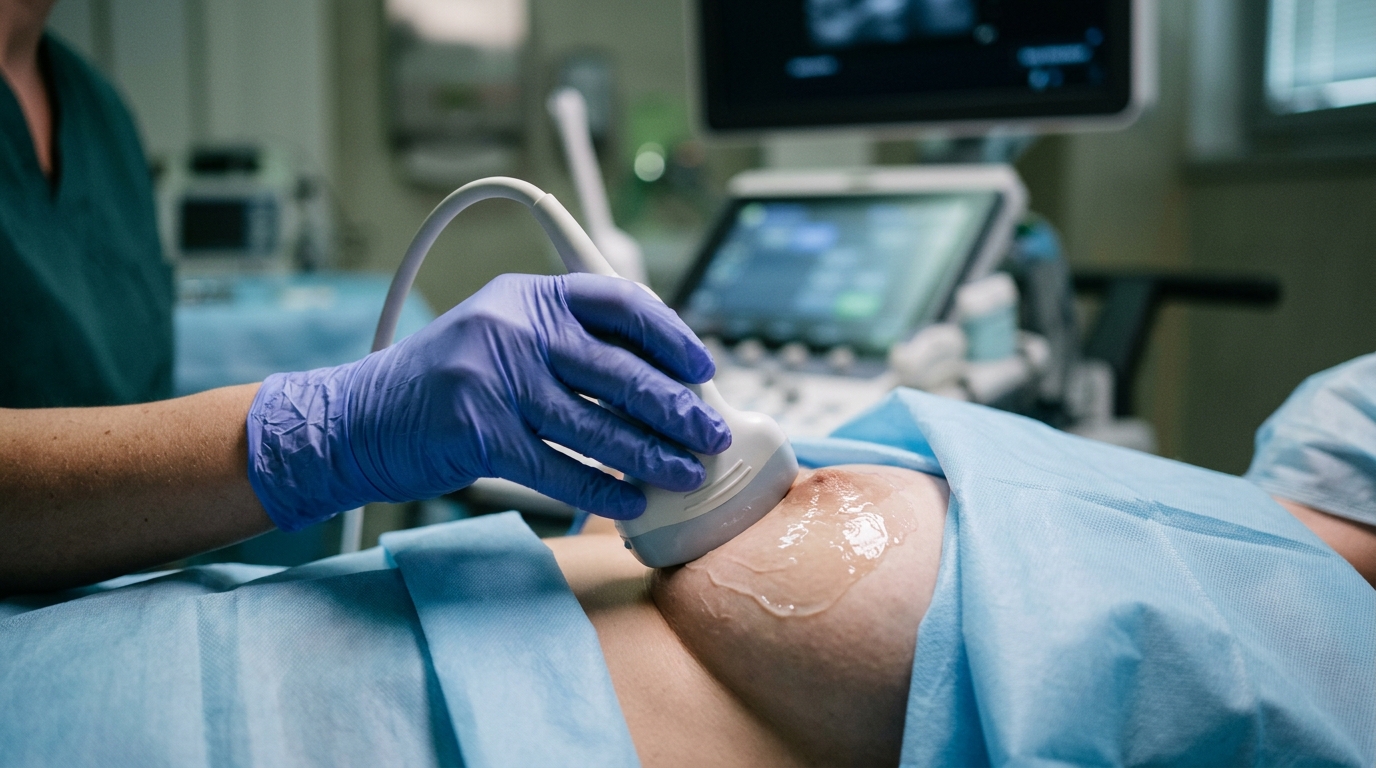
Breast ultrasound is widely deployed for breast cancer screening, but its clinical interpretation is operator-dependent, and conventional computer-aided diagnosis pipelines address classification and segmentation through separate models that elevate parameter budgets and deployment complexity. By consolidating these tasks into a single architecture, the unified model operated with 24.7 million parameters compared to the 45.9 million parameters required by two dedicated models. The authors concluded that the unified attention-gated framework provides practical value through parameter efficiency and workflow consolidation rather than through accuracy gains over dedicated single-task approaches.

Subject of Research: Unified multi-task deep learning for breast ultrasound classification and segmentation

Article Title: A unified attention-gated multi-task network for joint classification and lesion segmentation of breast ultrasound images

Article References: Zhang, Y., Liang, S.-M., Liu, J., Wen, W., & Fan, Y.-J. (2026). A unified attention-gated multi-task network for joint classification and lesion segmentation of breast ultrasound images. BMC Medical Imaging. https://doi.org/10.1186/s12880-026-03007-6

Image Credits: AI Generated

DOI: 10.1186/s12880-026-03007-6

Keywords: breast ultrasound, deep learning, multi-task learning, lesion segmentation, computer-aided diagnosis, ResNet-34, BUSI dataset, unified, attention-gated, multi-task, network, joint

News Source: Ophelia Keating. (November 5, 2026). Multi-Task AI Matches Separate Models in Breast Ultrasound Analysis. Scienmag.


Tags: attention-gatedbreast ultrasoundBUSI datasetcomputer-aided diagnosisdeep learningjointlesion segmentationmulti-taskMulti-task learningnetworkResNet-34unified
Share12Tweet7Share2ShareShareShare1

Related Posts

Conceptual Framework Proposes End-to-End Safety Audits for Voice Healthcare AI

Conceptual Framework Proposes End-to-End Safety Audits for Voice Healthcare AI

November 16, 2026
Winter temperatures drive water-soluble brown carbon light absorption in industrial Taiyuan

Winter temperatures drive water-soluble brown carbon light absorption in industrial Taiyuan

November 16, 2026

Mitochondrial Damage and Ferroptosis Interlock to Drive Bone Loss in Osteoporosis

November 16, 2026

Posttraumatic Stress From Child-Related Trauma Predicts Poorer Perceived Health in Mothers

November 16, 2026

POPULAR NEWS

  • Freshwater Restoration Shows Higher Microbial Carbon Fixation in Yellow River Delta Wetlands

    Freshwater Restoration Shows Higher Microbial Carbon Fixation in Yellow River Delta Wetlands

    29 shares
    Share 12 Tweet 7
  • Clear-Cutting Loblolly Pine Shifts Ecosystem Carbon and Water Balance for Years

    29 shares
    Share 12 Tweet 7
  • Mitochondrial Damage and Ferroptosis Interlock to Drive Bone Loss in Osteoporosis

    29 shares
    Share 12 Tweet 7
  • Mine-Adapted Bacteria Enhance Nutrient Uptake and Growth in Maize and Tomato

    29 shares
    Share 12 Tweet 7

About

We bring you the latest biotechnology news from best research centers and universities around the world. Check our website.

Follow us

Recent News

Conceptual Framework Proposes End-to-End Safety Audits for Voice Healthcare AI

Bioactive Materials and Biofabrication Drive Functional Perfusion in Engineered Cardiac Grafts

Winter temperatures drive water-soluble brown carbon light absorption in industrial Taiyuan

Subscribe to Blog via Email

Enter your email address to subscribe to this blog and receive notifications of new posts by email.

Join 88 other subscribers
  • Contact Us

Bioengineer.org © Copyright 2023 All Rights Reserved.

Welcome Back!

Login to your account below

Forgotten Password?

Retrieve your password

Please enter your username or email address to reset your password.

Log In
No Result
View All Result
  • Homepages
    • Home Page 1
    • Home Page 2
  • News
  • National
  • Business
  • Health
  • Lifestyle
  • Science

Bioengineer.org © Copyright 2023 All Rights Reserved.