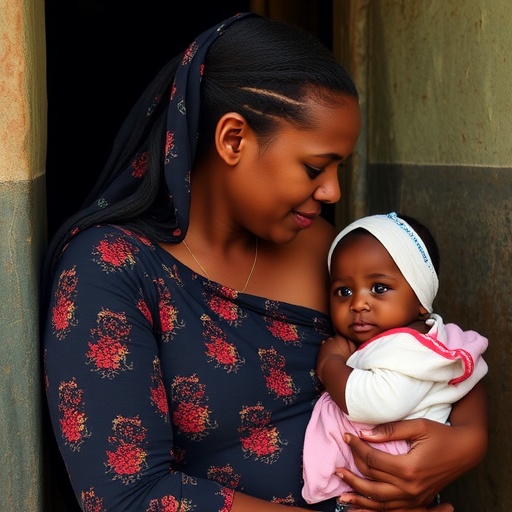
In the poignant narrative that resonates deeply within the realm of healthcare, author A. Herrera tackles a pressing and often overlooked issue in her groundbreaking article, “Mourning Mama: A Reflection on Care Deserved but Never Afforded.” Scheduled for publication in the Journal of General Internal Medicine in 2026, this article serves as a clarion call for systemic change in how we understand and provide care to marginalized populations, particularly mothers in difficult circumstances. As healthcare inequities continue to widen, Herrera’s reflections are a timely reminder of the responsibilities that society holds towards its most vulnerable members.
Medical care is not just a privilege accorded to a select few; it is a fundamental human right. This assertion underpins the essence of Herrera’s discourse, which carefully navigates through the fabric of societal neglect faced by certain individuals, particularly mothers who are often left to navigate complex healthcare systems alone. In chronicling the experiences of these women, the author highlights that the issues they face are not merely personal but collective failures of a system that should prioritize the well-being of all its citizens. In a world where the disparity in healthcare access remains stark, this article is a vital part of the ongoing discourse about equity in health services.
The narrative begins with a vivid recounting of the heartbreak and struggles endured by mothers who, despite their significant contributions to society, find themselves at the mercy of healthcare systems that fail to recognize their needs. Herrera’s examination is not just anecdotal; it is backed by a wealth of data and research that illustrates the dire state of maternal healthcare. The statistics are shocking—many women face delayed access to necessary services, lack support during critical times, and ultimately suffer from preventable complications that could have been addressed with adequate care. These narratives extend beyond personal accounts, painting a grim picture that calls into question the very foundations of justice and equity in healthcare.
One of the striking angles of Herrera’s piece is the intersectionality of motherhood and social determinants of health. The article deftly discusses how race, income, and geography can dictate the type of care a mother receives. For instance, a woman from a lower economic background may not have the same access to prenatal care as her counterparts in more affluent areas, leading to poorer health outcomes for both her and her child. This systemic inequity is not merely a statistical abstraction but a lived reality for many, and the emotional weight of these experiences is palpable in Herrera’s writing.
The research highlights that many mothers are forced to make impossible choices, prioritizing immediate needs and survival over long-term health implications. This is exacerbated by societal attitudes that stigmatize those who rely on welfare or publicly funded healthcare systems. Herrera passionately argues for a shift in perception, urging society to embrace these narratives with compassion and understanding rather than judgment. It is critical that we confront our biases and reassess the way we perceive and engage with issues surrounding maternal health and economic instability.
Throughout her article, Herrera calls for a multi-faceted approach to rectify these injustices, emphasizing the need for policy reform that prioritizes maternal healthcare. She highlights successful models from various countries that can serve as a guide for restructuring U.S. healthcare policies. By examining international benchmarks, Herrera posits that implementing universal access to maternity care is not only feasible but an ethical obligation to ensure that every mother receives the care they deserve. This proactive approach requires empowering women with the knowledge and resources to advocate for their health without fear of economic repercussions.
Central to Herrera’s argument is the concept of community-based care. The article posits that solutions lie in a shared responsibility model where communities take an active role in supporting mothers. Engaging local organizations, healthcare providers, and policy-makers in collaboration can foster an ecosystem that adequately supports maternal health. By creating networks of care that are rooted in trust and accessibility, we can build systems that not only care for mothers during pregnancy but continue to support them long after childbirth.
Moreover, Herrera delves into the emotional and psychological toll that a lack of care can impose on mothers. The repercussions of inadequate healthcare extend beyond physical health, affecting mental well-being, family dynamics, and societal engagement. Mothers who feel unsupported may struggle with issues of depression and anxiety, which can, in turn, affect their children and the broader community. It is a cyclical problem that necessitates a holistic approach to care, one that recognizes the interdependence of health outcomes and mental well-being.
The enterprise of care must also include recognizing the contributions of mothers as caregivers, community leaders, and change agents. Herrera argues that failing to provide adequate healthcare services to mothers is not only a disservice to them but also detrimental to societal progress. When mothers are cared for, they can better care for their families and contribute meaningfully to their communities. Thus, investing in maternal health is an investment in the future of society as a whole.
In drawing attention to the voices of mothers who have experienced neglect, Herrera elevates their stories from the margins to the center of the discourse. Her compelling writing captures the nuanced experiences of these women, framing their narratives in a way that humanizes them beyond statistics. This approach engenders a sense of urgency and responsibility among readers, compelling them to act and advocate for change.
In conclusion, “Mourning Mama” serves as a powerful reminder of the care that many mothers are denied within our current healthcare framework. Herrera’s reflective piece impels us to reconsider our roles as individuals and as a society in shaping the future of maternal healthcare. It is a call to action—one that implores us to fight for equitable healthcare policies that embrace diversity, acknowledge systemic inequalities, and ultimately provide mothers with the care they rightly deserve. As we move forward, we must hold steadfast to the belief that healthcare is a right, not a privilege, and work tirelessly to ensure that no mother is left behind.
Subject of Research: Inequities in maternal healthcare and systemic failures affecting mothers.
Article Title: Mourning Mama: A Reflection on Care Deserved but Never Afforded.
Article References:
Herrera, A. Mourning Mama: A Reflection on Care Deserved but Never Afforded.
J GEN INTERN MED (2026). https://doi.org/10.1007/s11606-025-10136-1
Image Credits: AI Generated
DOI: https://doi.org/10.1007/s11606-025-10136-1
Keywords: maternal healthcare, equity, social determinants of health, community care, healthcare reform.
Tags: A. Herrera’s healthcare narrativeaddressing unmet care needscare for marginalized populationschallenges in healthcare accesscollective failures in healthcare systemsexperiences of vulnerable mothersfundamental human right to medical carehealthcare disparities and solutionsmaternal health inequitiesreflections on motherhood and caresocietal neglect in healthcaresystemic change in healthcare