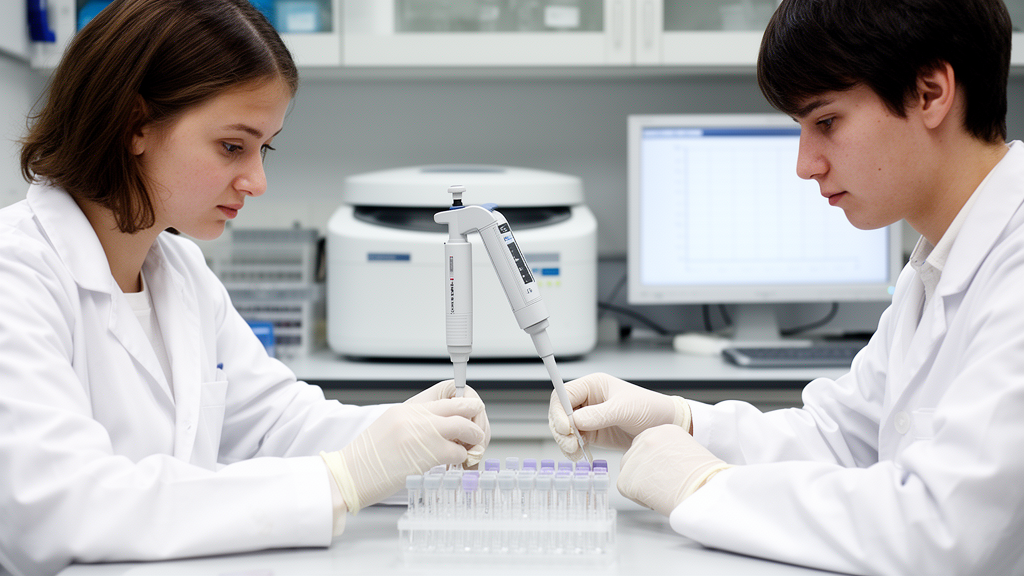
A newly evaluated university teaching module indicates that combining laboratory experimentation with bioinformatic workflows provides an effective environment for teaching molecular data interpretation to undergraduate biomedical students. According to a descriptive evaluation published in BMC Medical Education, undergraduate students completed the integrated laboratory and bioinformatics activity and achieved high post-activity knowledge scores.
The instructional intervention addressed a persistent disconnect identified within undergraduate biomedical and health sciences curricula. While modern degree programmes increasingly expect students to interpret complex molecular datasets, comprehend the role of experimental controls, and navigate ambiguous laboratory outcomes, conventional laboratory courses frequently separate hands-on experiments from subsequent bioinformatics and data analysis. To bridge this divide, the researchers selected DNA methylation analysis as an authentic educational model where students must resolve technical ambiguities and apply scientific reasoning across molecular and computational contexts.
The study examined a cohort of 32 third-year undergraduate students enrolled in a Bachelor of Science degree in Biomedicine and Advanced Therapies. The curriculum was structured as an intensive, three-day educational activity specifically configured to integrate hands-on molecular experimentation with guided computer-based bioinformatics. Working collaboratively in sixteen student pairs, the cohort performed sodium bisulfite conversion, methylation-specific PCR, combined bisulfite restriction analysis, guided bioinformatic analysis, and structured peer discussion.
During the laboratory component, students analysed promoter methylation of the tumour suppressor genes p16 (CDKN2A) and DAPK1. The students utilized DNA extracted from human cancer cell lines as their experimental substrate. The wet-bench experimental procedure integrated three foundational molecular biology protocols: sodium bisulfite conversion of target DNA, methylation-specific polymerase chain reaction (MSP), and combined bisulfite restriction analysis (COBRA). Following physical laboratory assays, students carried out guided bioinformatics tasks and engaged in structured peer discussions to evaluate and explain their experimental outcomes.
To evaluate the impact and efficacy of the curriculum, the instructional team implemented a multifaceted assessment framework. This evaluation captured technical performance indicators derived from students’ physical laboratory products, a 10-item objective knowledge assessment administered following the module, and an 11-item post-activity survey. The survey captured student perceptions regarding their own learning gains, the utility of the computational components, and their overall experience with the educational activity.
Technical performance records demonstrated that all 32 students completed the three-day curriculum within the scheduled time limits. In the laboratory assays, 15 of the 16 student pairs successfully produced interpretable PCR amplification products. Furthermore, 14 of the 16 pairs obtained a COBRA electrophoretic pattern consistent with the pattern expected for their specific cell-line and gene combination.
The post-activity knowledge assessment yielded a cohort mean score of 8.59 out of 10 points, with a standard deviation of 1.04, a median score of 8, and an overall range extending from 6 to 10 points. Every participating student reported that the module contributed either “quite a bit” or “a great deal” to their comprehension of DNA methylation mechanisms. Additionally, 26 out of 32 students, or 81.3 percent, expressed very or extremely high confidence in interpreting MSP and COBRA laboratory findings, while 23 of 32 participants, or 71.9 percent, categorized the guided bioinformatics component as very or extremely useful.
Despite these favourable technical and perceptual metrics, the authors explicitly emphasized the methodological constraints of the investigation. Because the study employed a descriptive evaluation centered on a single cohort of 32 students without a parallel control group, the recorded outcomes cannot definitively prove that the curriculum caused the development of long-term scientific reasoning or data interpretation competencies. Nonetheless, the authors concluded that the observed outcomes aligned closely with intended instructional objectives, providing a practical and potentially transferable pedagogical framework that could be adapted across biomedical sciences, biotechnology, pharmacy, and related health sciences programmes.
Subject of Research: Undergraduate biomedical curriculum combining wet-lab and bioinformatic DNA methylation analysis
Article Title: An integrated laboratory–bioinformatics DNA methylation activity designed to support molecular data interpretation and scientific reasoning in undergraduate biomedical education
Article References: Jiménez-Cuadrado, P., Almansa, R., Esteban-Amo, M. J., García-Martínez, C., Tellería, J. J., Merino, B., Simarro, M., & de la Fuente, M. Á. (2026). An integrated laboratory–bioinformatics DNA methylation activity designed to support molecular data interpretation and scientific reasoning in undergraduate biomedical education. BMC Medical Education. https://doi.org/10.1186/s12909-026-10737-2
Image Credits: AI Generated
DOI: 10.1186/s12909-026-10737-2
Keywords: DNA methylation, biomedical education, bioinformatics, molecular data interpretation, scientific reasoning, p16, CDKN2A, DAPK1, tumour suppressor genes, sodium bisulfite conversion, methylation-specific PCR, COBRA analysis, cancer cell lines, undergraduate laboratory, higher education pedagogy, peer discussion, health sciences curriculum
News Source: Courtney Benton. (November 14, 2026). Most Student Pairs Obtain Expected DNA Methylation Results in Descriptive Study. Scienmag.