• HOME
  • NEWS
  • EXPLORE
    • CAREER
      • Companies
      • Jobs
    • EVENTS
    • iGEM
      • News
      • Team
    • PHOTOS
    • VIDEO
    • WIKI
  • BLOG
  • COMMUNITY
    • FACEBOOK
    • INSTAGRAM
    • TWITTER
Tuesday, May 12, 2026
BIOENGINEER.ORG
No Result
View All Result
  • Login
  • HOME
  • NEWS
  • EXPLORE
    • CAREER
      • Companies
      • Jobs
        • Lecturer
        • PhD Studentship
        • Postdoc
        • Research Assistant
    • EVENTS
    • iGEM
      • News
      • Team
    • PHOTOS
    • VIDEO
    • WIKI
  • BLOG
  • COMMUNITY
    • FACEBOOK
    • INSTAGRAM
    • TWITTER
  • HOME
  • NEWS
  • EXPLORE
    • CAREER
      • Companies
      • Jobs
        • Lecturer
        • PhD Studentship
        • Postdoc
        • Research Assistant
    • EVENTS
    • iGEM
      • News
      • Team
    • PHOTOS
    • VIDEO
    • WIKI
  • BLOG
  • COMMUNITY
    • FACEBOOK
    • INSTAGRAM
    • TWITTER
No Result
View All Result
Bioengineer.org
No Result
View All Result
Home NEWS Science News Biology

More ecosystem engineers create stability, preventing extinctions

Bioengineer by Bioengineer
July 3, 2020
in Biology
Reading Time: 3 mins read
0
IMAGE
Share on FacebookShare on TwitterShare on LinkedinShare on RedditShare on Telegram

IMAGE

Credit: Justin Yeakel

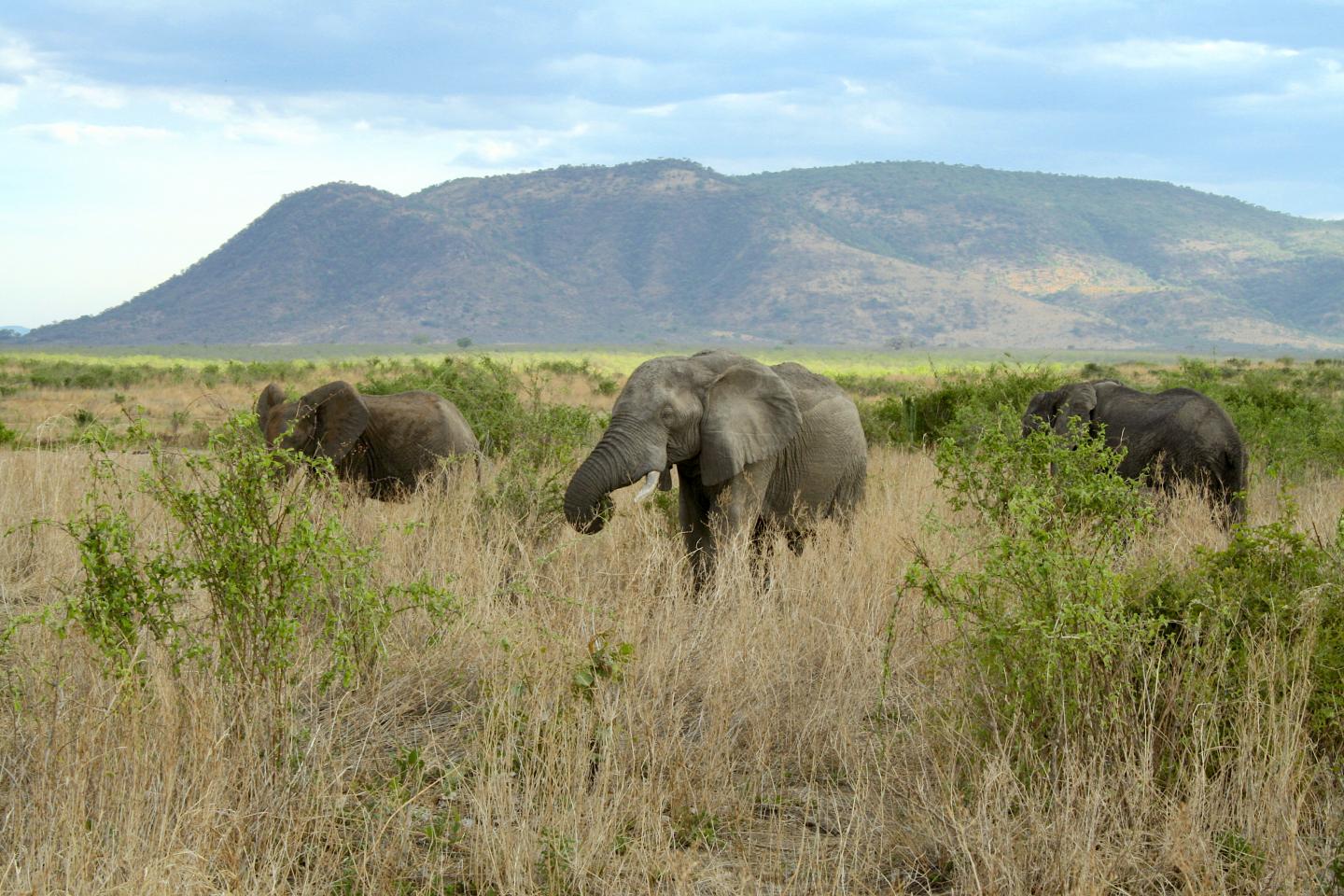
When we think of engineering in nature, we tend to think of beavers — the tree-felling, dam-building rodents whose machinations can shape the landscape by creating lakes and changing the path of rivers. But beavers are far from the only organisms to reshape their environment. A squirrel who inadvertently plants oak trees is also an “ecosystem engineer” — roughly speaking, any organism whose impact on the environment outlasts its own lifetime. The coolest of these biological builders, according to Justin Yeakel, might be the shipworm, which eats through rocks in streams, creating cozy abodes for future invertebrate inhabitants.

Yeakel, an ecologist at the University of California, Merced, and a former Santa Fe Institute Omidyar Fellow is the lead author of a new paper that models the long term impact of ecosystem engineers. Researchers have long considered the role of ecosystem engineers in natural histories, but this study is among the first to quantitatively assess them in an ecological network model.

“We wanted to understand how food webs and interaction networks were established from a mechanistic perspective,” he says. “To do that, you have to include things like engineering because species influence their environment and there’s this feedback between the environment to the species.”

In particular, the model uses simple rules to show how food webs can be assembled, how species interactions can change over time, and when species go extinct. One striking result: Few ecosystem engineers led to many extinctions and instability while many ecosystem engineers led to stability and few extinctions.

“As you increase the number of engineers, that also increases the redundancy of the engineers and this tends to stabilize the system,” Yeakel says.

So, how do you create an ecological network model? It’s highly abstracted — there are no specific species like beavers or concrete environmental features like rivers. Everything is reduced to interactions: species can eat, need, or make. In this sense, nature becomes a network of interactions. For example, bees eat nectar from flowers; flowers need bees to be pollinated; trees make shade which flowers need.

The researchers gave the model a small number of rules, the main one being: Species have to eat only one thing to survive but they have to obtain all of the things they need. In less abstract terms, even if one flower species goes extinct, bees could survive on nectar from other flowers. But if either bees or trees fail to provide pollination or shade, which flowers need, then the flowers will go extinct.

Using these rules, the models were able to produce ecological networks similar to those in the real world, with a characteristic hourglass shape in species diversity — more diversity at the top and the bottom of the web, less in the middle. To expand the model for future research, Yeakel plans on incorporating evolutionary dynamics so that species can change what they eat and need and make.

Two and a half billion years before humans showed up, cyanobacteria were a planetary-scale engineer that slowly changed the composition of the entire atmosphere by oxygenating it. But unlike our photosynthetic predecessors, “we’re making changes on ecological timescales rather than evolutionary timescales,” Yeakel says. “Is an organism that becomes a planetary-scale engineer doomed to extinction if it changes the environment too quickly?”

###

Media Contact
Justin Yeakel
[email protected]

Related Journal Article

http://dx.doi.org/10.1038/s41467-020-17164-x

Tags: BiologyEcology/EnvironmentEvolutionSystems/Chaos/Pattern Formation/Complexity
Share13Tweet8Share2ShareShareShare2

Related Posts

From Complexity to Clarity: Unraveling the “Topological Laws” Governing Cell Death — Biology

From Complexity to Clarity: Unraveling the “Topological Laws” Governing Cell Death

May 11, 2026
New Classification Framework Identifies Tumor-Associated Bacterial Effectors as Crucial Drivers of Tumor Biology and Immune Response — Biology

New Classification Framework Identifies Tumor-Associated Bacterial Effectors as Crucial Drivers of Tumor Biology and Immune Response

May 11, 2026

HIV-1 Strains Reveal Varied Paths to Antibody Escape

May 11, 2026

CRISPRi Screening Identifies Fungal-Specific Drug Targets

May 11, 2026
Please login to join discussion

POPULAR NEWS

  • Research Indicates Potential Connection Between Prenatal Medication Exposure and Elevated Autism Risk

    841 shares
    Share 336 Tweet 210
  • New Study Reveals Plants Can Detect the Sound of Rain

    728 shares
    Share 290 Tweet 182
  • Salmonella Haem Blocks Macrophages, Boosts Infection

    62 shares
    Share 25 Tweet 16
  • Breastmilk Balances E. coli and Beneficial Bacteria in Infant Gut Microbiomes

    57 shares
    Share 23 Tweet 14

About

We bring you the latest biotechnology news from best research centers and universities around the world. Check our website.

Follow us

Recent News

Humans and Zebra Finches Share Similar Speech Learning Techniques #ASA190

New Study Uncovers How Fungal Parasites Attack Strawberries and Raspberries

City of Hope Researchers to Present Groundbreaking Immunotherapy and Precision Medicine Advances Across Multiple Cancer Types at ASCO 2026

Subscribe to Blog via Email

Enter your email address to subscribe to this blog and receive notifications of new posts by email.

Join 82 other subscribers
  • Contact Us

Bioengineer.org © Copyright 2023 All Rights Reserved.

Welcome Back!

Login to your account below

Forgotten Password?

Retrieve your password

Please enter your username or email address to reset your password.

Log In
No Result
View All Result
  • Homepages
    • Home Page 1
    • Home Page 2
  • News
  • National
  • Business
  • Health
  • Lifestyle
  • Science

Bioengineer.org © Copyright 2023 All Rights Reserved.