• HOME
  • NEWS
  • EXPLORE
    • CAREER
      • Companies
      • Jobs
    • EVENTS
    • iGEM
      • News
      • Team
    • PHOTOS
    • VIDEO
    • WIKI
  • BLOG
  • COMMUNITY
    • FACEBOOK
    • INSTAGRAM
    • TWITTER
Thursday, December 11, 2025
BIOENGINEER.ORG
No Result
View All Result
  • Login
  • HOME
  • NEWS
  • EXPLORE
    • CAREER
      • Companies
      • Jobs
        • Lecturer
        • PhD Studentship
        • Postdoc
        • Research Assistant
    • EVENTS
    • iGEM
      • News
      • Team
    • PHOTOS
    • VIDEO
    • WIKI
  • BLOG
  • COMMUNITY
    • FACEBOOK
    • INSTAGRAM
    • TWITTER
  • HOME
  • NEWS
  • EXPLORE
    • CAREER
      • Companies
      • Jobs
        • Lecturer
        • PhD Studentship
        • Postdoc
        • Research Assistant
    • EVENTS
    • iGEM
      • News
      • Team
    • PHOTOS
    • VIDEO
    • WIKI
  • BLOG
  • COMMUNITY
    • FACEBOOK
    • INSTAGRAM
    • TWITTER
No Result
View All Result
Bioengineer.org
No Result
View All Result
Home NEWS Science News

Moose tracking: There’s an app for that.

Bioengineer by Bioengineer
April 10, 2017
in Science News
Reading Time: 2 mins read
0
Share on FacebookShare on TwitterShare on LinkedinShare on RedditShare on Telegram
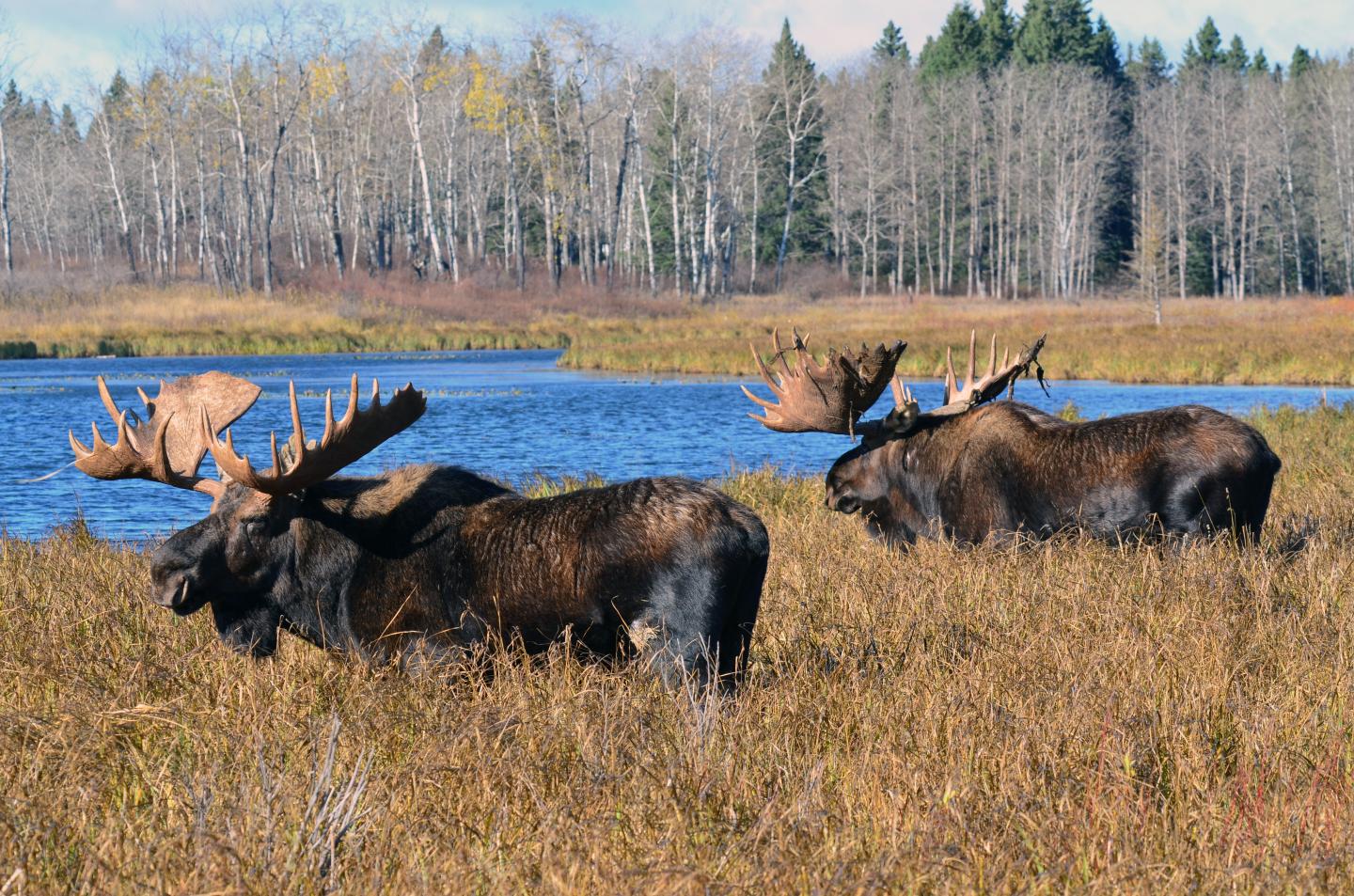
IMAGE

Credit: Vince Crichton

EDMONTON (Monday, April 10, 2017)–Ecologists in the University of Alberta's Department of Biological Sciences have developed an app to improve population modeling for moose, asking hunters record the number of moose they see while hunting in Alberta.

Population modeling for big game, such as moose, is extremely difficult but critically important for understanding the status of moose in Alberta and developing conservation strategies. Traditionally, biologists have used helicopters to track moose populations, a method both expensive and dangerous for researchers.

Inspired by similar practices in Norway and Sweden, Mark Boyce, UAlberta professor and Alberta Conservation Association endowed chair in fisheries and wildlife, came up with the idea of a smartphone app. Simple and easy to use, the app provides invaluable information about moose in Alberta engaging wildlife aficionados who are already in the field.

"At the end of every day, your phone will emit the sound of a cow moose in heat to remind you to enter data," he explains. "The interface prompts users to enter how many moose they saw and the number of hours they were hunting that day."

Having cell phone service isn't necessary–a critical factor for analyzing remote populations of moose, typically deep in Alberta's forests. "The information is stored on your phone until you have access to cell service," says Boyce.

Developed by a second-year undergraduate student in the U of A's Department of Computing Sciences, the app has been disseminated to hunters through the Alberta Fish and Wildlife Division of the Ministry of Environment and Parks since 2012.

"They simply contact everyone who drew a moose tag and invited them to participate in the project," explains Boyce. " Hunters specify their Wildlife Identification Number as well as the Wildlife Management Unit they're in.

The app received nearly 14,000 submissions in 2016, up from 3,000 in 2012.

The Alberta Conservation Association (ACA) has now taken over management of the app and accompanying data, Boyce explains.

"As an ongoing project managed by the ACA, the app can be used for modeling, monitoring, and managing moose populations across the province," he says. "This allows us to detect and understand the impact of changes in harvest regulations, disease outbreaks, territory shifts, and potentially even climate change."

Moose Survey is available free of charge for both iPhone and Android users on the Moose Hunter Survey website.

###

The University of Alberta Faculty of Science is a research and teaching powerhouse dedicated to shaping the future by pushing the boundaries of knowledge in the classroom, laboratory, and field. Through exceptional teaching, learning, and research experiences, we competitively position our students, staff, and faculty for current and future success.

Media Contact

Katie Willis
[email protected]
780-248-1215
@ualberta

http://www.ualberta.ca

############

Story Source: Materials provided by Scienmag

Share12Tweet8Share2ShareShareShare2

Related Posts

Boosting Continuous CO2 Capture with Thermal pH Control

Boosting Continuous CO2 Capture with Thermal pH Control

December 11, 2025

Lactate Links Mesangial Cells to T Cell Differentiation in Lupus

December 11, 2025

Global Shift in Pest Management Boosts Agriculture

December 11, 2025

Local Field Potentials Guide Parkinson’s DBS Programming

December 11, 2025
Please login to join discussion

POPULAR NEWS

  • New Research Unveils the Pathway for CEOs to Achieve Social Media Stardom

    New Research Unveils the Pathway for CEOs to Achieve Social Media Stardom

    204 shares
    Share 82 Tweet 51
  • Scientists Uncover Chameleon’s Telephone-Cord-Like Optic Nerves, A Feature Missed by Aristotle and Newton

    121 shares
    Share 48 Tweet 30
  • Neurological Impacts of COVID and MIS-C in Children

    108 shares
    Share 43 Tweet 27
  • Nurses’ Views on Online Learning: Effects on Performance

    69 shares
    Share 28 Tweet 17

About

We bring you the latest biotechnology news from best research centers and universities around the world. Check our website.

Follow us

Recent News

Boosting Continuous CO2 Capture with Thermal pH Control

Lactate Links Mesangial Cells to T Cell Differentiation in Lupus

Global Shift in Pest Management Boosts Agriculture

Subscribe to Blog via Email

Enter your email address to subscribe to this blog and receive notifications of new posts by email.

Join 69 other subscribers
  • Contact Us

Bioengineer.org © Copyright 2023 All Rights Reserved.

Welcome Back!

Login to your account below

Forgotten Password?

Retrieve your password

Please enter your username or email address to reset your password.

Log In
No Result
View All Result
  • Homepages
    • Home Page 1
    • Home Page 2
  • News
  • National
  • Business
  • Health
  • Lifestyle
  • Science

Bioengineer.org © Copyright 2023 All Rights Reserved.