• HOME
  • NEWS
  • EXPLORE
    • CAREER
      • Companies
      • Jobs
    • EVENTS
    • iGEM
      • News
      • Team
    • PHOTOS
    • VIDEO
    • WIKI
  • BLOG
  • COMMUNITY
    • FACEBOOK
    • INSTAGRAM
    • TWITTER
Saturday, February 7, 2026
BIOENGINEER.ORG
No Result
View All Result
  • Login
  • HOME
  • NEWS
  • EXPLORE
    • CAREER
      • Companies
      • Jobs
        • Lecturer
        • PhD Studentship
        • Postdoc
        • Research Assistant
    • EVENTS
    • iGEM
      • News
      • Team
    • PHOTOS
    • VIDEO
    • WIKI
  • BLOG
  • COMMUNITY
    • FACEBOOK
    • INSTAGRAM
    • TWITTER
  • HOME
  • NEWS
  • EXPLORE
    • CAREER
      • Companies
      • Jobs
        • Lecturer
        • PhD Studentship
        • Postdoc
        • Research Assistant
    • EVENTS
    • iGEM
      • News
      • Team
    • PHOTOS
    • VIDEO
    • WIKI
  • BLOG
  • COMMUNITY
    • FACEBOOK
    • INSTAGRAM
    • TWITTER
No Result
View All Result
Bioengineer.org
No Result
View All Result
Home NEWS Science News Health

Moongoose females compete over reproduction

Bioengineer by Bioengineer
December 13, 2019
in Health
Reading Time: 2 mins read
0
IMAGE
Share on FacebookShare on TwitterShare on LinkedinShare on RedditShare on Telegram

IMAGE

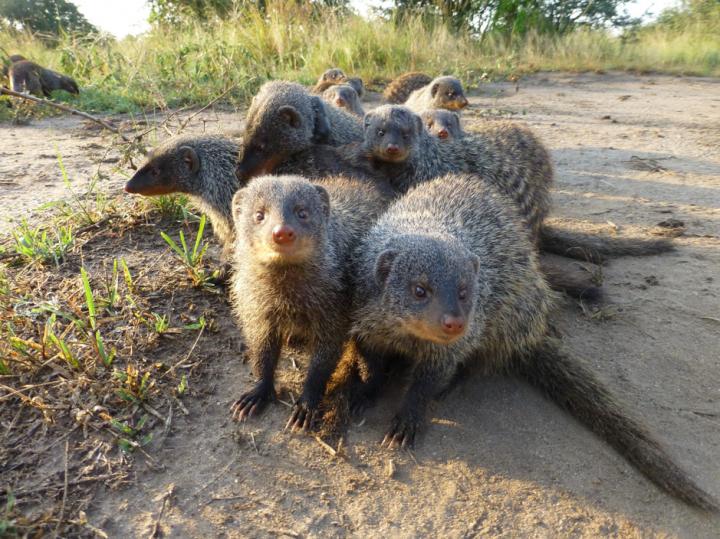
Credit: Emma Vitikainen


A new study on wild banded mongooses reveals that females may use spontaneous abortion to cope with reproductive competition, and to save their energy for future breeding attempts in better conditions.

Researchers at the University of Exeter, UK, followed a population of wild banded mongooses (Mungos mungo) in western Uganda for 15 years, using ultrasound imaging to track which females became pregnant and which carried to full term. They discovered that there were more abortions during the dry season when food was scarce, and also when more females were competing over reproduction in the same group. Individual females were less likely to carry to term if they were young, in poor condition, or carrying smaller fetuses.

“Reproduction takes a lot of energy, and for a female whose offspring may have slim chances at survival, it makes sense to delay that investment until times are better. Spontaneous abortion may be an adaptive strategy in this species because it enables females to save energy for the next breeding attempt,” says researcher, and senior author of the study, Emma Vitikainen from the University of Helsinki.

Banded mongooses are cooperative breeders that live in family groups where several females give birth at the same time to a litter that is jointly cared for by all the group members. Underneath this seemingly harmonious surface, co-breeding females compete over whose offspring do best. Pups that are born bigger have more help from their group members, grow faster and outcompete their littermates.

This study revealed that females adjust their own investment in response to the competition, and that females whose offspring would be more likely to lose out are more likely to cut their losses by aborting their fetuses mid-pregnancy. Banded mongooses also curb competition by evicting younger females. To focus on spontaneous pregnancy loss the researchers only looked at breeding events where no violent eviction events occurred.

“Female competition over reproduction is easily overlooked,” explains lead author Emma Inzani from the University of Exeter, UK. “Males fight with horns and antlers over access to females, whereas female competition can be much more subtle. Our study shows that even in the absence of overt aggression, females adjust their reproductive decisions in response to competition from other females. ”

All research was done under ethical permits from University of Exeter and Uganda Wildlife Authority and study methods caused no harm to pregnant mongooses.

###

Media Contact
Emma Vitikainen
[email protected]
358-443-645-070

Related Journal Article

http://dx.doi.org/10.1098/rsbl.2019.0529

Tags: BiologyDevelopmental/Reproductive Biology
Share12Tweet8Share2ShareShareShare2

Related Posts

Digital Health Perspectives from Baltic Sea Experts

February 7, 2026

Exploring Decision-Making in Dementia Caregivers’ Mobility

February 7, 2026

Succinate Receptor 1 Limits Blood Cell Formation, Leukemia

February 7, 2026

Palmitoylation of Tfr1 Drives Platelet Ferroptosis and Exacerbates Liver Damage in Heat Stroke

February 7, 2026
Please login to join discussion

POPULAR NEWS

  • Robotic Ureteral Reconstruction: A Novel Approach

    Robotic Ureteral Reconstruction: A Novel Approach

    82 shares
    Share 33 Tweet 21
  • Digital Privacy: Health Data Control in Incarceration

    63 shares
    Share 25 Tweet 16
  • Study Reveals Lipid Accumulation in ME/CFS Cells

    57 shares
    Share 23 Tweet 14
  • Breakthrough in RNA Research Accelerates Medical Innovations Timeline

    53 shares
    Share 21 Tweet 13

About

We bring you the latest biotechnology news from best research centers and universities around the world. Check our website.

Follow us

Recent News

Digital Health Perspectives from Baltic Sea Experts

Florida Cane Toad: Complex Spread and Selective Evolution

Exploring Decision-Making in Dementia Caregivers’ Mobility

Subscribe to Blog via Email

Enter your email address to subscribe to this blog and receive notifications of new posts by email.

Join 73 other subscribers
  • Contact Us

Bioengineer.org © Copyright 2023 All Rights Reserved.

Welcome Back!

Login to your account below

Forgotten Password?

Retrieve your password

Please enter your username or email address to reset your password.

Log In
No Result
View All Result
  • Homepages
    • Home Page 1
    • Home Page 2
  • News
  • National
  • Business
  • Health
  • Lifestyle
  • Science

Bioengineer.org © Copyright 2023 All Rights Reserved.