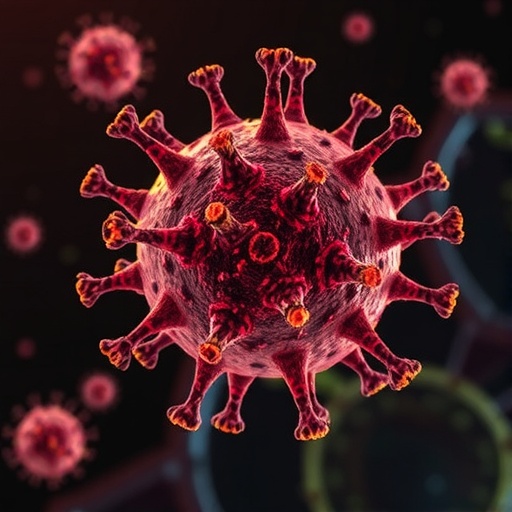
In a groundbreaking new study published in Cell Death Discovery, researchers have unveiled a sophisticated mechanism by which the monkeypox virus (MPXV) subverts host cellular defenses to enhance its survival and replication. The team, led by Refolo, G., Mija, C., and Ciccosanti, F., reveals that the virus strategically modulates the expression of a key cellular regulator, Rubicon, to suppress autophagy—a vital process that typically assists cells in degrading and recycling intracellular pathogens and damaged organelles. This novel insight not only broadens our understanding of MPXV pathogenesis but also highlights new potential therapeutic avenues to combat this resurging zoonotic threat.
Autophagy is an essential cellular homeostatic mechanism that involves the sequestration of cytoplasmic components into autophagosomes, which then fuse with lysosomes for degradation. This process is critical in the immune response against viral infections, as it can target and destroy invading viral particles and facilitate antigen presentation to the immune system. However, many viruses have evolved mechanisms to evade or manipulate autophagy to their advantage, and MPXV appears to be a master at this subversion.
The study delves into the molecular intricacies of how MPXV influences autophagy. Rubicon, an intracellular protein known for negatively regulating autophagy by inhibiting the fusion of autophagosomes with lysosomes, emerges as a linchpin in this virus-host interplay. By upregulating Rubicon expression, the monkeypox virus effectively stalls the maturation of autophagosomes, thereby preventing the degradation of viral particles within host cells. This blockade grants the virus a protected intracellular niche for replication and assembly.
Employing a combination of molecular biology techniques—such as qRT-PCR, Western blotting, and fluorescence microscopy—the researchers meticulously quantified Rubicon levels and monitored autophagic flux in infected cells. Their observations demonstrated a consistent increase in Rubicon expression upon monkeypox virus infection, concomitant with a marked accumulation of undegraded autophagosomes. This imbalance in autophagic machinery suggests deliberate viral interference in host cell pathways rather than collateral damage.
Further mechanistic investigations uncovered that the viral proteins interact with specific signaling cascades responsible for Rubicon regulation. The virus modulates transcription factors and post-translational modifications that stabilize Rubicon protein levels, thus tipping the balance toward autophagy inhibition. Intriguingly, when Rubicon expression was silenced using RNA interference, the infected cells exhibited restored autophagic activity and a significant reduction in viral replication, validating the causative role of Rubicon modulation in viral propagation.
These findings carry profound implications for our comprehension of monkeypox virus biology and underscore autophagy as a pivotal battleground in viral infection. Unlike its close relative, the smallpox virus, which has been eradicated, monkeypox has recently reemerged as a public health concern due to zoonotic spillovers and human-to-human transmission, necessitating urgent research into host-pathogen dynamics.
The study also offers a valuable framework for potential targeted interventions. By designing therapeutics that inhibit Rubicon function or mimic autophagic activation, it may be possible to restore the host’s natural capacity to clear the virus. Small molecule inhibitors aimed at Rubicon or its regulatory pathways could effectively dismantle the viral shield, thereby enhancing immune clearance and improving clinical outcomes.
Moreover, the detailed molecular characterization of the virus’s manipulation of autophagy opens doors to exploring similar mechanisms in related poxviruses. Comparative analyses could reveal conserved strategies leveraged by this viral family, informing broad-spectrum antiviral drug development. Additionally, given the centrality of autophagy in numerous cellular processes, care must be taken to ensure that manipulation of this pathway for therapeutic purposes does not inadvertently compromise cellular homeostasis.
This research also sheds light on the nuanced interplay between viral evasion strategies and host defense systems. Autophagy, traditionally studied in the context of nutrient deprivation and organelle quality control, is increasingly recognized as a critical element in immunity. The monkeypox virus’s ability to subvert this pathway exemplifies the evolutionary arms race at the cellular level, where host cells continually develop mechanisms to detect and dismantle invaders, while viruses evolve countermeasures to neutralize these defenses.
The implications extend beyond virology, as insights gained from this study might inform therapeutic strategies for other conditions where autophagy modulation is relevant, such as neurodegenerative diseases, cancer, and inflammatory disorders. Understanding how Rubicon can be finely tuned provides a molecular handle on a key regulator of autophagy that could potentially be harnessed in diverse biomedical applications.
Importantly, these revelations come at a time when monkeypox virus infections have garnered global attention following outbreaks in previously non-endemic regions. The public health response benefits greatly from mechanistic studies such as this, as they provide a foundation for rational drug design and vaccine development efforts. Identifying viral factors and host pathways critical for infection paves the way for more effective surveillance, diagnostic, and therapeutic tools.
The elegance of the virus’s strategy in modulating Rubicon offers a stark reminder of the sophistication viruses have attained to persist within host organisms. The precise orchestration by MPXV to tilt cellular autophagy in its favor without triggering overt cytotoxicity highlights a delicate balance between viral survival tactics and host viability. Deciphering this balance is essential for developing interventions that can disrupt viral replication without harming the host.
In conclusion, the study by Refolo and colleagues marks an important milestone in monkeypox virus research. By elucidating the molecular underpinnings of autophagy suppression via Rubicon modulation, it provides a critical piece of the puzzle in understanding MPXV pathogenicity. Future endeavors should focus on exploring the translational potential of these findings to craft novel antiviral therapies and enhance preparedness for outbreaks of monkeypox and related poxviruses.
The journey from molecular discovery to clinical application is complex, but this research delivers a compelling target and a mechanistic rationale to fuel the next generation of antiviral strategies. As monkeypox continues to pose emerging threats worldwide, such cutting-edge insights are indispensable in informing science-driven public health responses and ensuring better outcomes for affected populations.
Subject of Research: The monkeypox virus’s suppression of autophagy through modulation of Rubicon expression.
Article Title: The monkeypox virus suppresses autophagy by modulating Rubicon expression.
Article References:
Refolo, G., Mija, C., Ciccosanti, F. et al. The monkeypox virus suppresses autophagy by modulating Rubicon expression. Cell Death Discov. (2025). https://doi.org/10.1038/s41420-025-02920-z
Image Credits: AI Generated
DOI: https://doi.org/10.1038/s41420-025-02920-z
Tags: autophagy and intracellular pathogensautophagy suppression mechanismscellular homeostasis and viral infectionsintracellular defense evasion by virusesmolecular mechanisms of viral manipulationmonkeypox virus pathogenesisresearch on emerging viral threatsrole of autophagy in immune responseRubicon modulation in virus replicationRubicon’s role in autophagy regulationtherapeutic targets for monkeypoxzoonotic diseases and public health