• HOME
  • NEWS
  • EXPLORE
    • CAREER
      • Companies
      • Jobs
    • EVENTS
    • iGEM
      • News
      • Team
    • PHOTOS
    • VIDEO
    • WIKI
  • BLOG
  • COMMUNITY
    • FACEBOOK
    • INSTAGRAM
    • TWITTER
Thursday, April 2, 2026
BIOENGINEER.ORG
No Result
View All Result
  • Login
  • HOME
  • NEWS
  • EXPLORE
    • CAREER
      • Companies
      • Jobs
        • Lecturer
        • PhD Studentship
        • Postdoc
        • Research Assistant
    • EVENTS
    • iGEM
      • News
      • Team
    • PHOTOS
    • VIDEO
    • WIKI
  • BLOG
  • COMMUNITY
    • FACEBOOK
    • INSTAGRAM
    • TWITTER
  • HOME
  • NEWS
  • EXPLORE
    • CAREER
      • Companies
      • Jobs
        • Lecturer
        • PhD Studentship
        • Postdoc
        • Research Assistant
    • EVENTS
    • iGEM
      • News
      • Team
    • PHOTOS
    • VIDEO
    • WIKI
  • BLOG
  • COMMUNITY
    • FACEBOOK
    • INSTAGRAM
    • TWITTER
No Result
View All Result
Bioengineer.org
No Result
View All Result
Home NEWS Science News Biology

Mongolian microfossils point to the rise of animals on Earth

Bioengineer by Bioengineer
October 23, 2017
in Biology
Reading Time: 2 mins read
0
Share on FacebookShare on TwitterShare on LinkedinShare on RedditShare on Telegram
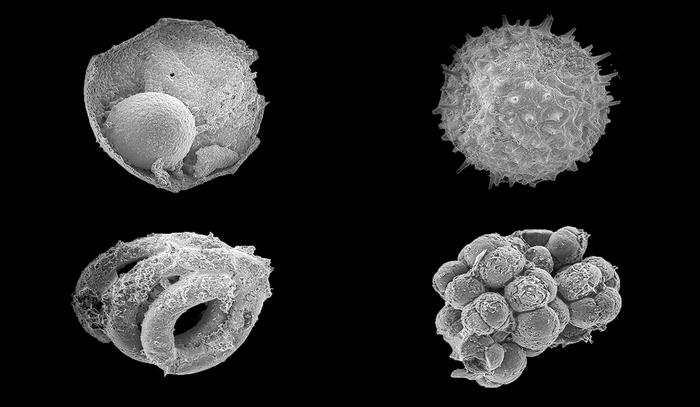
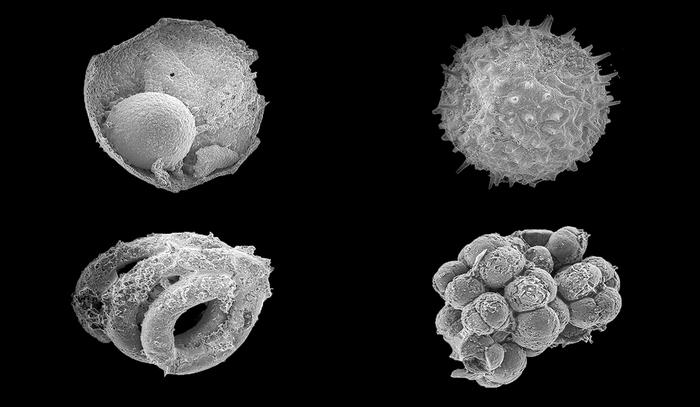
IMAGE

Credit: Yale University

New Haven, Conn. – A Yale-led research team has discovered a cache of embryo-like microfossils in northern Mongolia that may shed light on questions about the long-ago shift from microbes to animals on Earth.

Called the Khesen Formation, the site is one of the most significant for early Earth fossils since the discovery of the Doushantuo Formation in southern China nearly 20 years ago. The Dousantuo Formation is 600 million years old; the Khesen Formation is younger, at about 540 million years old.

"Understanding how and when animals evolved has proved very difficult for paleontologists. The discovery of an exceptionally well-preserved fossil assemblage with animal embryo-like fossils gives us a new window onto a critical transition in life's history," said Yale graduate student Ross Anderson, first author of a study in the journal Geology.

The new cache of fossils represents eight genera and about 17 species, comprising tens to hundreds of individuals. Many of them are spiny microfossils called acritarchs, which are roughly 100 microns in size — about one-third the thickness of a fingernail.

The Khesen Formation is located to the west of Lake Khuvsgul in northern Mongolia. "This site was of particular interest to us because it had the right type of rocks — phosphorites — that had preserved similar organisms in China," Anderson said.

The discovery may help scientists confirm a much earlier date for the existence of Earth ecosystems with animals, rather than just microbes. For two decades, researchers have debated the findings at the Doushantuo Formation, with no resolution. If confirmed as animals, these microfossils would represent the oldest animals to be preserved in the geological record.

The other authors of the study are Derek Briggs, Yale's G. Evelyn Hutchinson Professor of Geology and Geophysics and curator at the Yale Peabody Museum of Natural History; Sean McMahon, a postdoctoral fellow in the Briggs lab; Francis Macdonald of Harvard; and David Jones of Amherst College.

The researchers said the Khesen Formation should provide scientists with additional information for years to come.

"This study is only the tip of the iceberg, as most of the fossils derive from only two samples," Anderson said. Since the original discovery, the Yale team has worked with Harvard and the Mongolian University of Science and Technology to sample several additional sites within the formation.

###

Media Contact

Jim Shelton
[email protected]
203-432-3881
@yale

http://www.yale.edu

Share12Tweet8Share2ShareShareShare2

Related Posts

Newly Discovered Chronic Pain Circuit Unveils Potential Avenues for Innovative Treatments

Newly Discovered Chronic Pain Circuit Unveils Potential Avenues for Innovative Treatments

April 2, 2026
DNA Transforms from Blueprint to Active Field Agent

DNA Transforms from Blueprint to Active Field Agent

April 2, 2026

UBC Okanagan Study Reveals How Trees Visually Signal Their Spring Rehydration

April 1, 2026

Rising Temperatures from Climate Change Associated with Reduced Newborn Size

April 1, 2026
Please login to join discussion

POPULAR NEWS

  • blank

    Revolutionary AI Model Enhances Precision in Detecting Food Contamination

    96 shares
    Share 38 Tweet 24
  • Imagine a Social Media Feed That Challenges Your Views Instead of Reinforcing Them

    1007 shares
    Share 398 Tweet 249
  • Promising Outcomes from First Clinical Trials of Gene Regulation in Epilepsy

    51 shares
    Share 20 Tweet 13
  • Popular Anti-Aging Compound Linked to Damage in Corpus Callosum, Study Finds

    44 shares
    Share 18 Tweet 11

About

We bring you the latest biotechnology news from best research centers and universities around the world. Check our website.

Follow us

Recent News

New Research Reveals Unexpected Findings About Urban Peruvians

Chemical Exposome Patterns Vary by Urbanization in Europe

Quantum Circuits Constrained by Noise in Today’s Technology

Subscribe to Blog via Email

Enter your email address to subscribe to this blog and receive notifications of new posts by email.

Join 78 other subscribers
  • Contact Us

Bioengineer.org © Copyright 2023 All Rights Reserved.

Welcome Back!

Login to your account below

Forgotten Password?

Retrieve your password

Please enter your username or email address to reset your password.

Log In
No Result
View All Result
  • Homepages
    • Home Page 1
    • Home Page 2
  • News
  • National
  • Business
  • Health
  • Lifestyle
  • Science

Bioengineer.org © Copyright 2023 All Rights Reserved.