• HOME
  • NEWS
  • EXPLORE
    • CAREER
      • Companies
      • Jobs
    • EVENTS
    • iGEM
      • News
      • Team
    • PHOTOS
    • VIDEO
    • WIKI
  • BLOG
  • COMMUNITY
    • FACEBOOK
    • INSTAGRAM
    • TWITTER
Saturday, February 7, 2026
BIOENGINEER.ORG
No Result
View All Result
  • Login
  • HOME
  • NEWS
  • EXPLORE
    • CAREER
      • Companies
      • Jobs
        • Lecturer
        • PhD Studentship
        • Postdoc
        • Research Assistant
    • EVENTS
    • iGEM
      • News
      • Team
    • PHOTOS
    • VIDEO
    • WIKI
  • BLOG
  • COMMUNITY
    • FACEBOOK
    • INSTAGRAM
    • TWITTER
  • HOME
  • NEWS
  • EXPLORE
    • CAREER
      • Companies
      • Jobs
        • Lecturer
        • PhD Studentship
        • Postdoc
        • Research Assistant
    • EVENTS
    • iGEM
      • News
      • Team
    • PHOTOS
    • VIDEO
    • WIKI
  • BLOG
  • COMMUNITY
    • FACEBOOK
    • INSTAGRAM
    • TWITTER
No Result
View All Result
Bioengineer.org
No Result
View All Result
Home NEWS Science News Health

Monash discovery uncovers clue to disarm gonorrhea superbug

Bioengineer by Bioengineer
March 30, 2018
in Health
Reading Time: 2 mins read
0
Share on FacebookShare on TwitterShare on LinkedinShare on RedditShare on Telegram
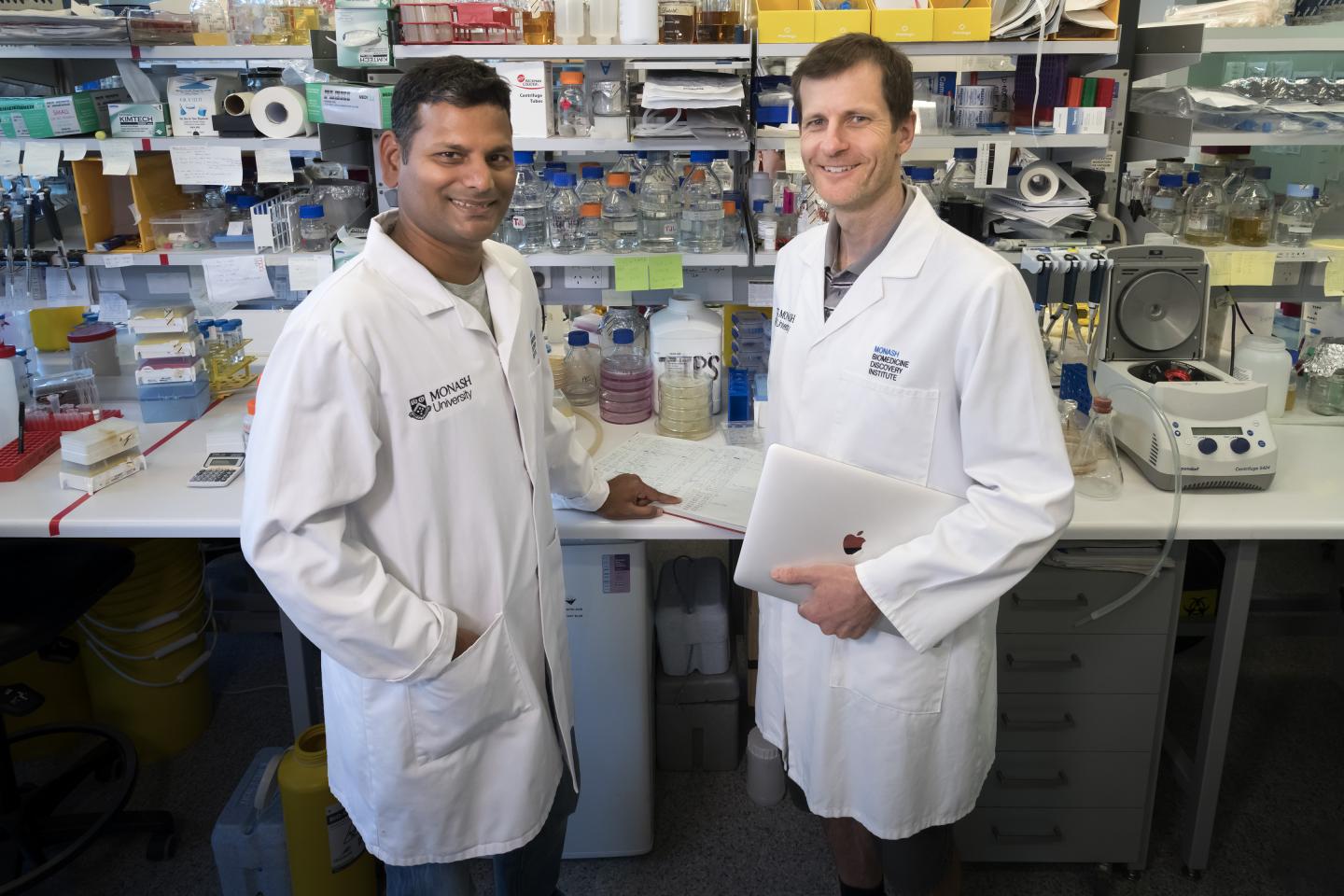
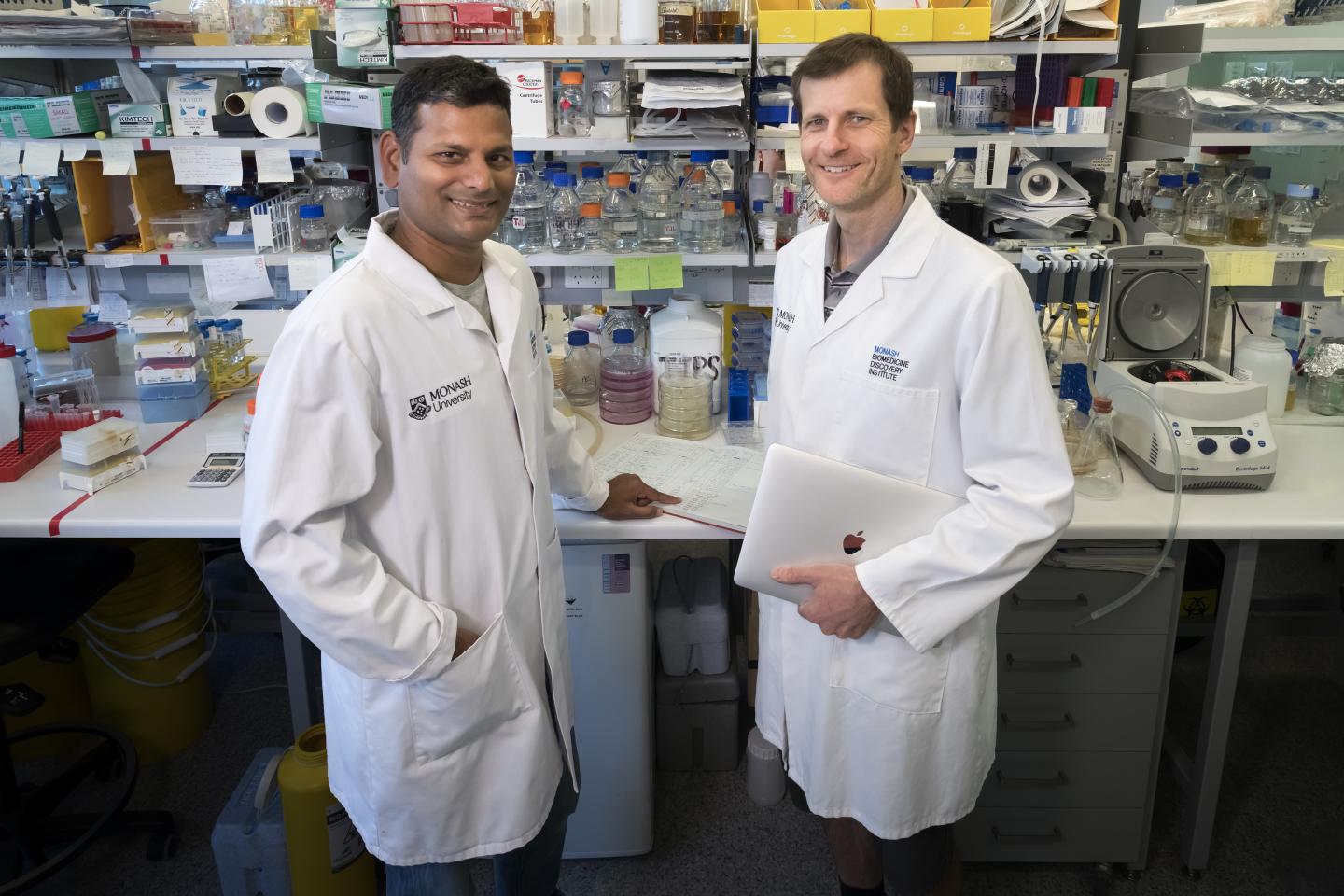
IMAGE

Credit: Monash University

Every year, more than 100 million people worldwide develop the sexually transmitted disease gonorrhoea, with health consequences such as infertility, transmission of the disease to newborn babies, and increased risk of HIV infections. There has been a 63 per cent rise in gonorrhoea in Australia over the past five years.

Gonorrhoea is caused by bacteria which can rapidly develop resistance to all known antibiotics – commonly called 'superbugs'. Gonorrhoea superbugs have now been detected in every Australian state and territory and are increasingly difficult to treat in the clinic.

Monash University researchers have discovered a way the gonorrhoea bacteria cleverly evade the immune system – opening up the way for therapies that prevent this process, allowing the body's natural defences to kill the bug.

Published today in PLOS Pathogens, Dr Thomas Naderer and Dr Pankaj Deo and their team from the Monash Biomedicine Discovery Institute, have discovered how the gonorrhoea-causing superbug (which is very small) creates even smaller packages of bacterial membrane blebs, termed vesicles, which attack immune cells.

Using cutting-edge super-resolution microscopy, which is able to see, and film, the most minute of events – the researchers found that these membrane vesicles interacted with the cells in the human immune system called 'macrophages', triggering these to die in an orchestrated suicide process. Macrophages are the cells within the immune system that ordinarily kill foreign invaders like bacteria and viruses, so without them the gonorrhoea bacteria can flourish.

Dr Naderer said that this new understanding of how the gonorrhoea bacteria interact and cause the death of immune system cells "may lead to strategies to combat gonorrhoea infection and its symptoms".

The research may also provide information as to how other bacteria evade the immune system and be unaffected by antibiotics. The 2016 Review on Antimicrobial Resistance Final Report and Recommendations states that antibiotic resistant infection will kill an extra 10 million people a year worldwide – more than currently die from cancer – by 2050 unless action is taken.

Read the full paper in PLOS Pathogens titled 'Outer membrane vesicles from Neisseria gonorrhoeae target PorB to mitochondria and induce apoptosis.'

###

About the Monash Biomedicine Discovery Institute

Committed to making the discoveries that will relieve the future burden of disease, the newly established Monash Biomedicine Discovery Institute at Monash University brings together more than 120 internationally-renowned research teams. Our researchers are supported by world-class technology and infrastructure, and partner with industry, clinicians and researchers internationally to enhance lives through discovery.

Media enquiries:
Tania Ewing
0408 378 422
[email protected]

Media Contact

Tania Ewing
[email protected]
61-408-378-422
@MonashUni

http://www.monash.edu.au

Related Journal Article

http://dx.doi.org/10.1371/1006945

Share12Tweet8Share2ShareShareShare2

Related Posts

Digital Health Perspectives from Baltic Sea Experts

February 7, 2026

Exploring Decision-Making in Dementia Caregivers’ Mobility

February 7, 2026

Succinate Receptor 1 Limits Blood Cell Formation, Leukemia

February 7, 2026

Palmitoylation of Tfr1 Drives Platelet Ferroptosis and Exacerbates Liver Damage in Heat Stroke

February 7, 2026
Please login to join discussion

POPULAR NEWS

  • Robotic Ureteral Reconstruction: A Novel Approach

    Robotic Ureteral Reconstruction: A Novel Approach

    82 shares
    Share 33 Tweet 21
  • Digital Privacy: Health Data Control in Incarceration

    63 shares
    Share 25 Tweet 16
  • Study Reveals Lipid Accumulation in ME/CFS Cells

    57 shares
    Share 23 Tweet 14
  • Breakthrough in RNA Research Accelerates Medical Innovations Timeline

    53 shares
    Share 21 Tweet 13

About

We bring you the latest biotechnology news from best research centers and universities around the world. Check our website.

Follow us

Recent News

Digital Health Perspectives from Baltic Sea Experts

Florida Cane Toad: Complex Spread and Selective Evolution

Exploring Decision-Making in Dementia Caregivers’ Mobility

Subscribe to Blog via Email

Enter your email address to subscribe to this blog and receive notifications of new posts by email.

Join 73 other subscribers
  • Contact Us

Bioengineer.org © Copyright 2023 All Rights Reserved.

Welcome Back!

Login to your account below

Forgotten Password?

Retrieve your password

Please enter your username or email address to reset your password.

Log In
No Result
View All Result
  • Homepages
    • Home Page 1
    • Home Page 2
  • News
  • National
  • Business
  • Health
  • Lifestyle
  • Science

Bioengineer.org © Copyright 2023 All Rights Reserved.