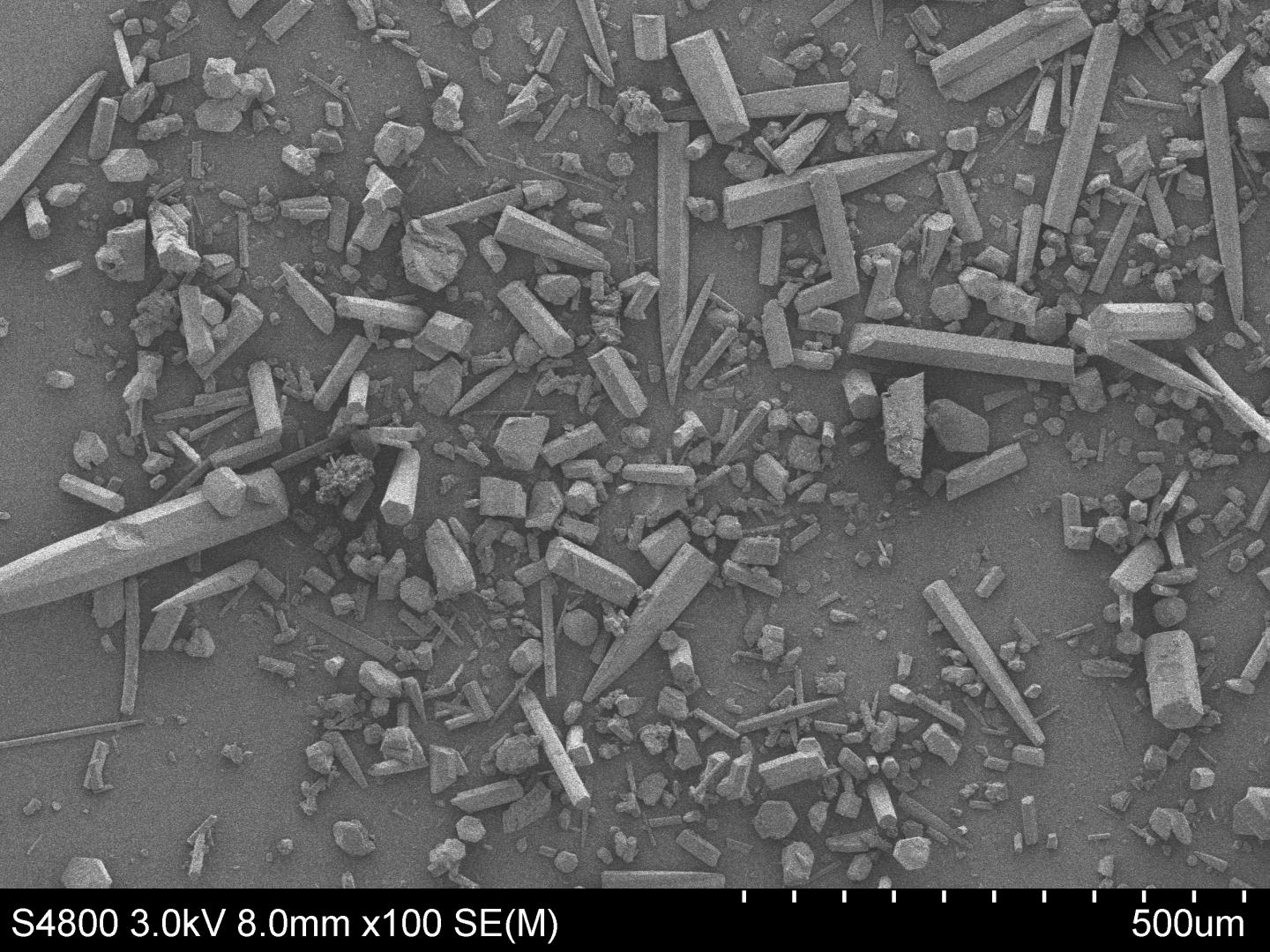
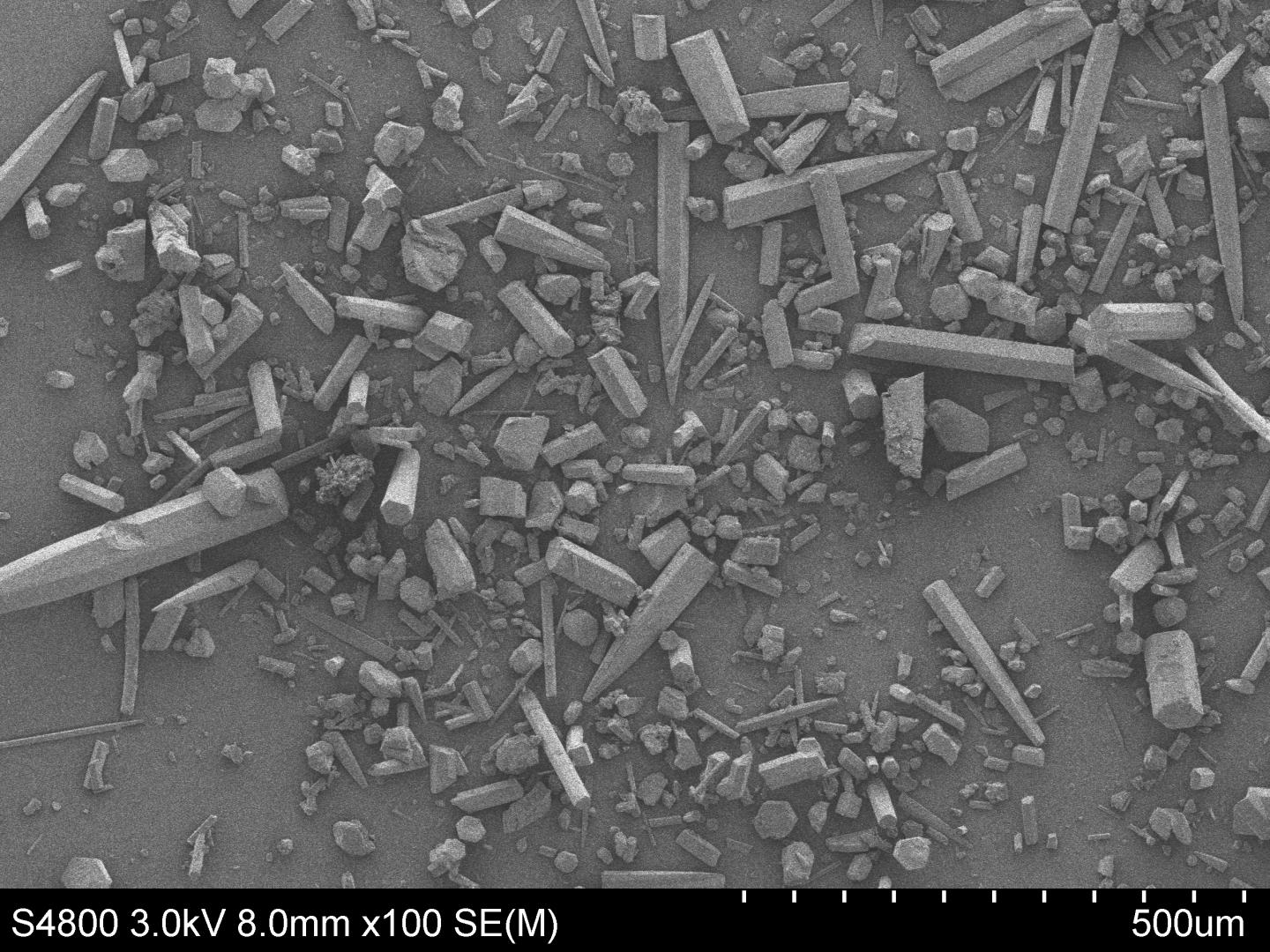
Credit: University of Southampton
Scientists at the University of Southampton working with colleagues at the University of Liverpool have developed a new method which has the potential to revolutionise the way we search for, design and produce new materials.
The researchers used sophisticated computer modelling to map how molecules assemble and crystallise to form new materials – each molecule leading to a myriad of possible structures, each with different properties and possible applications.
This new approach, published in the journal Nature, could accelerate the discovery of materials for key applications in energy, pollution control, pharmaceuticals and a host of other fields.
"When an engineer builds a dam or an aeroplane, the structure is first designed using computers. This is extremely difficult at the size scale of molecules or atoms, which often assemble in non-intuitive ways," explains Graeme Day, a Professor of Chemical Modelling at the University of Southampton. "It is difficult to design at the atomic scale from scratch and the failure rate in new materials discovery is high. As chemists and physicists trying to discover new materials, we often feel like explorers without reliable maps."
Professor Andrew Cooper, Director of the Materials Innovation Factory at the University of Liverpool, continues: "Each molecule has an associated energy surface, which you can think of as being like the map of a desert island. Some islands contain treasure in the form of useful new materials, but most don't. There is an almost limitless number of molecules that we could, in principle, make – this new method tells us which islands to search and what to look for."
Unlike engineers, chemists are not truly free to make any structure that they want: they are limited to discovering structures that correspond to the optimised positions of atoms–known as local minima–on a highly complex energy surface. This surface can only be fully represented in many dimensions, so cannot be easily conceptualised.
However, the UK team has combined methods that predict how molecules will form crystal structures, with computer simulations that predict the properties of these structures. The result is relatively simple colour-coded maps which can be used, by researchers without a computational background, to locate the best materials for specific applications. For example, a researcher trying to create a highly porous material to store a particular gas might use the map to identify the best molecules that optimise this property.
In the simulations highlighted in their paper, the researchers applied this new approach to a series of known and hypothetical molecules, which led to the discovery and synthesis of materials with large methane storage capacities, which has ramifications for natural-gas-powered vehicles. The research also led to the synthesis of the least dense molecular crystal that has ever been created, showing how computational methods can be used to discover unprecedented properties.
###
The project was funded by the European Research Council and the Engineering and Physical Science Research Council (EPSRC). The work was carried out in the UK, but the team included researchers from Spain, China, Poland, Canada and America.
Notes to editors
1) For a copy of the paper Functional materials discovery using energy-structure-function maps (doi:10.1038/nature21419) contact Media Relations.
2) The University of Southampton is a leading UK teaching and research institution with a global reputation for leading-edge research and scholarship across a wide range of subjects in engineering, science, social sciences, health and humanities.
With over 24,000 students, 6500 staff, and an annual turnover in excess of £550m, the University of Southampton is acknowledged as one of the country's top institutions for engineering, computer science and medicine. We combine academic excellence with an innovative and entrepreneurial approach to research, supporting a culture that engages and challenges students and staff in their pursuit of learning.
The University is also home to a number of world-leading research centres including the Institute of Sound and Vibration Research, the Optoelectronics Research Centre, the Institute for Life Sciences, the Web Science Trust and Doctoral training Centre, the Centre for the Developmental Origins of Health and Disease, the Southampton Statistical Sciences Research Institute and is a partner of the National Oceanography Centre at the Southampton waterfront campus. http://www.southampton.ac.uk
3) The University of Liverpool is one of the UK's leading research institutions with an annual turnover of £480 million, including £102 million for research. Liverpool is ranked in the top 1% of higher education institutions worldwide and is a member of the Russell Group. Visit http://www.liv.ac.uk or follow us on twitter at: http://www.twitter.com/livuninews
4) European Research Council
5) Engineering and Physical Science Research Council
For further information contact:
Peter Franklin, Media Relations, University of Southampton, Tel: 023 8059 5457 Email: [email protected]
http://www.soton.ac.uk/mediacentre/
Follow us on twitter: http://twitter.com/unisouthampton
Like us on Facebook: http://www.facebook.com/unisouthampton
Media Contact
Peter Franklin
[email protected]
44-238-059-5457
@unisouthampton
http://www.southampton.ac.uk/
############
Story Source: Materials provided by Scienmag