

• HOME
  • NEWS
  • EXPLORE
    • CAREER
      • Companies
      • Jobs
    • EVENTS
    • iGEM
      • News
      • Team
    • PHOTOS
    • VIDEO
    • WIKI
  • BLOG
  • COMMUNITY
    • FACEBOOK
    • INSTAGRAM
    • TWITTER
Sunday, December 28, 2025
BIOENGINEER.ORG
No Result
View All Result
  • Login
  • HOME
  • NEWS
  • EXPLORE
    • CAREER
      • Companies
      • Jobs
        • Lecturer
        • PhD Studentship
        • Postdoc
        • Research Assistant
    • EVENTS
    • iGEM
      • News
      • Team
    • PHOTOS
    • VIDEO
    • WIKI
  • BLOG
  • COMMUNITY
    • FACEBOOK
    • INSTAGRAM
    • TWITTER
  • HOME
  • NEWS
  • EXPLORE
    • CAREER
      • Companies
      • Jobs
        • Lecturer
        • PhD Studentship
        • Postdoc
        • Research Assistant
    • EVENTS
    • iGEM
      • News
      • Team
    • PHOTOS
    • VIDEO
    • WIKI
  • BLOG
  • COMMUNITY
    • FACEBOOK
    • INSTAGRAM
    • TWITTER
No Result
View All Result
Bioengineer.org
No Result
View All Result
Home NEWS Science News Health

Molecular interactions regulating trans-synaptic signalling and synapse formation

Bioengineer by Bioengineer
November 2, 2020
in Health
Reading Time: 2 mins read
0
IMAGE
Share on FacebookShare on TwitterShare on LinkedinShare on RedditShare on Telegram

DGIST scientists are learning more about the molecular processes involved in the formation of well-communicating nerve fibres.
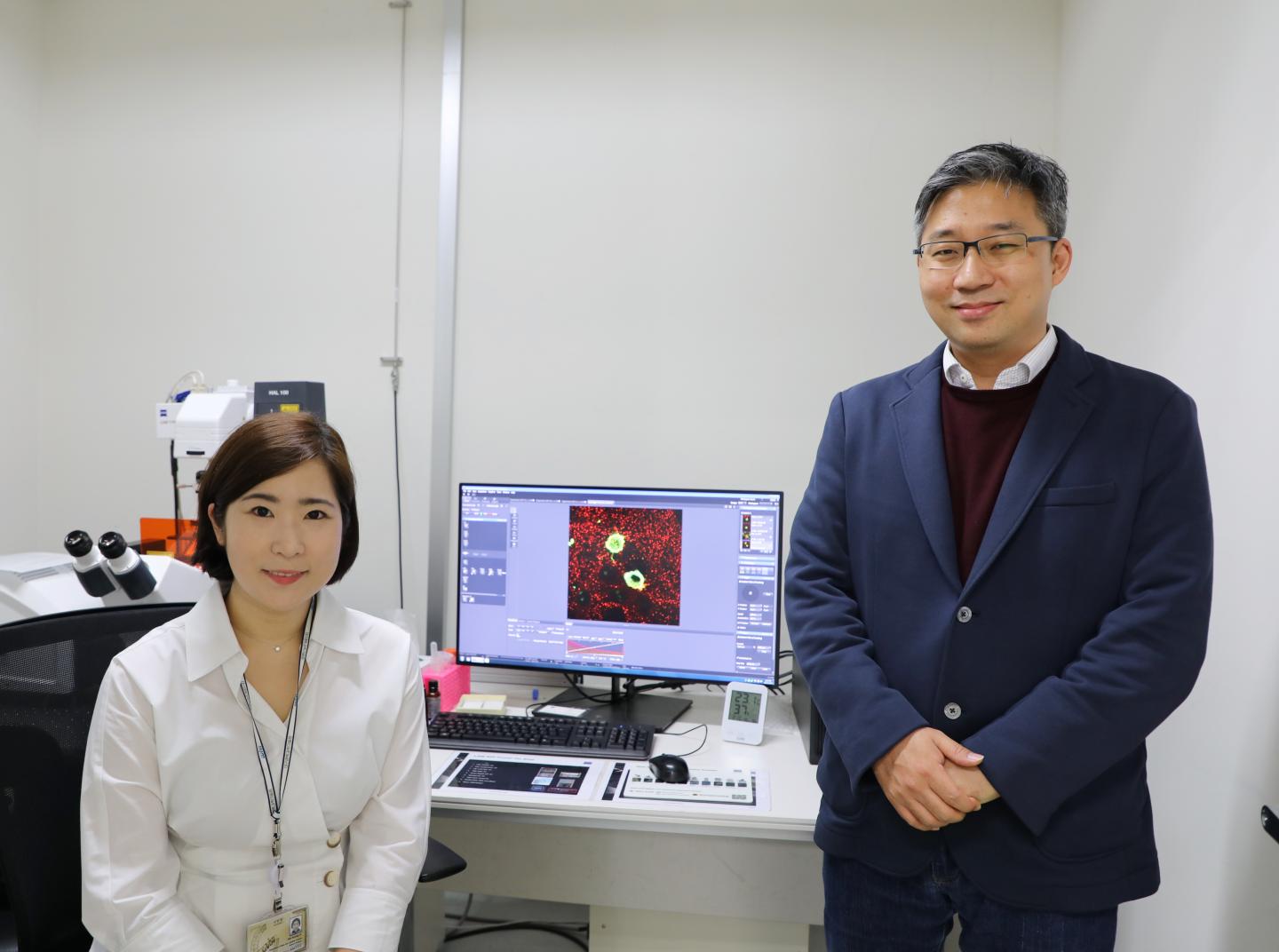
IMAGE

Credit: dgist

Scientists at Korea’s Daegu Gyeongbuk Institute of Science and Technology (DGIST) and colleagues have uncovered some of the complex molecular mechanisms involved in the formation of the brain’s neural circuits. Their findings were published in The Journal of Neuroscience and could be relevant for developing treatments for diseases, such as autism spectrum disorders and schizophrenia.

Synaptogenesis is a complex molecular process that promotes the growth and development of nerve fibre ends so they can recognize and communicate with their appropriate nerve fibre partner via molecules transmitted across specialized junctions, called synapses.

“A comprehensive understanding of synaptogenesis is essential for designing therapeutic approaches against many devastating brain disorders,” says DGIST neuroscientist, Professor Jaewon Ko. “So it’s really crucial to develop fine-tuned molecular manipulations that can target key synapse components in order to understand their roles.”

Professor Ko and his team of scientists specifically looked at two key ‘synaptic adhesion molecules’ involved in synaptogenesis. Neurexins and leukocyte common antigen-related protein tyrosine phosphatases (LAR-RPTPs) are transmembrane proteins that are located on the ‘presynaptic’ sending side of a developing nerve junction. They are known to be involved in the formation and maintenance of synapses. But it has been unclear whether they cooperate with each other and how they interact with other synaptic molecules in regulating synapse organization.

To address these questions, the scientists conducted a series of extensive experiments in rodent nerve cell cultures and then in fruit flies in which Drosophila orthologs of neurexins and LAR-RPTPs were deleted. They observed that two members of LAR-RPTPs (termed PTPσ and PTPδ) are required for neurexins to promote presynaptic differentiation. At the sending end of the developing synapse, neurexins bind to either of the two LAR-RPTPs through a distinct set of molecules depending on whether the synapse will be excitatory or inhibitory; in other words if it will send signals to activate or to turn off its receiving nerve end.

The scientists also found that PTPσ and neurexin directly interact through specific glycans, called heparan sulphates, to direct the formation of the receiving nerve end at excitatory synapses.

“We believe that our findings have significance in terms of proposing a novel molecular model underlying synapse organization, and possibly have implications for understanding neural circuit architecture and brain functions,” says Professor Ko.

The team is now investigating downstream mechanisms underlying interactions of neurexins with LAR-RPTPs in vertebrate neurons, and is working to pinpoint a set of intracellular proteins involved in trans-synaptic signalling in presynaptic neurons. Further studies are essential before these findings can be translated into clinical studies.

###

Media Contact
Kwanghoon Choi
[email protected]

Original Source

https://dgist.ac.kr/en/html/sub06/060202.html

Related Journal Article

http://dx.doi.org/10.1523/JNEUROSCI.1091-20.2020

Tags: BiologyCell BiologyneurobiologyNeurochemistry
Share12Tweet8Share2ShareShareShare2

Related Posts

New Insights on Angiogenesis and Cell Death in Spinal Cord Injury

December 28, 2025

Assessing Surgical Nurses’ AI Literacy and Readiness

December 28, 2025

Link Between Physical Activity and Youth Mental Health

December 28, 2025

LncRNA AC040169.1 Enhances Ovarian Cancer via m6A Regulation

December 28, 2025
Please login to join discussion

POPULAR NEWS

  • Robotic Waist Tether for Research Into Metabolic Cost of Walking

    NSF funds machine-learning research at UNO and UNL to study energy requirements of walking in older adults

    71 shares
    Share 28 Tweet 18
  • Nurses’ Views on Online Learning: Effects on Performance

    70 shares
    Share 28 Tweet 18
  • Exploring Audiology Accessibility in Johannesburg, South Africa

    51 shares
    Share 20 Tweet 13
  • SARS-CoV-2 Subvariants Affect Outcomes in Elderly Hip Fractures

    44 shares
    Share 18 Tweet 11

About

We bring you the latest biotechnology news from best research centers and universities around the world. Check our website.

Follow us

Recent News

Advancements in Road Accident Prediction Models

New Insights on Angiogenesis and Cell Death in Spinal Cord Injury

Assessing Surgical Nurses’ AI Literacy and Readiness

Subscribe to Blog via Email

Enter your email address to subscribe to this blog and receive notifications of new posts by email.

Join 71 other subscribers
  • Contact Us

Bioengineer.org © Copyright 2023 All Rights Reserved.

Welcome Back!

Login to your account below

Forgotten Password?

Retrieve your password

Please enter your username or email address to reset your password.

Log In
No Result
View All Result
  • Homepages
    • Home Page 1
    • Home Page 2
  • News
  • National
  • Business
  • Health
  • Lifestyle
  • Science

Bioengineer.org © Copyright 2023 All Rights Reserved.


