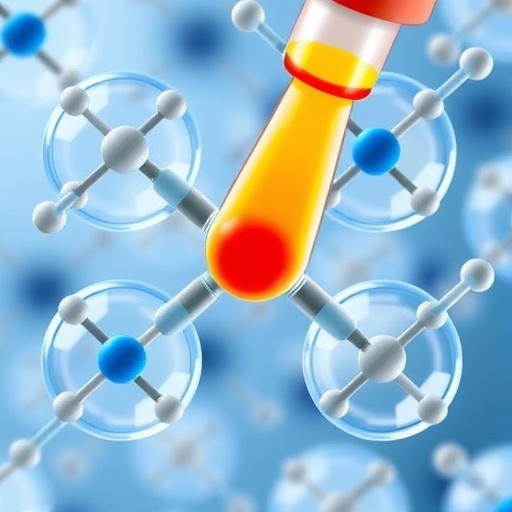
In a groundbreaking advance merging the realms of chemistry and cellular biology, researchers have unveiled a pioneering method to systematically discover molecular glues—small molecules that can direct cellular machinery to selectively degrade disease-causing proteins. This innovation transcends the traditional luck-driven discovery of such compounds, heralding a transformative shift in drug development that promises to tackle previously intractable proteins implicated in severe diseases like leukemia.
Cellular homeostasis depends critically on the controlled degradation of proteins. Cells employ an intricate waste-disposal system to ensure that obsolete or harmful proteins are tagged for destruction and subsequently dismantled by specialized enzymes. Exploiting this natural process, molecular glues function by bridging proteins that do not normally interact, guiding harmful proteins toward degradation pathways. This elegant strategy offers an unprecedented level of selectivity and therapeutic potential, particularly for proteins that evade conventional drug targeting.
Historically, the identification of molecular glues has been serendipitous, limiting efficient exploitation across diverse therapeutic landscapes. Addressing this, a team led by Georg Winter, Scientific Director at the AITHYRA Research Institute and Adjunct Principal Investigator at CeMM in Vienna, alongside Michael Erb from the Scripps Research Institute, developed an innovative high-throughput chemical diversification technique paired with live-cell functional screening. This approach enables the rapid exploration of vast chemical modifications on an initial small molecule scaffold, uncovering variants that effectively reshape protein surfaces to foster new protein-protein interactions.
This methodology involves synthesizing thousands of molecular variants by systematically appending diverse chemical building blocks to a known protein ligand. Each variant subtly alters the ligand’s interface, potentially fostering novel contacts between the target protein and cellular degradation enzymes. Crucially, the screening is conducted in live cells without prior compound purification, using sensitive assays that report real-time degradation of the protein target. This fusion of chemical synthesis and cellular biology allows researchers to pinpoint active compounds with genuine biological efficacy from enormous chemical spaces in a highly efficient manner.
The researchers applied this cutting-edge approach to the leukemia-associated protein ENL, a critical regulator in certain aggressive forms of acute leukemia. Screening thousands of ligand derivatives led to identifying a compound that selectively induces robust degradation of ENL in leukemia cells. Subsequent investigations demonstrated that this compound reprograms the protein’s interaction landscape, promoting recruitment of a ubiquitin ligase complex responsible for tagging ENL with ubiquitin molecules, effectively marking it for destruction by the proteasome.
Fundamental to the activity of these compounds is their cooperative binding mechanism, a hallmark of molecular glues. Rather than indiscriminately binding to both partners, the molecule binds the target protein first, then facilitates a new interface that recruits the enzymatic degradation machinery. This mechanism underpins both the specificity and efficacy of the induced protein degradation, minimizing off-target effects and enhancing therapeutic potential.
The successful targeted degradation of ENL elucidates the enormous promise held by molecular glue technology. By precisely ablating proteins driving leukemia progression, this approach curtails malignant cell growth and opens pathways for new leukemia treatments with potentially fewer side effects compared to current therapies. Moreover, the demonstration that high-throughput ligand diversification and functional screening can yield such potent glues paves the way for broad applications across a spectrum of diseases.
The implications of this work extend far beyond ENL and leukemia. The generalizable workflow combining scalable chemical innovation with phenotype-based cellular screening transforms the paradigm of proximity-inducing drug discovery. Where once the hunt for molecular glues was slow and hit-or-miss, it can now be approached rationally with vast chemical libraries tested directly in biological contexts, accelerating the translation from molecule to medicine.
Georg Winter emphasizes that this breakthrough sets the foundation for a new era in drug design, making it feasible to target proteins, once deemed ‘undruggable,’ with small molecules that enlist the cell’s own degradation machinery for therapeutic benefit. This extends the druggable proteome dramatically, enabling intervention in diseases where pathogenic proteins have historically eluded pharmacological control.
Furthermore, the integration of artificial intelligence and next-generation automated chemistry platforms at institutions like AITHYRA will likely amplify this approach’s efficiency and breadth. The convergence of AI-driven design, robotic synthesis, and live-cell functional assays creates a powerful ecosystem to systematically identify molecular glues tailored to diverse therapeutic targets, accelerating drug discovery timelines significantly.
As molecular glues gain traction in both academic and pharmaceutical sectors, the strategy heralded by this study could revolutionize how diseases such as cancer, neurodegeneration, and viral infections are treated. Through rational, scalable ligand diversification paired with cell-based functional screening, there is newfound optimism that targeted protein degradation can become a mainstay of precision medicine, offering customized therapies with high specificity and minimal side effects.
This landmark study, published in Nature Chemical Biology, underscores the transformative potential of combining high-throughput chemistry with live-cell biology to unlock new drug modalities. The systematic discovery of molecular glues not only represents a technical tour de force but also a conceptual leap forward, fostering a deeper understanding of protein interactions and cellular degradation pathways that can be leveraged for therapeutic innovation.
The impact of these findings is already resonating through the scientific community, evoking excitement about the possibilities molecular glues hold for treating a vast array of diseases. As this platform matures, it promises to illuminate previously dark corners of the proteome, making the impossible task of targeting elusive proteins a tangible reality.
Subject of Research: Cells
Article Title: High-throughput ligand diversification to discover chemical inducers of proximity
News Publication Date: February 16, 2026
Web References:
https://doi.org/10.1038/s41589-025-02137-2
References:
Shaum JB, Muñoz i Ordoño M, Steen EA, et al. High-throughput ligand diversification to discover chemical inducers of proximity. Nature Chemical Biology. 2026; DOI:10.1038/s41589-025-02137-2.
Image Credits: © Miquel Muñoz
Keywords: Leukemia, Proteins, Molecular glues, Targeted protein degradation, High-throughput screening, Chemical biology, Drug discovery, Acute leukemia, Ubiquitin ligase, ENL protein
Tags: cellular machinery manipulationdisease-causing protein interventiondrug development breakthroughshigh-throughput screening methodsinnovative chemical techniquesmolecular biology advancementsmolecular glue discoveryprotein homeostasis mechanismsselective protein degradationserendipitous drug discoverytargeted protein degradationtherapeutic applications of molecular glues