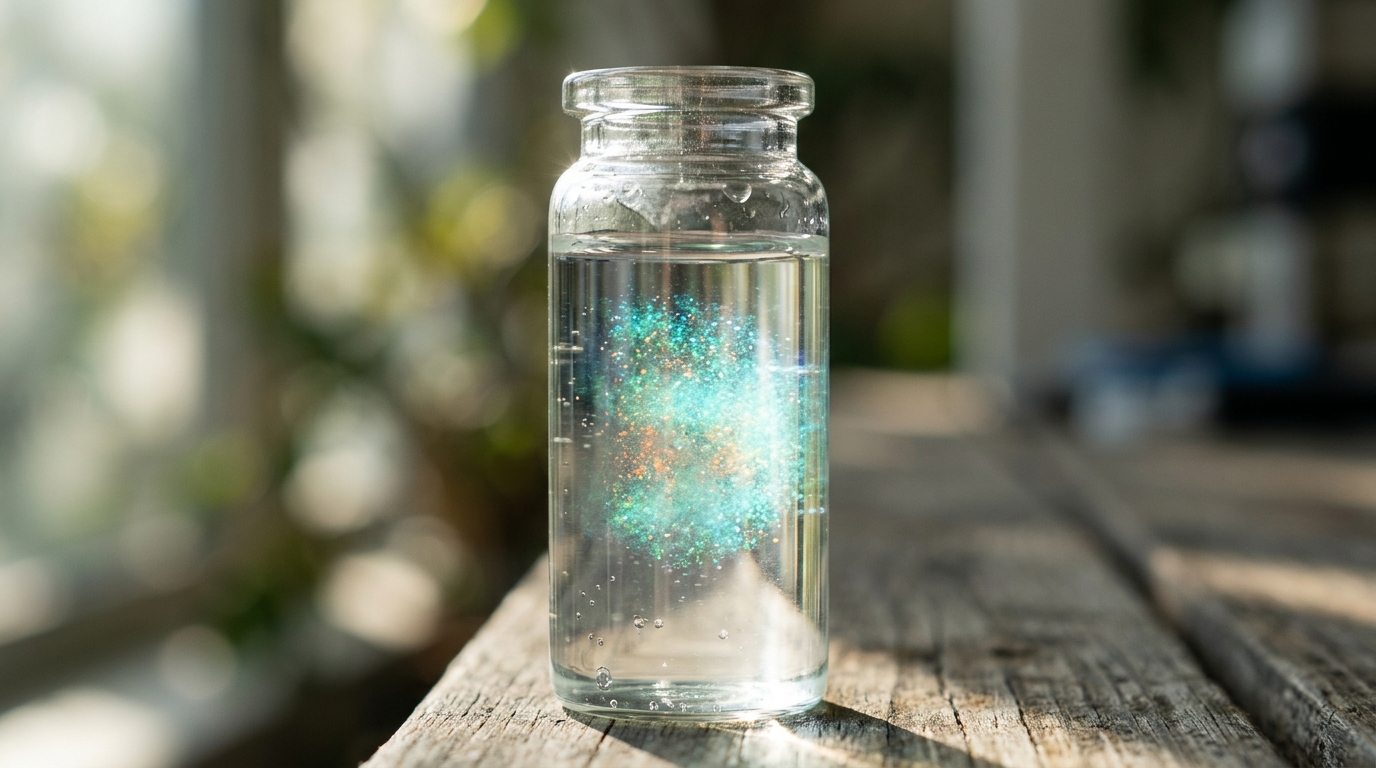
In recent scientific publications, researchers across nanotechnology have increasingly applied the term water-soluble quantum dots to describe nanoparticles whose surfaces have been modified to improve their dispersibility in water. However, improved aqueous dispersibility does not imply dissolution of the quantum dots and therefore does not justify using the word soluble, according to a perspective by Claudio Nastruzzi published in the Journal of Nanoparticle Research. The paper issues a clear call for terminological precision, pointing out that surface modifications do not convert intact particles into true solutions.
In addressing this common phrasing, the perspective paper explicitly recalls the formal physical distinction between dissolution and colloidal dispersion, referencing established International Union of Pure and Applied Chemistry definitions. The author explains that modifying the outer surface of a nanoparticle to enhance its interaction with water creates an aqueous colloidal dispersion rather than a genuine solution. Conflating the two distinct physical states obscures the reality that the underlying quantum dots remain intact particles rather than dissolved species.
An analysis of published scientific studies reveals a clear discrepancy between the widespread use of the phrase water-soluble quantum dots and the analytical techniques actually employed to characterize these systems. Rather than applying methods intended for dissolved molecules or ions, researchers routinely employ transmission electron microscopy, dynamic light scattering, and zeta potential measurements. As the perspective highlights, these three experimental approaches are typically and specifically used to characterize intact dispersed particles rather than dissolved chemical compounds.
To align scientific descriptions with physical reality and experimental practice, the paper recommends using the phrases water-dispersible quantum dots or aqueous colloidal dispersions of quantum dots when referring to intact particles dispersed in water. Nastruzzi stresses that distinguishing solubility from dispersibility is not merely an abstract matter of semantics or preferred terminology, but a necessary condition for correctly describing the actual physicochemical nature of nanomaterials across the scientific record.
Subject of Research: Distinction between solubility and colloidal dispersibility in quantum dot characterization
Article Title: Why quantum dots cannot be defined as “soluble”: a call for terminological precision
Article References: Nastruzzi, C. (2026). Why quantum dots cannot be defined as “soluble”: a call for terminological precision. Journal of Nanoparticle Research, 28(12), Article 298. https://doi.org/10.1007/s11051-026-06830-8
Image Credits: AI Generated
DOI: 10.1007/s11051-026-06830-8
Keywords: quantum dots, colloidal dispersion, water dispersibility, solubility, IUPAC definitions, transmission electron microscopy, dynamic light scattering, zeta potential, surface modification, physicochemical properties, nanomaterials, nanoparticle research, dissolution, aqueous dispersions, intact particles, terminological precision
News Source: Katie Riggs. (November 18, 2026). Modified Quantum Dots in Water Form Colloidal Dispersions Rather Than Solutions. Scienmag.