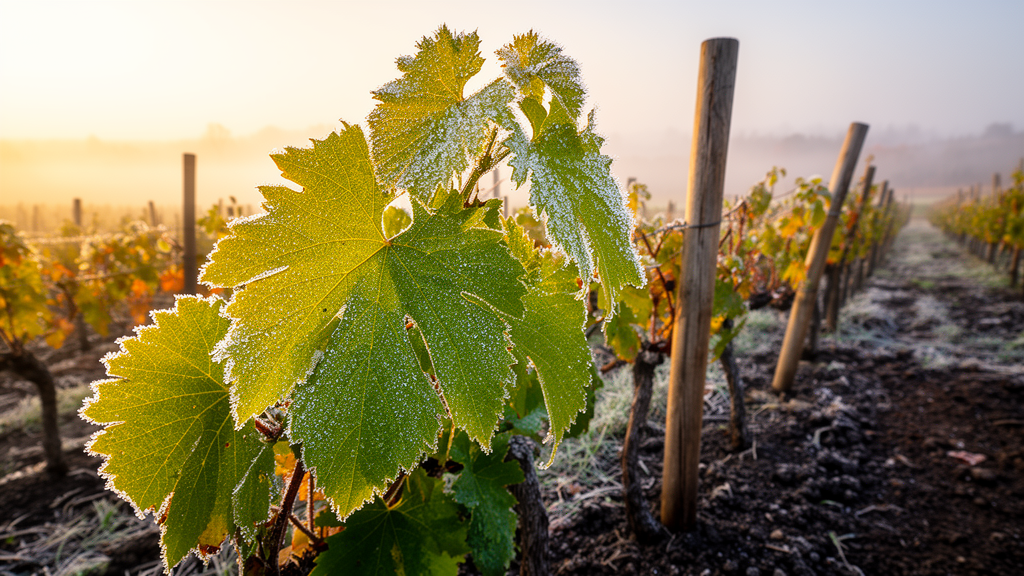
Controlled greenhouse experiments evaluating nutrient management in viticulture demonstrate that moderate phosphorus supplementation markedly enhances cold hardiness in grapevine cultivars, whereas excessive phosphorus applications trigger severe physiological decline and heighten chilling vulnerability. In a study published in Biological Research, investigators examined how differing concentrations of phosphorus fertilizer alter physiological and biochemical defenses under chilling conditions. Low-temperature episodes represent one of the most destructive abiotic hazards confronting horticultural crops in temperate climates, where spring frost events can inflict extensive tissue injury and economic losses across commercial vineyards. While baseline freezing resistance is strongly governed by cultivar genetics, nutritional regimes exert a pronounced influence on low-temperature hardiness. The experimental data reveal that potted vines supplied with an optimal phosphorus concentration of 0.5 millimolar exhibited the most robust cold resilience. Conversely, an elevated phosphorus concentration of 1.0 millimolar severely impaired plant defense systems, precipitating membrane degradation, nutrient imbalances, and total seedling mortality following low-temperature exposure.
To investigate the mechanistic basis of nutrient-mediated cold resistance, the research team conducted factorial experiments arranged in a completely randomized design at the Malayer University research greenhouse. The experimental architecture incorporated three distinct experimental factors: phosphorus supply, cultivar selection, and temperature regime. Potted vines were grown across seven-liter containers filled with a soilless hydroponic mixture composed of equal volumetric proportions of perlite and cocopeat under standard greenhouse temperatures maintained at twenty-four degrees Celsius. The trials evaluated two distinct Vitis vinifera cultivars displaying contrasting cold hardiness: the cold-tolerant cultivar Khalili and the cold-sensitive cultivar Perlette. Nutritional inputs were delivered three times weekly using modified Hoagland nutrient solutions formulated with three distinct phosphorus concentrations of zero, 0.5, and 1.0 millimolar, alongside periodic distilled water flushes to eliminate salt accumulation within the root zones. All other nutrient constituents within the Hoagland formulation remained strictly identical across treatments, ensuring observed differences resulted directly from phosphorus dosing.
Following four months of vegetative growth when plants reached the twenty-to-twenty-five leaf developmental stage, half of the experimental grapevines underwent low-temperature chilling tests within an automated cooling chamber. The cooling chamber initiated chilling at fifteen degrees Celsius, matching environmental conditions, before cooling at an hourly rate of two degrees Celsius down to a target minimum of two degrees Celsius. The vines were maintained at two degrees Celsius under artificial illumination of two hundred micromoles per square meter per second for twelve hours overnight. Following this chilling treatment, chamber temperatures rose gradually over five hours to ambient levels, whereupon plants were returned to the greenhouse for three days of post-stress recovery before leaf harvesting. Scientists then gathered fully developed, mature foliage from middle cane positions around each vine to evaluate membrane integrity, water relations, pigment dynamics, antioxidant enzyme functions, polyamine levels, carbohydrate reserves, phytohormones, and mineral profiles across all experimental combinations.
Assessments of leaf membrane integrity and hydration status demonstrated that cold tolerance was consistently superior in the Khalili cultivar compared to Perlette. Membrane stability, measured via the electrolyte leakage technique, exhibited significant variations influenced by phosphorus levels, cultivar genetics, and thermal treatments. In Khalili vines, the lowest electrolyte leakage values occurred under the combination of 0.5 millimolar phosphorus and ambient twenty-four degrees Celsius conditions, reflecting optimal membrane preservation. In contrast, the highest electrolyte leakage manifested in unfertilized Perlette vines subjected to chilling at two degrees Celsius. Parallel measurements of relative water content revealed that exposure to two degrees Celsius caused notable tissue dehydration, with reductions proving substantially more severe in the cold-sensitive Perlette cultivar than in Khalili. Maximum leaf relative water content was recorded in plants nourished with 0.5 millimolar phosphorus at twenty-four degrees Celsius, whereas plants receiving zero and 1.0 millimolar phosphorus exhibited significantly depressed tissue hydration.
Biochemical assays monitoring reactive oxygen species and cellular degradation further substantiated the protective threshold of intermediate phosphorus feeding. Levels of malondialdehyde, an established marker of membrane lipid peroxidation quantified through thiobarbituric acid reactivity, and hydrogen peroxide concentrations rose considerably under chilling stress across all experimental groups. However, damage markers remained noticeably higher in Perlette than in Khalili. Plants fertilized with 1.0 millimolar phosphorus accumulated the highest recorded quantities of hydrogen peroxide and malondialdehyde when chilled at two degrees Celsius, while the lowest levels occurred under 0.5 millimolar phosphorus at twenty-four degrees Celsius in Khalili. Elevated lipid peroxidation and hydrogen peroxide were also detected in both phosphorus-deprived and high-phosphorus vines kept under non-stress twenty-four-degree conditions. These observations indicate that extreme nutritional regimes—both total phosphorus starvation and excessive supply—are perceived by grapevines as substantial metabolic stressors that destabilize cellular structures even prior to low-temperature exposure.
The activity of primary antioxidant defense enzymes corroborated this protective pattern, showing marked suppression when phosphorus fertilization reached 1.0 millimolar. Spectrophotometric assays tracking catalase, guaiacol peroxidase, and ascorbate peroxidase activities across frozen leaf homogenates demonstrated significant interactive effects between phosphorus concentration and temperature regimes. While exposure to chilling conditions stimulated protective antioxidant activities under low and moderate phosphorus levels, vines supplied with 1.0 millimolar phosphorus exhibited an abrupt collapse in enzymatic defenses under both temperature settings. Guaiacol peroxidase activity attained its maximum level in Perlette vines receiving 0.5 millimolar phosphorus at two degrees Celsius, but fell to its absolute minimum in chilled Khalili vines nourished with 1.0 millimolar phosphorus. Researchers attributed this severe enzymatic impairment to sharp reductions in essential cofactor micronutrients, noting that the biological synthesis and catalytic functionality of heme-containing antioxidant enzymes strictly depend on adequate reserves of iron, copper, and zinc.
Analysis of compatible osmoprotectants, polyamines, and plant growth regulators highlighted further physiological adaptations mediated by phosphorus availability. Leaf proline content and concentrations of polyamines, including putrescine and spermine, increased prominently in response to cold treatment when paired with 0.5 millimolar phosphorus. Spermidine exhibited significant temperature-dependent accumulation during chilling exposure. These polyamines serve crucial protective roles by binding cellular components, stabilizing membranes, and counteracting photooxidation. Meanwhile, chromatographic profiling of carbohydrates showed that soluble sugars including sucrose, fructose, and glucose accumulated during chilling to facilitate osmotic adjustment and depression of the freezing point. However, vines subjected to 1.0 millimolar phosphorus displayed the lowest reserves of soluble sugars, starch, and soluble proteins under both temperature regimes. Concurrently, leaf abscisic acid accumulated progressively as phosphorus increased and temperatures dropped, reaching its absolute peak under 1.0 millimolar phosphorus at two degrees Celsius, reflecting intense combined stress signaling.
Photosynthetic pigments and leaf nutrient compositions exhibited pronounced disruptions under high phosphorus feeding, providing a mechanistic explanation for observed tissue injuries. Leaf chlorophyll content, monitored using the SPAD index, declined markedly under low temperatures and increasing phosphorus levels, registering its minimum values in vines supplied with 1.0 millimolar phosphorus at two degrees Celsius. Conversely, photoprotective anthocyanins attained maximum concentrations under 0.5 millimolar phosphorus at two degrees Celsius in both cultivars, whereas 1.0 millimolar phosphorus drastically repressed anthocyanin synthesis. Elemental analysis via atomic absorption and flame photometry revealed that while nitrogen, potassium, and total phosphorus concentrations rose with increasing phosphorus supplementation, vital divalent cations and trace metals experienced profound declines. Calcium, magnesium, zinc, copper, and active iron concentrations dropped to their lowest levels in the 1.0 millimolar phosphorus treatment, inducing noticeable leaf chlorosis and physiological impairment.
The pronounced decline in active iron relative to total iron emerged as a pivotal diagnostic factor underlying the collapse of vines given 1.0 millimolar phosphorus. Although total iron concentrations rose slightly at high phosphorus dosing compared to intermediate levels, the biologically functional active iron fraction extracted with hydrochloric acid declined sharply. Excessive inorganic phosphorus forms insoluble complexes with iron and downregulates genes governing iron assimilation, precipitating physiological iron chlorosis despite apparent elemental abundance. In contrast, vines cultivated without phosphorus exhibited classic deficiency symptoms characterized by vegetative growth stagnation and dark, brittle leaves. Nonetheless, these phosphorus-starved plants retained greater chilling tolerance than those receiving 1.0 millimolar phosphorus, underscoring the severe toxicity and systemic physiological disruption wrought by phosphorus overfertilization.
Ultimately, the experimental outcomes delineate a precise physiological window for phosphorus nutrition in viticulture, establishing that moderate 0.5 millimolar feeding optimizes cold tolerance while 1.0 millimolar induces fatal vulnerabilities. Seedlings subjected to 1.0 millimolar phosphorus suffered complete mortality following chilling stress in both Khalili and Perlette cultivars, driven by an inability to scavenge reactive oxygen species, sustain compatible solutes, or preserve membrane stability amid acute micronutrient imbalances. Instead, viticultural management must carefully balance nutrient delivery, recognizing that phosphorus excess disrupts active mineral fractions, impairs enzyme-mediated antioxidant defense systems, and exacerbates low-temperature mortality. Applying phosphorus at balanced physiological concentrations of 0.5 millimolar offers an effective agronomic strategy to preserve cellular water balance, enhance protective biochemical pathways, and mitigate damaging frost impacts in vulnerable vineyard regions.
Subject of Research: Phosphorus concentration effects on physiological and biochemical cold tolerance in grape cultivars
Article Title: Phosphorus and cold stress: physiological and biochemical assessment in two grape (Vitis vinifera L.) cultivars
Article References: Zaeri-Behrooz, M., Karimi, R., Khadivi, A., & Tunç, Y. (2026). Phosphorus and cold stress: physiological and biochemical assessment in two grape (Vitis vinifera L.) cultivars. Biological Research, 59(1), Article 24. https://doi.org/10.1186/s40659-026-00683-0
Image Credits: AI Generated
DOI: 10.1186/s40659-026-00683-0
Keywords: Vitis vinifera, Khalili cultivar, Perlette cultivar, cold tolerance, phosphorus nutrition, electrolyte leakage, malondialdehyde, hydrogen peroxide, antioxidant enzymes, proline accumulation, polyamines, abscisic acid, soluble sugars, chlorosis, active iron, chilling stress, Hoagland solution, relative water content
News Source: Drew Townsend. (November 14, 2026). Moderate Phosphorus Boosts Grapevine Chilling Resilience While Excessive Feeding Triggers Severe Vulnerability. Scienmag.