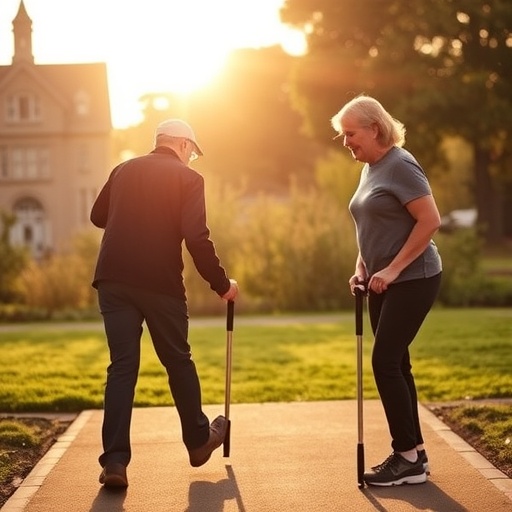
In recent years, the aging population has emerged as a significant area of concern in geriatric research. As societies worldwide confront the demographic shift toward an older populace, understanding the factors affecting mobility and fall risk in this demographic becomes crucial. A recent study spearheaded by Lin, Guo, and You sheds new light on these pertinent issues by examining the relationships between mobility assessments and the concerns older adults hold about falling. Conducted within a Chinese community, this prospective cohort study provides invaluable insights into how mobility correlates with fall risk and the potential predictors of such concerns.
The implications of this study extend beyond mere statistical analysis; they resonate deeply with the lives of older adults. Falls represent a leading cause of morbidity among the elderly, often resulting in protracted hospitalization, loss of independence, and in severe cases, fatalities. Understanding the nuances of mobility—how well individuals can move and their confidence in their physical abilities—can significantly inform preventative measures. This study indicates more than just correlations; it draws attention to the psychological ramifications of fall concerns, which can inhibit mobility and ultimately lead to a vicious cycle of decreased activity and increased fall risk.
The researchers meticulously chose a sample of community-dwelling older adults, a population often underrepresented in clinical studies. By focusing on this demographic, the findings emphasize the relevance of mobility assessment tools designed specifically for community settings. Such tools can aid geriatric practitioners not only in evaluating the current mobility status of older adults but also in identifying specific areas where intervention may be beneficial, thus preventing falls before they occur.
Moreover, the predictive value analysis conducted in this study sheds light on the importance of regular mobility assessments. By determining which factors can reliably predict future fall risks, healthcare providers can prioritize high-risk individuals for early interventions. This proactive approach is critical, as it allows for personalized care strategies that can adapt to the unique needs and concerns of older adults. Engaging in discussions about falling and associated risks also empowers individuals, making them active participants in their own health journeys rather than passive recipients of care.
One significant aspect of the study is its emphasis on the dual nature of mobility—both the physical capabilities of older adults and their psychological state regarding movement. The researchers found that concerns about falling could strongly predict the extent to which individuals limited their own mobility. This finding emphasizes the importance of addressing not only the physical but also the emotional barriers that can contribute to a sedentary lifestyle among older adults. Education campaigns may be needed to help older adults reconcile their fears with the reality of their mobility abilities.
As the study unfolds, it also discusses the methodological rigor required for such analyses. The researchers utilized varying mobility assessment tools, providing a thorough evaluation of physical capabilities. Through longitudinal tracking, they were able to elucidate the changes in mobility status over time, lending credence to the argument that regular assessment is needed to adapt care approaches accordingly. This aspect of research illustrates the importance of longitudinal studies in geriatric health, as they offer insights that cross-sectional studies may overlook.
Another important discovery from the research relates to factors external to the individual that can influence mobility concerns. Environmental factors such as home modifications and community resources can play a significant role in either alleviating or exacerbating fears about falling. Identifying how these external elements contribute to fall concerns can help families and caregivers create supportive environments that encourage mobility, thus transforming a challenging living situation into one that fosters independence and confidence in older adults.
While the findings of this study are compelling, they also invite further inquiry into the psychological dimensions of fall risk. As the researchers pointed out, cultivating a respectful dialogue between older adults and healthcare providers can significantly contribute to the latter’s understanding of fears related to falling. Engaging older adults in conversations surrounding their mobility concerns fosters a relationship of trust that can promote adherence to preventative strategies.
Furthermore, the articulation of direct links between mobility assessments and falling concerns could influence policy changes in community health initiatives. Policymakers interested in enhancing the quality of life for older adults might find this research invaluable in informing the design of community programs that proactively address mobility and fall risk through education, supportive infrastructure, and improved access to mobility assessment resources.
The study also highlights the need for comprehensive training programs for healthcare professionals focusing on geriatric care. As mobility concerns and fall risks are integral components of elder care, equipping healthcare personnel with the tools to effectively assess and address these issues should be a priority. Workshops that emphasize the interplay between psychological and physical health can empower practitioners to deliver well-rounded care that not only focuses on physical rehabilitation but also resonates emotionally with older adults.
In light of the compelling findings from Lin, Guo, and You, it is evident that the relationship between mobility and fall risk is complex. A multifaceted approach that incorporates individual assessments, environmental modifications, and emotional support appears to be the most prudent way forward. As society aims to improve the quality of life for its aging population, such proactive measures are not merely optional; they are essential components of future health strategies that seek to safeguard the independence and well-being of the elderly.
Looking ahead, future research can benefit from an exploration of how technology—such as wearable devices and mobile applications—might play a role in continuously monitoring mobility and fall risks. With the increasing penetration of technology in daily lives, digital solutions could bridge gaps in real-time assessments and foster a better understanding of individual mobility needs. This could ultimately lead to predictive analytics that can preemptively address fall risks before they materialize.
In summary, the pivotal research by Lin and colleagues opens up crucial avenues for further exploration into the interplay between mobility assessments and fall risk concerns among older adults. The findings underscore the importance of a comprehensive approach in geriatrics—one that prioritizes both physical and psychological factors. As the aging population continues to grow, implementing strategies based on these insights could significantly mitigate the detrimental effects of falls, fostering a healthier, more active lifestyle for our elderly community members.
Subject of Research: The relationship between mobility assessments and concerns about falling in community-dwelling older adults.
Article Title: Association and predictive value analysis for mobility assessments and concerns about falling on falls in community-dwelling older adults: a prospective cohort study in China.
Article References: Lin, J., Guo, L., You, L. et al. Association and predictive value analysis for mobility assessments and concerns about falling on falls in community-dwelling older adults: a prospective cohort study in China. BMC Geriatr 25, 1030 (2025). https://doi.org/10.1186/s12877-025-06549-6
Image Credits: AI Generated
DOI: https://doi.org/10.1186/s12877-025-06549-6
Keywords: Mobility assessments, fall risk, older adults, community health, geriatric care, psychological factors, environmental influences.
Tags: aging population and mobilitycommunity health studies on elderlydemographic shifts and elder carefall risk prediction in elderlygeriatric research on fallsmobility and independence in elderlymobility assessments for seniorsmorbidity and falls in seniorsphysical activity and fall preventionpreventing falls in older adultspsychological impact of fall concernsunderstanding mobility in aging populations