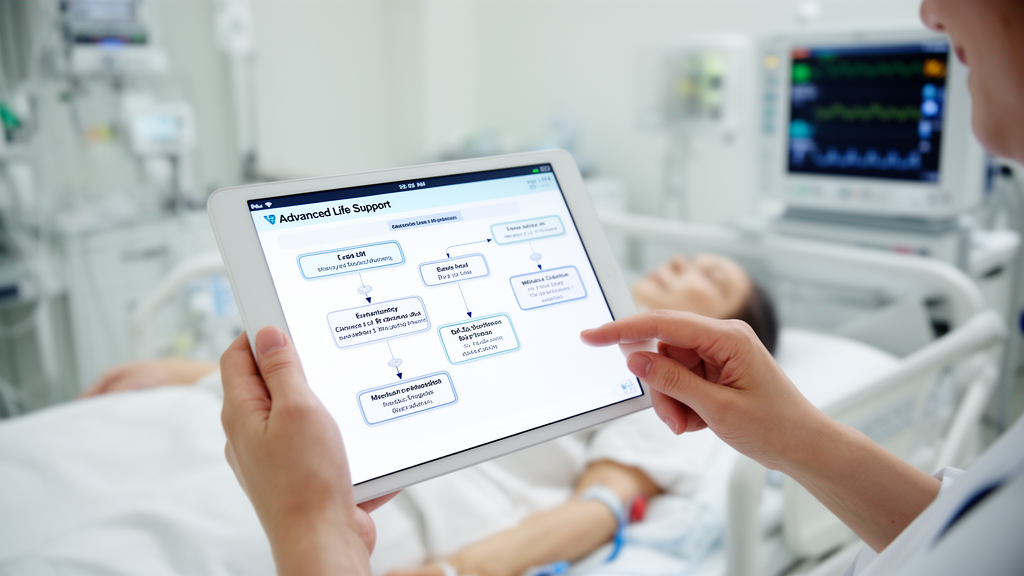
Researchers have developed a mobile decision-support and documentation application designed for real-time bedside use during adult cardiac arrest. Described in Resuscitation Plus by Mehmet Bahadır Savaş and colleagues, the application translates the 2025 European Resuscitation Council Adult Advanced Life Support algorithm into an interactive workflow. The project addresses educational frameworks articulated by Nabecker and colleagues, which trace scientific evidence through teaching and learning to clinical implementation and improved neurological outcomes. Savaş and coauthors noted that moving from guidelines to clinical practice remains a persistent challenge due to the extreme cognitive load experienced by resuscitation teams during cardiac arrest.
The authors noted that this implementation gap is also evident among digital resuscitation tools. A cited systematic review by Fijačko and colleagues found that only six of 1,207 candidate applications, or 0.49 percent, designed to teach basic life support met predefined quality criteria. Furthermore, although an earlier controlled simulation study demonstrated that a dynamic mobile tool improved residents’ guideline adherence, compression fraction, and correct interventions, its benefit in real in-hospital resuscitation remained unvalidated.
To structure bedside care, the new application synchronizes a two-minute resuscitation cycle timer directly with a 120-beat-per-minute metronome. Automated reminders prompt providers to administer adrenaline every three to five minutes, while amiodarone reminders are linked to cumulative shock numbers. For refractory ventricular fibrillation, the system automatically activates an escalation pathway after three consecutive unsuccessful shocks, prompting resuscitation teams to transition to anteroposterior defibrillation pad placement.
Medication prompts within the application are linked to confirmed intravenous or intraosseous vascular access, with alternative-route guidance provided when access is unsuccessful. Furthermore, eleven special-circumstance protocols are integrated directly into the cardiac arrest workflow, including guidance for anaphylaxis, hypothermia, pulmonary embolism, and maternal cardiac arrest. Clinical interventions can be time-stamped and documented in Utstein format in real time, supporting structured data collection without requiring practitioners to exit the emergency management protocol.
Beyond basic guideline reminders, the authors designed the software to reduce decision latency by shifting provider memory recall to recognition during emergency interventions. The mobile system enables real-time structured data capture and automates Utstein documentation during cardiac arrest events. In addition, the tool supports clinical education and post-resuscitation debriefing through recorded procedural replay, allowing healthcare teams to review workflow timing and adherence after events conclude.
The physical interface was designed specifically for the resuscitation environment. The visual layout incorporates high-contrast, glance-readable displays to ensure legibility during intense bedside care. To accommodate clinicians wearing gloves during clinical emergencies, the software incorporates glove-compatible touch targets. The system also delivers audible confirmation for user actions and enforces mandatory double confirmation before executing irreversible clinical actions, minimizing the risk of inadvertent operational errors.
The researchers are currently preparing a simulation-based evaluation to compare guideline adherence, medication-timing accuracy, and documentation completeness with and without the mobile application. Savaş and colleagues noted that if successful, the tool could provide a practical means of bringing the 2025 European Resuscitation Council implementation layer directly to the bedside to support consistent guideline-based care. The authors congratulated the guideline authors for articulating this implementation-focused vision and welcomed collaboration with the European Resuscitation Council community to further develop and evaluate the platform.
Subject of Research: Mobile decision-support application for adult advanced life support
Article Title: From guidelines to the bedside: a mobile decision-support and documentation tool for adult advanced life support
Article References: Savaş, M. B., Dikencik, T., Özkaya, F., Doğan, Y., & Yılmaz, A. (2026). From guidelines to the bedside: a mobile decision-support and documentation tool for adult advanced life support. Resuscitation Plus, 32, Article 101476. https://doi.org/10.1016/j.resplu.2026.101476
Image Credits: AI Generated
DOI: 10.1016/j.resplu.2026.101476
Keywords: adult advanced life support, European Resuscitation Council, cardiac arrest, decision-support tool, bedside resuscitation, Utstein documentation, cycle timer, metronome, adrenaline timing, amiodarone, refractory ventricular fibrillation, anteroposterior pad placement, intraosseous access, intravenous access, special-circumstance protocols, simulation evaluation, cognitive load
News Source: Ophelia Keating. (November 24, 2026). Mobile App Translates Advanced Life Support Guidelines Into Bedside Clinical Workflows. Scienmag.