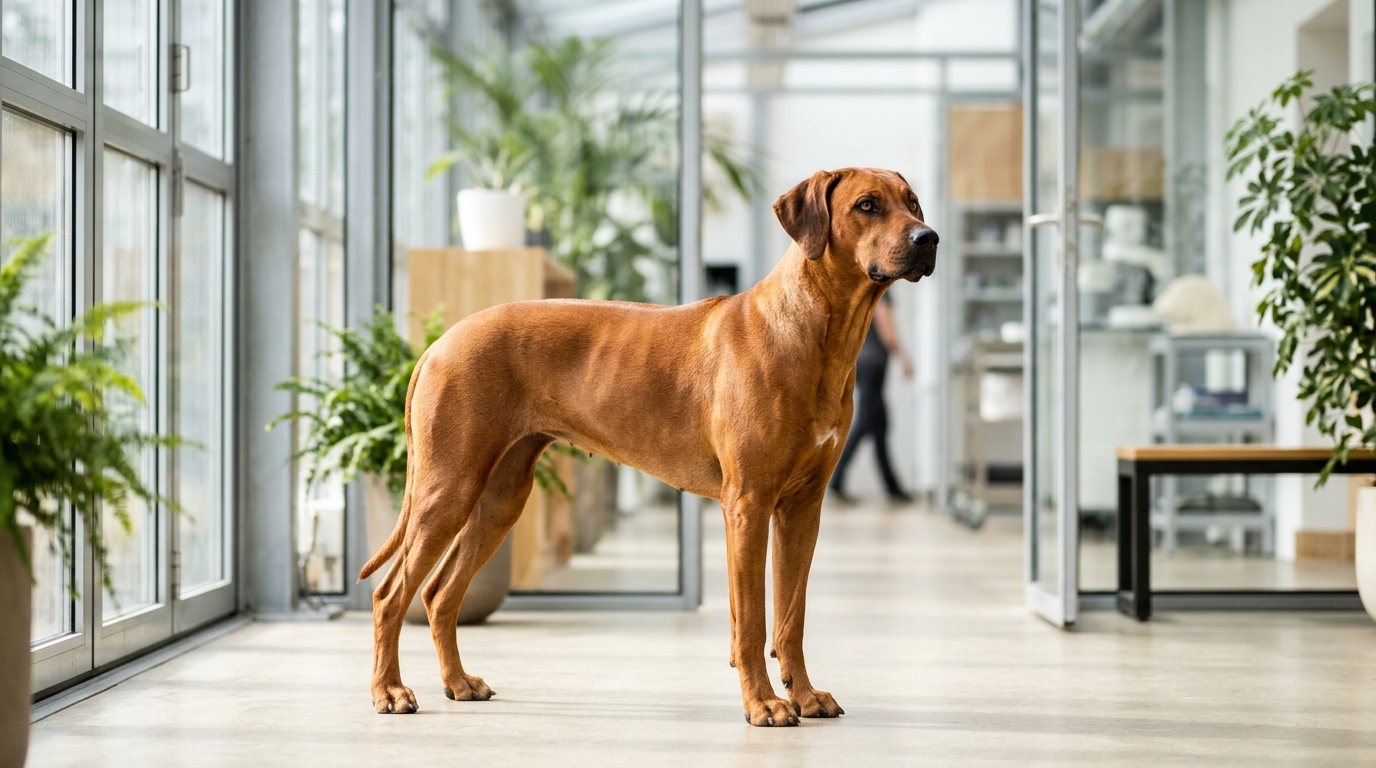
Seasonal canine flank alopecia, a skin disorder that strips patches of hair from the flanks of otherwise healthy dogs and then lets the fur grow back months later, has long been suspected to run in certain bloodlines. Rhodesian Ridgebacks are among the breeds most often affected, and that pattern of concentrated risk has pointed researchers toward a genetic cause. A study from the Netherlands, published in the journal Canine Medicine and Genetics, tested one candidate gene and found no association: the melanophylin gene, known as MLPH, was not found to be involved in the condition in this breed, although the authors note that further genetic studies are needed to clarify the etiology of the condition.
The research team, led by Millie U. M. Y. Verschuuren with colleagues Yvette M. Schlotter and Peter A. J. Leegwater, assembled a group of 24 Rhodesian Ridgebacks with confirmed canine flank alopecia and 12 unaffected control dogs of the same breed. The affected animals all met strict inclusion criteria: they were otherwise healthy, had experienced at least two consecutive episodes of hair loss beginning each year between November and April, and showed spontaneous full or partial regrowth of hair within eight months. Dogs with metabolic diseases that can themselves cause hair loss, such as hypothyroidism or hypercortisolism, were excluded to keep the phenotype as clean as possible.
Canine flank alopecia is visually distinctive, which makes diagnosis straightforward. The bald patches are non-inflammatory, non-scarring and non-itchy, they are often hyperpigmented, and they recur seasonally. The surrounding skin and hair look entirely normal. Affected dogs are otherwise healthy, and because the condition does not impair quality of life, veterinarians frequently recommend what the authors describe as benign neglect, simply waiting for the hair to regrow. The first episode typically occurs between three and six years of age, and regrowth usually happens within three to eight months, though the bald patches tend to return each year. Despite this recognizable clinical picture, the underlying cause has remained elusive. One leading hypothesis involves changes in daylight exposure, which could shift circadian rhythms and hormonal balance, particularly through the neurohormone melatonin, which is known to influence hair growth physiology in various species.
The choice of MLPH as a candidate gene was not arbitrary. The gene sits on the D locus and carries a variant called c.-22G>A that is involved in coat color dilution across many dog breeds. In Rhodesian Ridgebacks, the d allele segregates in the population: dogs carrying two copies of the dominant D allele or one copy each of D and d have the standard wheaten coat with full pigmentation, while dogs with two copies of the recessive d allele show a grayish, dilute coat that can be subtle and hard to distinguish from wheaten. Importantly, coat color dilution in MLPH homozygous dogs is sometimes accompanied by hair loss conditions known as color dilution alopecia or black hair follicular dysplasia. That overlap between a coat color gene and a hair loss disorder made MLPH a natural suspect for flank alopecia as well. The researchers hypothesized that both heterozygous and homozygous carriers of the d allele would face an increased risk of the condition compared with dogs carrying two normal D alleles.
To test this, the team extracted DNA from EDTA-treated blood samples using an automated nucleic acid extractor, amplified a fragment spanning the exon 1/intron 1 junction of MLPH by polymerase chain reaction, and determined the sequence with chain termination sequencing on a Genetic Analyzer 3500xL. The genotyping results showed no difference between the groups. Three of the 24 affected dogs, or 12.5 percent, were heterozygous for the dilute allele, while one of the 12 control dogs, or 8.3 percent, carried the same heterozygous genotype. Not a single dog in either group was homozygous for the d allele.
The pedigree analysis pointed in a different direction for the genetic hypothesis. By tracing detailed pedigree records provided by owners, the researchers identified close family relationships among several affected dogs. One unaffected sire, designated dog A in the study, had fathered four CFA-affected offspring and was grandfather to two more affected dogs. This sire produced affected puppies with two sister dams, and two affected dams descended from the same sire. The pedigrees contained an inbreeding loop and several mating loops, and the authors state that these findings indicate that the average relatedness was greater than that of the control group. Within the CFA group, males and females were equally often affected, and the authors suggest this indicates that the disorder is autosomal.
To quantify the strength of these familial patterns, the team used a software tool called Superlink to calculate the maximum obtainable logarithm of odds, or LOD score, for linkage in the pedigree of closely related dogs for which DNA was available. The score reached 3.5, well above the canonical significance threshold of 3. The authors note, however, that the small number of dogs prevented them from drawing statistically firm conclusions about the precise mode of inheritance, and that information about the CFA status of siblings of affected dogs would help clarify the picture.
This is, according to the authors, the first study to examine the genetic background of canine flank alopecia in Rhodesian Ridgebacks. Prior genetic work on a related condition exists, but it concerns atypical recurrent flank alopecia in the Cesky Fousek, a breed in which the alopecic skin is not hyperpigmented and onset often occurs later in life. That condition also presents more extensively, with hair loss extending to the sacral area, thighs, base of the tail and occasionally the ears and nose. A recent genome-wide association study of 216 Cesky Fousek dogs, combining histological, genomic and transcriptomic data, showed that atypical recurrent flank alopecia in that breed is multifactorial, and identified four candidate genes involved in controlling circadian rhythm: RORA, PIF1, TCF12 and CSNK2A1. The clinical differences between the two conditions led the Dutch team to suggest that flank alopecia in Rhodesian Ridgebacks may follow a less complex, possibly monogenic inheritance pattern, though this remains to be proven.
The negative MLPH result does not close the case; the authors note that it cannot be ruled out that another gene could be a causative factor. The authors point out that another gene could still be a causative factor, and they plan a genome-wide association study of their cohort as a follow-up, which would scan the entire genome rather than testing a single candidate. They also emphasize that the cause of the condition may be multifactorial, with both genetic and environmental factors playing a role, consistent with the seasonal pattern of onset during months of declining daylight. Deeper knowledge of the genetic and environmental basis, they argue, could eventually support breeding strategies to reduce the frequency of this cosmetically undesirable trait within the Rhodesian Ridgeback population.
What the study establishes is a foundation: a characterized cohort of affected and unaffected dogs, pedigree findings suggesting a potential genetic component, and no association found between the MLPH-d allele and the condition.
Subject of Research: Genetic investigation of seasonal canine flank alopecia in Rhodesian Ridgeback dogs
Article Title: Investigation of the association of the MLPH gene with seasonal canine flank alopecia in Rhodesian Ridgeback dogs
Article References: Verschuuren, M. U. M. Y., Schlotter, Y. M., & Leegwater, P. A. J. (2024). Investigation of the association of the MLPH gene with seasonal canine flank alopecia in Rhodesian Ridgeback dogs. Canine Medicine and Genetics, 11(1), Article 5. https://doi.org/10.1186/s40575-024-00139-2
Image Credits: AI Generated
DOI: 10.1186/s40575-024-00139-2
Keywords: canine flank alopecia, Rhodesian Ridgeback, MLPH gene, coat color dilution, pedigree analysis, dog genetics, seasonal hair loss, LOD score, genotyping, melanophylin, breed predisposition, veterinary dermatology
News Source: Juliet Wilcox. (November 5, 2026). MLPH Gene Ruled Out in Seasonal Flank Alopecia of Rhodesian Ridgebacks. Scienmag.