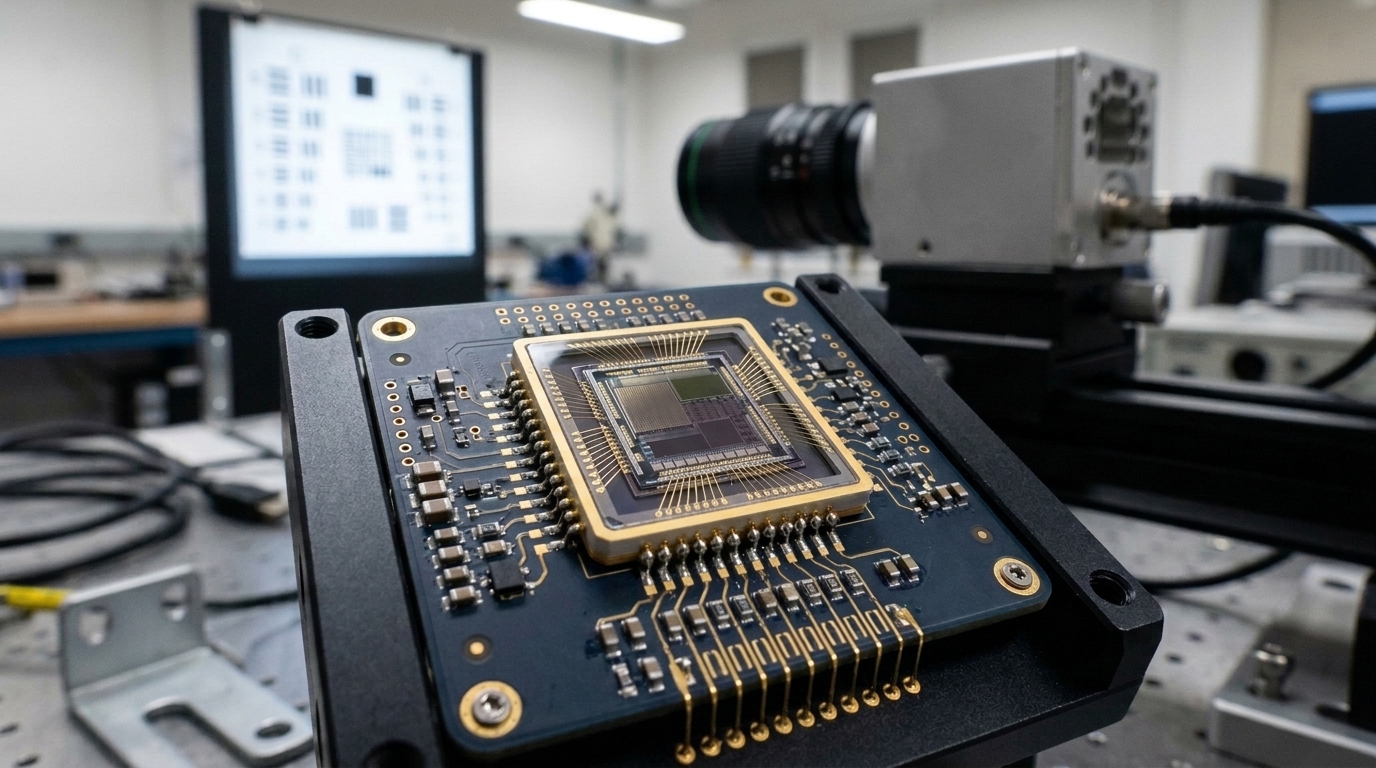
A research team from the Institute of Automation and the School of Future Technology at the Chinese Academy of Sciences has introduced Mixed-Timestep Spiking Neural Networks, an artificial intelligence architecture designed to overcome the efficiency bottlenecks of conventional neuromorphic vision models. Spiking neural networks process information through discrete electrical pulses known as spike trains, offering substantial energy savings compared to conventional artificial neural networks due to their event-driven computation and sparse data transmission. However, most existing spiking architectures enforce a single uniform time-step across every layer of the network, which restricts temporal flexibility and causes suboptimal trade-offs between classification accuracy and computational delay during low-latency inference. Addressing this constraint, the researchers developed an artificial-to-spiking conversion paradigm in which different network layers operate with distinct, statically assigned simulation time-steps. Evaluated on the large-scale ImageNet-1K image classification benchmark using a ResNet-34 backbone, the mixed-timestep architecture achieved a 73.63 percent Top-1 accuracy while requiring an average of only 4.88 simulation time-steps, demonstrating a practical path toward ultra-low-latency neuromorphic computing.
Spiking neural networks are widely regarded as the third generation of neural network models because their operational dynamics closely resemble biological neurons that transmit discrete electrical signals across time. Although these biological characteristics make spiking models attractive for low-power edge processing, training deep models has historically proven difficult because the mathematical step functions governing spike generation are non-differentiable. Machine learning researchers typically circumvent this hurdle through two primary techniques: surrogate-gradient learning, which approximates activation gradients during direct backpropagation, and artificial-to-spiking network conversion, which maps continuous activation values from pre-trained artificial networks into spiking firing rates. Conversion avoids the high memory burden and training instabilities associated with unrolling spiking dynamics across long temporal sequences, but it historically required extensive simulation windows to accurately approximate continuous numerical activations. Because uniform-timestep models enforce the same simulation duration across all processing stages, their computational complexity scales directly with both the number of network layers and the total temporal duration, creating severe processing delays during real-time deployment.
To establish a systematic framework for non-uniform temporal execution, the authors drew inspiration from mixed-precision quantization in standard deep learning, where distinct layers receive different numerical bit-widths depending on their sensitivity to precision loss. In traditional artificial neural networks, assigning lower numerical precision to robust layers and higher precision to vulnerable layers optimizes model size and throughput without degrading task accuracy. The research team identified an analogous principle within neuromorphic processing, observing that individual layers within a spiking network exhibit vastly different tolerances to temporal compression. Certain layers demand extended simulation windows to preserve representational fidelity, whereas other layers maintain robust feature representations even when evaluated over minimal temporal durations. Unlike dynamic early-exit mechanisms that rely on runtime entropy calculations or confidence scores to terminate processing for simple input samples, the mixed-timestep paradigm establishes static layer-wise temporal allocations prior to deployment, eliminating runtime decision overhead while preserving predictable computational schedules.
The mathematical foundation of the new architecture rests on a formal theoretical equivalence between activation bit-widths in quantized artificial networks and simulation durations in spiking networks. Under residual-free conversion conditions, the team proved that the simulation duration of a spiking layer can be directly approximated by the activation quantization level of the corresponding source artificial layer, where a bit-width of n corresponds to two to the power of n discrete quantization levels. The conversion framework utilizes soft-reset Integrate-and-Fire neurons that apply a reset-by-subtraction mechanism rather than resetting the electrical membrane potential to zero after firing. By subtracting the firing threshold from the accumulated membrane potential upon spike emission, the neuron preserves residual voltage information across successive intervals. When the clipping threshold of the quantized artificial activation matches the spiking firing threshold, the scaled spike firing rate of the spiking neuron mathematically mirrors the quantized activation value of the artificial neuron, providing a formal bridge to transfer learned layer-wise configurations.
To translate this theoretical equivalence into practical network architectures, the researchers evaluated four distinct parameterizations for optimizing layer-wise configurations using the Straight-Through Estimator to approximate non-differentiable quantization gradients. The parameters governing quantized activations satisfy an inherent mathematical relationship connecting bit-width, quantization step size, and clipping threshold. Analyzing the gradient flow and loss landscapes across combinations of these parameters revealed that optimizing bit-width directly introduces exponential terms that cause sharp gradients, irregular loss landscapes, and numerical instability. Parameterizations relying on the ratio of clipping threshold to step size similarly suffered from optimization instability whenever step sizes approached zero. In contrast, directly parameterizing the formulation through the integer quantization level alongside the clipping threshold produced the smoothest optimization landscape. Because the latency regularization penalty contributes a steady, constant gradient signal under this formulation, the model reliably converges to compact layer-wise temporal distributions without experiencing gradient explosion or erratic parameter oscillations.
Empirical ablation experiments across the CIFAR-10, CIFAR-100, and ImageNet-200 benchmarks confirmed the optimization stability predicted by the mathematical gradient analysis. When evaluated on CIFAR-10 using a ResNet-18 architecture, the direct quantization level and threshold parameterization achieved 95.71 percent Top-1 accuracy while reducing average simulation time-steps by 9.6-fold, 1.8-fold, and 8.2-fold compared to the alternative parameter formulations. On CIFAR-100, the chosen parameterization reached 77.28 percent accuracy, outperforming competing parameterizations while reducing average simulation durations by 9.5-fold, 2.2-fold, and 5.5-fold, respectively. Similar stability was observed on ImageNet-200, where the network recorded 63.65 percent accuracy alongside latency reductions exceeding 10-fold relative to bit-width-based optimization. Further temporal scalability evaluations demonstrated that uniformly expanding the learned layer-wise durations across multiples of the original configuration yielded only marginal accuracy gains beyond double the baseline duration, verifying that the optimization algorithm successfully identified compact operational operating points near the theoretical saturation limit of spike-rate representations.
Operating adjacent layers with heterogeneous temporal resolutions inevitably creates an inter-layer temporal mismatch, as a layer producing spike sequences over one duration cannot directly interface with a subsequent layer expecting a different sequence length. Prior attempts to resolve temporal mismatches in multi-stage networks relied on discrete temporal upsampling or downsampling, but these resampling operations frequently caused feature loss or artificial signal amplification. To resolve this challenge without adding operational latency, the authors introduced Scaled Synaptic Current Accumulation. This fused temporal alignment mechanism projects inter-layer communication into the synaptic-current domain by integrating temporal accumulation directly into the fused convolution and batch-normalization operations. The subsequent Integrate-and-Fire neurons consume this accumulated current through mathematically scaled threshold dynamics, where the effective firing threshold scales proportionally with the temporal duration of the preceding layer. This algebraic formulation achieves exact average-current temporal alignment while completely avoiding the instantiation of an independent temporal-alignment kernel during execution.
For network architectures containing residual skip connections, temporal discrepancies can also emerge between the primary convolutional pathway and shortcut pathways. In comparative temporal alignment ablations conducted on CIFAR-10 and CIFAR-100 across ResNet-18, ResNet-20, and VGG-16 backbones, the fused alignment mechanism matched the top-performing explicit temporal averaging baselines while eliminating external kernel operations. On CIFAR-10, the fused accumulation strategy achieved 95.69 percent accuracy on ResNet-18, 91.03 percent on ResNet-20, and 94.94 percent on VGG-16, closely matching explicit temporal averaging and outperforming discrete upsampling and downsampling configurations by up to 3.75 percent on CIFAR-10 and up to 15.24 percent on CIFAR-100, where discrete resampling severely degraded deep feature propagation.
Comprehensive performance comparisons on standard image classification benchmarks demonstrated substantial efficiency gains over existing uniform-timestep conversion and dynamic early-exit methods. On CIFAR-10, the mixed-timestep models achieved 94.98 percent accuracy on VGG-16 with an average of 2.20 time-steps, 95.71 percent on ResNet-18 with 2.59 time-steps, and 91.08 percent on ResNet-20 with 3.63 time-steps, outperforming methods such as QCFS, SlipReLU, and SRP while executing across fewer computational steps. On ImageNet-1K, the architecture demonstrated notable latency advantages over prominent conversion baselines. On ResNet-34, the model reached 73.63 percent accuracy with 4.88 average time-steps, outperforming the low-latency baseline SRP by 6.92 percent accuracy while avoiding SRP’s mandatory eight-step pre-inference phase. Compared to AdaFire, which required 8 and 16 uniform time-steps to achieve 72.96 percent and 73.85 percent accuracy on ResNet-34, the mixed-timestep design delivered comparable accuracy while reducing temporal iterations by 1.6-fold and 3.2-fold, respectively. The static layer-wise design also surpassed dynamic models like SEENN-I and MTT without requiring runtime confidence estimators.
The researchers further extended the conversion framework to neuromorphic vision domains using dynamic vision sensor recordings from the CIFAR10-DVS and DVS-Gesture benchmarks. Because neuromorphic event streams possess an intrinsic temporal dimension that is incompatible with standard two-dimensional convolutional networks, the team implemented a temporal channel reshaping scheme that integrates input event intervals into the channel dimension. On DVS-Gesture, this conversion pipeline reduced training duration by approximately 9-fold compared to directly trained spiking models unrolled over 15 time-steps, while maintaining steady graphics memory utilization. When evaluated on classification tasks, the mixed-timestep network achieved 94.10 percent accuracy on DVS-Gesture using an average of 4.06 time-steps, matching the accuracy of the KLIF baseline while cutting inference latency by 3-fold. On CIFAR10-DVS, the model achieved 84.40 percent accuracy using only 2.0 average time-steps, surpassing competitive architectures including AdaFire, TPP, and CLIF while operating with substantially shorter temporal windows.
To evaluate potential operational gains on low-power hardware, the authors conducted theoretical arithmetic energy modeling based on standard 45-nanometer complementary metal-oxide-semiconductor energy parameters. In this operational model, an 8-bit fixed-point multiply-accumulate operation in an artificial network consumes 0.23 picojoules, whereas an 8-bit spike-triggered accumulation in a neuromorphic architecture consumes 0.03 picojoules. Because the initial layer receives dense analog visual input, it is calculated as a standard multiply-accumulate operation, while all subsequent layers operate through event-driven additions triggered solely by active spike emissions. Analysis of synaptic-weighted firing rates revealed that non-input layers maintained sparse operational activity ranging between 13 percent and 18 percent across evaluated models. The authors noted that these theoretical arithmetic calculations exclude physical system variables such as memory access latency, cache structures, static leakage current, and hardware synchronization costs, which require future validation on specialized neuromorphic hardware like Loihi or Field-Programmable Gate Array accelerators.
Subject of Research: Mixed-timestep spiking neural network conversion and temporal alignment for neuromorphic computing
Article Title: Mixed-timestep spiking neural networks: a temporal alignment framework for high-efficiency neuromorphic computing
Article References: Guo, M., Yao, X., Li, Q., Li, Y., Li, G., Cheng, J., & Chen, L. (2026). Mixed-timestep spiking neural networks: a temporal alignment framework for high-efficiency neuromorphic computing. Frontiers in Neuroscience, 20, Article 1783326. https://doi.org/10.3389/fnins.2026.1783326
Image Credits: AI Generated
DOI: 10.3389/fnins.2026.1783326
Keywords: Spiking Neural Networks, ANN-to-SNN Conversion, Mixed-Timestep SNNs, Neuromorphic Computing, Temporal Alignment, Quantization-Aware Training, Scaled Synaptic Current Accumulation, ImageNet Classification, Event-Driven Computing, Integrate-and-Fire Neurons, CIFAR-10, CIFAR10-DVS, DVS-Gesture, Inference Latency, Energy-Efficient AI, Hardware Acceleration
News Source: Ophelia Keating. (November 13, 2026). Mixed-Timestep Spiking Networks Cut Inference Latency Across Complex Vision Benchmarks. Scienmag.