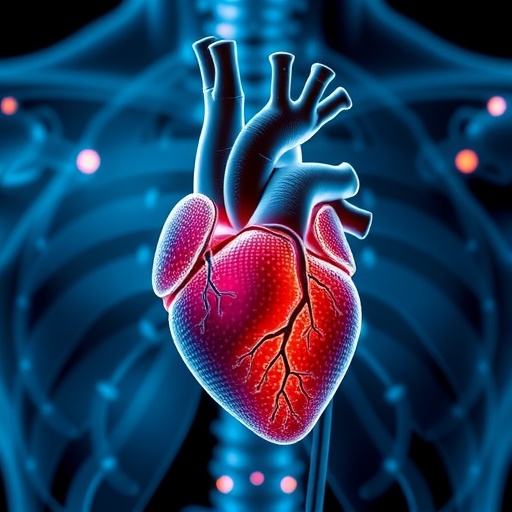
Diabetes and kidney disease have long been recognized as individual health concerns; however, their complex interrelation with cardiovascular health unveils a far more intricate narrative that broadens the scope of heart disease risk factors beyond the cardiac anatomy itself. Recent findings emphasize the critical need to reconceptualize how we view and address heart health, advocating for a systemic approach that incorporates metabolic and renal function as integral components of cardiovascular risk assessment and management.
Current epidemiological data indicate a profound underdiagnosis of diabetes and chronic kidney disease (CKD), with nearly one in four adults harboring undetected diabetes and a staggering 90% of those with CKD unaware of their condition. This diagnostic gap significantly hampers prevention efforts as these overlapping pathologies share a constellation of risk factors, including hypertension, dyslipidemia, hyperglycemia, obesity, and impaired renal filtration, which synergistically exacerbate cardiovascular morbidity and mortality.
The metabolic underpinnings of diabetes, particularly insulin resistance and glucose dysregulation, contribute to endothelial dysfunction and pro-inflammatory states that precipitate atherogenesis. Concurrently, kidney disease introduces additional pathogenic mechanisms through uremic toxins, volume overload, and renin-angiotensin-aldosterone system activation, promoting vascular remodeling and hypertensive sequelae. Collectively, these factors constitute what is clinically recognized as Cardiovascular-Kidney-Metabolic (CKM) syndrome, a multifaceted syndrome embodying the interplay between heart, kidney, and metabolic health.
Screening strategies for CKM syndrome call for a multidisciplinary approach encompassing hemodynamic, biochemical, and anthropometric assessments. Blood pressure monitoring remains foundational, given hypertension’s pivotal role in initiating and perpetuating vascular injury. Lipid profiling, including quantification of total cholesterol, LDL, HDL, and triglycerides, evaluates atherogenic risk, guiding lipid-lowering interventions. Glycemic control assessment through fasting glucose and glycated hemoglobin (A1C) measurements identifies early and chronic hyperglycemia, critical in mitigating microvascular and macrovascular complications.
Anthropometric evaluation through body mass index and waist circumference provides surrogate markers for visceral adiposity, correlating with metabolic disturbances and systemic inflammation. Renal function testing necessitates both serum creatinine-based estimated glomerular filtration rate (eGFR) and urine albumin-to-creatinine ratio (uACR) assays to detect early nephropathy, a key indicator of systemic endothelial dysfunction and a potent predictor of cardiovascular outcomes.
The incorporation of these parameters into validated risk prediction models, such as the American Heart Association’s PREVENT calculator, facilitates individualized stratification of cardiovascular event probability over 10 to 30 years. This prognostic tool aids clinicians in tailoring preventative and therapeutic modalities, targeting modifiable risk factors with lifestyle modifications and pharmacologic interventions aligned with current clinical guidelines.
CKM syndrome underscores the imperative for an integrated care paradigm that transcends traditional disease silos, emphasizing the convergence of metabolic, renal, and cardiovascular pathologies. Interdisciplinary initiatives, exemplified by the American Heart Association’s Cardiovascular-Kidney-Metabolic Health Initiative, foster collaborative frameworks across primary and specialty care settings. These programs aim to elevate awareness, refine diagnostic accuracy, and standardize treatment algorithms, ultimately enhancing patient outcomes on a population scale.
Therapeutic advances targeting CKM syndrome have embraced the complexity of its pathophysiology, with agents such as SGLT2 inhibitors demonstrating cardiorenal protective effects beyond glycemic control. These pharmacotherapies modulate renal hemodynamics, reduce hyperfiltration, and attenuate inflammatory pathways, representing a paradigm shift in managing interconnected chronic diseases.
Preventive strategies emphasizing “Life’s Essential 8”—a composite of health behaviors including diet, physical activity, sleep quality, smoking cessation, weight management, and blood biomarker regulation—hold promise in mitigating the progression of CKM syndrome. Early detection through routine screening and vigilant monitoring remains paramount due to the insidious onset of risk factors, which often remain clinically silent until advanced disease stages.
The interdependence of heart, kidney, and metabolic health elucidates a central theme: organ system interplay governs disease trajectories and therapeutic responses. This insight challenges clinicians and researchers to adopt holistic perspectives, integrating molecular, physiological, and clinical data streams. Harnessing advances in biomarker discovery, genomics, and digital health technologies has the potential to redefine diagnostic precision and personalize care pathways for CKM syndrome patients.
In summary, addressing cardiovascular disease necessitates a comprehensive understanding of its multifactorial origins, incorporating diabetes and kidney disease into the framework that guides clinical decision-making. Public health initiatives and clinical practice must align to close the diagnostic gap, enhance awareness, and implement evidence-based interventions that jointly target metabolic, renal, and cardiovascular risk factors, thus transforming patient care and improving population health outcomes.
Subject of Research: Interrelationship of Cardiovascular Disease, Diabetes, and Chronic Kidney Disease within Cardiovascular-Kidney-Metabolic Syndrome
Article Title: Unveiling the Hidden Nexus: A Comprehensive Analysis of Cardiovascular-Kidney-Metabolic Syndrome and Its Impact on Heart Disease Risk
News Publication Date: February 18, 2026
Web References:
American Heart Association 2026 statistics update: https://www.ahajournals.org/doi/epub/10.1161/CIR.0000000000001412
Consumer survey on heart-kidney-metabolic health connections: https://newsroom.heart.org/news/about-9-in-10-havent-heard-of-condition-that-affects-nearly-90-of-u-s-adults
Cardiovascular-Kidney-Metabolic Health Initiative: https://www.heart.org/en/professional/cardiovascular-kidney-metabolic-health
PREVENT Online Calculator: https://professional.heart.org/en/guidelines-and-statements/prevent-calculator
Life’s Essential 8: http://www.heart.org/lifes8
References: Centers for Disease Control and Prevention, American Heart Association
Keywords: Cardiovascular Disease, Diabetes, Chronic Kidney Disease, Metabolic Syndrome, Cardiovascular-Kidney-Metabolic Syndrome, CKM, Heart Disease Risk, Screening, Prevention, SGLT2 Inhibitors
Tags: cardiovascular-kidney-metabolic syndromechronic kidney disease and heart riskdiabetes impact on cardiovascular healthheart disease risk factors outside the heartinsulin resistance and endothelial dysfunctionmetabolic syndrome and heart diseaseoverlapping risk factors for heart and kidney diseaseprevention of cardiovascular morbidity and mortalitypro-inflammatory states in cardiovascular diseaserenin-angiotensin-aldosterone system in hypertensionsystemic approach to heart healthunderdiagnosis of diabetes and CKD