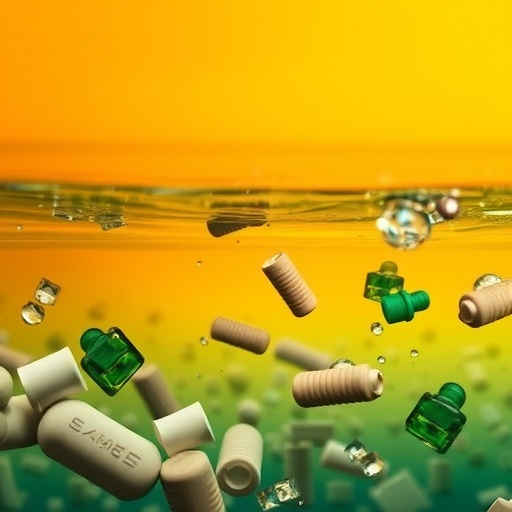
In the evolving landscape of environmental science, a pioneering study sheds light on a critical yet understudied intersection: the dynamics between microplastics and nitrogenous disinfection byproducts in drinking water systems. Authored by Li and Andrews, this groundbreaking research delves deep into the multifaceted interactions that extend far beyond the conventional paradigm of adsorption, unveiling complexities with significant implications for public health and water treatment protocols.
Microplastics—ubiquitous contaminants originating from the breakdown of larger plastic debris—have captured global attention for their pervasive presence in aquatic environments. Simultaneously, nitrogenous disinfection byproducts (N-DBPs), which form during water chlorination processes, have long posed concerns due to their potential toxicological effects. However, the confluence of these two contaminants has remained largely uncharted until now. The study meticulously explores how microplastics influence the formation, distribution, and persistence of N-DBPs within drinking water matrices, challenging prior assumptions predicated solely on adsorption phenomena.
Contrary to simplistic models where microplastics are regarded merely as passive adsorbents, Li and Andrews demonstrate that these particles actively contribute to the modulation of chemical reactions during chlorination. Their meticulous experiments reveal that the surface properties, polymer types, and aging of microplastics critically affect their interaction with nitrogenous precursors. For instance, aged microplastics with oxidized surfaces exhibit enhanced catalytic tendencies, promoting atypical reaction pathways that alter N-DBP speciation.
The research employs cutting-edge spectroscopic analyses and advanced chromatography techniques to unravel the molecular intricacies underpinning these interactions. Detailed characterization of microplastic surfaces combined with real-time monitoring of disinfection kinetics provides a comprehensive picture of how these particles serve as microreactors, facilitating the transformation of nitrogenous compounds in unexpected ways. This mechanistic insight challenges the current regulatory frameworks that often overlook the modifying role of particulate matter in disinfection chemistry.
Moreover, the environmental context in which these interactions occur plays a pivotal role. The study highlights the influence of environmental factors such as pH, temperature, and the presence of natural organic matter (NOM) on the fate and behavior of microplastics and N-DBPs. Such parameters dynamically modify the physicochemical interface, further complicating predictions of contaminant behavior in real-world scenarios. This nuanced understanding underscores the necessity for adaptive water treatment strategies that can accommodate these complex variables.
One of the standout revelations pertains to the differential effects observed across polymer types. Polyethylene, polypropylene, and polystyrene microplastics exhibit distinct affinities for nitrogenous precursors, which in turn affect the yield and toxicity of resultant byproducts. This polymer-specific interaction suggests that the heterogeneity of microplastic pollution demands equally diverse remediation approaches, moving beyond one-size-fits-all solutions traditionally applied in water purification.
Furthermore, the research insists on revisiting water safety guidelines in light of these novel findings. The intimate association between microplastics and disinfection chemistry could potentially exacerbate human exposure to harmful nitrogenous byproducts, some of which are linked to carcinogenic and mutagenic effects. This intersectionality positions microplastics not only as passive contaminants but as active modulators of chemical risk within potable water supplies.
The investigations also extend to the impact of microplastic aging, a factor seldom addressed in prior studies. Through controlled environmental simulations, the team demonstrates how UV-induced weathering and biofilm growth on microplastic surfaces modulate their reactivity with disinfection agents. Such findings illuminate the lifecycle-dependent behavior of microplastics, emphasizing the importance of accounting for environmental transformations when assessing water quality.
Intriguingly, the study also explores how microplastics might interfere with conventional water treatment technologies, such as activated carbon filtration and advanced oxidation processes. These interactions could hinder the efficacy of treatment methods or conversely, enhance certain reactions leading to elevated concentrations of nitrogenous byproducts. This dualistic effect presents both a challenge and an opportunity for technological innovation in water purification.
At a broader scale, the research prompts a paradigm shift in understanding anthropogenic impacts on water chemistry. The intricate interplay between emerging pollutants and disinfection chemistry is emblematic of the complex anthropogenic footprint on environmental systems. Such knowledge calls for integrative multidisciplinary approaches within environmental engineering, chemistry, and toxicology to develop holistic water safety solutions in an era marked by novel contaminants.
Beyond the laboratory, these findings carry significant policy implications. The dynamic interactions identified necessitate rigorous monitoring of microplastic content in water supplies alongside traditional chemical parameters. Regulatory agencies might need to incorporate guidelines specifically addressing the combined presence of microplastics and disinfection byproducts to safeguard public health more effectively.
Additionally, the study paves the way for future research directions aimed at mitigating the dual risks posed by microplastics and N-DBPs. Potential avenues include the development of targeted sorbents that selectively bind harmful byproducts, or the engineering of disinfection protocols tailored to the presence of microplastics. The identification of specific polymer types and aging conditions that heighten risks can inform targeted pollution control strategies.
In summation, Li and Andrews’ research is a seminal contribution that elevates our understanding of the environmentally and public health-relevant complexities resulting from microplastic contamination within drinking water systems. By illuminating the active role of microplastics in modulating nitrogenous disinfection byproduct formation, this work challenges conventional wisdom and opens new frontiers for scientific inquiry and policy reform. As drinking water safety remains paramount globally, integrating these insights into practice becomes an urgent imperative.
The implications of these findings resonate widely across environmental science, public health, and water engineering sectors. They underscore that tackling pollution demands a systemic perspective that acknowledges the intricate web of interactions between chemical and particulate contaminants. In the face of increasing plastic pollution, this study reinforces the need for proactive and innovative responses to protect human health and preserve the integrity of vital water resources.
Subject of Research: The study investigates the complex interactions between microplastics and nitrogenous disinfection byproducts in drinking water, focusing on mechanisms beyond simple adsorption and their implications for water treatment and safety.
Article Title: Microplastics and nitrogenous disinfection byproducts in drinking water: complex interactions beyond adsorption
Article References:
Li, Y., Andrews, S. Microplastics and nitrogenous disinfection byproducts in drinking water: complex interactions beyond adsorption. Micropl.& Nanopl. 5, 46 (2025). https://doi.org/10.1186/s43591-025-00155-4
Image Credits: AI Generated
DOI: https://doi.org/10.1186/s43591-025-00155-4
Tags: chlorination and water safetycomplex water chemistry interactionsdrinking water contaminationenvironmental science researchimpacts of plastic pollutioninteractions of microplastics and N-DBPsmicroplastics and chemical reactionsmicroplastics in drinking waternitrogen disinfection byproductspublic health implications of contaminantstoxicological effects of N-DBPswater treatment processes