• HOME
  • NEWS
  • EXPLORE
    • CAREER
      • Companies
      • Jobs
    • EVENTS
    • iGEM
      • News
      • Team
    • PHOTOS
    • VIDEO
    • WIKI
  • BLOG
  • COMMUNITY
    • FACEBOOK
    • INSTAGRAM
    • TWITTER
Saturday, February 7, 2026
BIOENGINEER.ORG
No Result
View All Result
  • Login
  • HOME
  • NEWS
  • EXPLORE
    • CAREER
      • Companies
      • Jobs
        • Lecturer
        • PhD Studentship
        • Postdoc
        • Research Assistant
    • EVENTS
    • iGEM
      • News
      • Team
    • PHOTOS
    • VIDEO
    • WIKI
  • BLOG
  • COMMUNITY
    • FACEBOOK
    • INSTAGRAM
    • TWITTER
  • HOME
  • NEWS
  • EXPLORE
    • CAREER
      • Companies
      • Jobs
        • Lecturer
        • PhD Studentship
        • Postdoc
        • Research Assistant
    • EVENTS
    • iGEM
      • News
      • Team
    • PHOTOS
    • VIDEO
    • WIKI
  • BLOG
  • COMMUNITY
    • FACEBOOK
    • INSTAGRAM
    • TWITTER
No Result
View All Result
Bioengineer.org
No Result
View All Result
Home NEWS Science News Biology

Microorganisms in the subsurface seabed on evolutionary standby

Bioengineer by Bioengineer
January 25, 2018
in Biology, Science News
Reading Time: 2 mins read
0
Share on FacebookShare on TwitterShare on LinkedinShare on RedditShare on Telegram
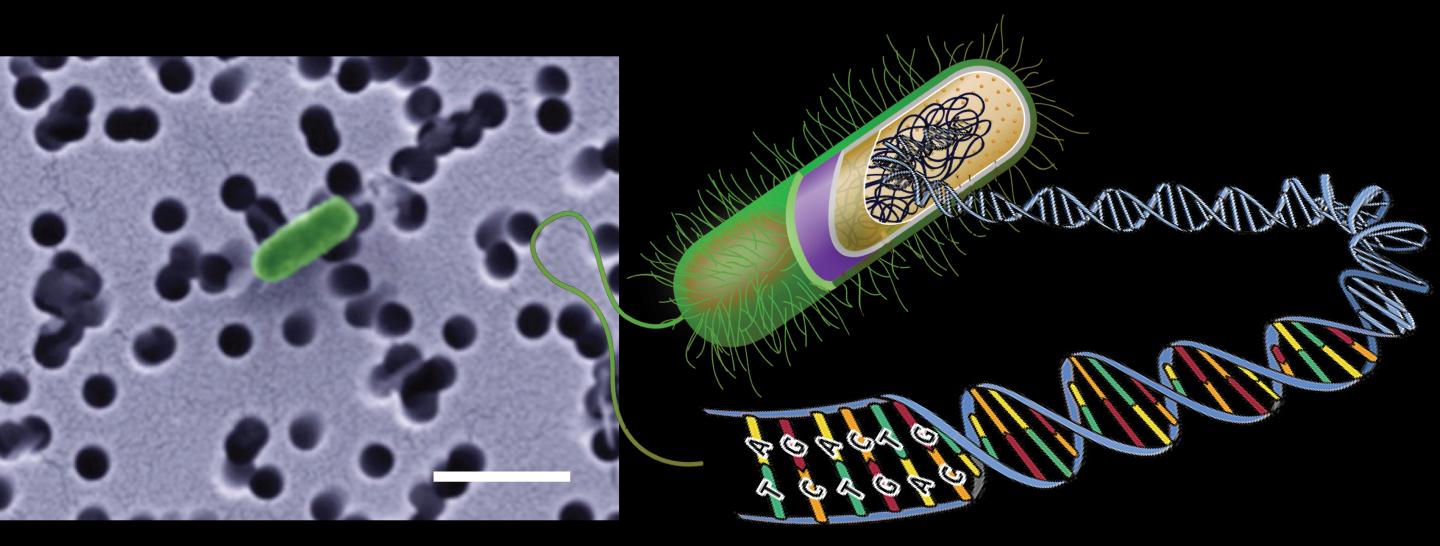
IMAGE

Credit: Photo: Stefan Braun. Graphic modified from Wikipedia and www.genesandhealth.org.

Researchers at the Center for Geomicrobiology at Aarhus University, Denmark, have sequenced the genomes of several microorganisms inhabiting the subsurface seabed in Aarhus Bay. The results reveal the extreme evolutionary regime controlling microbial life in the deep biosphere.

A life in slow motion

Microbial evolution is arrested in the subsurface seabed as cells are buried in under a continuously growing layer of deposited mud and their genetic material therefore remains unchanged during the millennia.

"This means that these buried microorganisms presumably have a very low adaptability, unlike the microbial life that otherwise surrounds us in our environment" says Kasper U. Kjeldsen, associate professor at the Center for Geomicrobiology, who participated in the research project.

Through genetic mutations microorganisms normally have the ability to develop new properties over a short time scale, thereby quickly adapting in response to their environment. But the researchers have shown that microbes grow in slow motion in the deep seabed with generation times of up to 100 years. Mutations therefore appear and spread very slowly in the subsurface populations. For comparison, intestinal bacteria typically have generation times of 20 minutes.

The microorganisms in the deep seabed live in an environment, which is extremely poor in food. Put simply, they chew on a lunch box, which has fed their ancestors for thousands of years, and the availability of energy is therefore minimal.

Buried alive

The microbial species we find in the deep seabed, are the same as those who lived at the seafloor for thousands of years ago. Unlike the majority of the members of surface community, these microorganisms survive burial deeper and deeper in to the subsurface.

It remains a mystery why these microorganisms have an inherent ability to grow under the extreme conditions that occur in the deep seabed.

The researchers hope that the new findings could ultimately help us to understand and reconstruct past environmental and climatic conditions based on analysis of the microbial species composition in deep marine sediment cores.

The discovery, which has changed our understanding of microbial life in the soil deep biosphere, was recentlt published in the highly acclaimed international journal Proceedings of the National Academy of Sciences of the United States America (PNAS).

###

CONTACT

Associate Professor Kasper U. Kjeldsen
Email: [email protected]
www: http://pure.au.dk/portal/en/
Phone: +45 8715 6506

Professor Andreas Schramm
Email: [email protected]
www: http://pure.au.dk/portal/en/
Phone: +45 8715 6541

Center for Geomicrobiology and Section for Microbiology, Department of Bioscience, Aarhus University.

Media Contact

Associate Professor Kasper U. Kjeldsen
[email protected]
0045-87-15-65-06
@aarhusuni

http://www.au.dk
Share12Tweet8Share2ShareShareShare2

Related Posts

Scientists Identify SARS-CoV-2 PLpro and RIPK1 Inhibitors Showing Potent Synergistic Antiviral Effects in Mouse COVID-19 Model

February 7, 2026

Neg-Entropy: The Key Therapeutic Target for Chronic Diseases

February 7, 2026

Multidisciplinary Evidence-Based Guidelines for Therapeutic Drug Monitoring of Biologics in Inflammatory Bowel Disease

February 7, 2026

Early Tuberculosis Treatment Lowers Sepsis Mortality in People with HIV

February 7, 2026
Please login to join discussion

POPULAR NEWS

  • Robotic Ureteral Reconstruction: A Novel Approach

    Robotic Ureteral Reconstruction: A Novel Approach

    82 shares
    Share 33 Tweet 21
  • Digital Privacy: Health Data Control in Incarceration

    63 shares
    Share 25 Tweet 16
  • Study Reveals Lipid Accumulation in ME/CFS Cells

    57 shares
    Share 23 Tweet 14
  • Breakthrough in RNA Research Accelerates Medical Innovations Timeline

    53 shares
    Share 21 Tweet 13

About

We bring you the latest biotechnology news from best research centers and universities around the world. Check our website.

Follow us

Recent News

Scientists Identify SARS-CoV-2 PLpro and RIPK1 Inhibitors Showing Potent Synergistic Antiviral Effects in Mouse COVID-19 Model

Neg-Entropy: The Key Therapeutic Target for Chronic Diseases

Multidisciplinary Evidence-Based Guidelines for Therapeutic Drug Monitoring of Biologics in Inflammatory Bowel Disease

Subscribe to Blog via Email

Enter your email address to subscribe to this blog and receive notifications of new posts by email.

Join 73 other subscribers
  • Contact Us

Bioengineer.org © Copyright 2023 All Rights Reserved.

Welcome Back!

Login to your account below

Forgotten Password?

Retrieve your password

Please enter your username or email address to reset your password.

Log In
No Result
View All Result
  • Homepages
    • Home Page 1
    • Home Page 2
  • News
  • National
  • Business
  • Health
  • Lifestyle
  • Science

Bioengineer.org © Copyright 2023 All Rights Reserved.