Researchers have developed spray-dried microcapsules that co-encapsulate lactic acid and ajwain essential oil, and report that the formulation shows antibacterial activity in laboratory tests and partially blunts some infection-associated changes in a mouse model of Clostridium perfringens challenge. The study, published as an open-access original article in Annals of Microbiology, is presented as preliminary evidence rather than proof of a therapeutic effect.
Clostridium perfringens is an important pathogen associated with foodborne disease and necrotic enteritis, and infection-related alterations in oxidative and inflammatory responses are thought to contribute to tissue damage. The research team, led by Nafise Yarabi with Ehsan Karimi and Ehsan Oskoueian, set out to develop and characterize the co-encapsulated formulation, designated LA-AEO-M, and to evaluate its antibacterial activity in vitro and its effects in a challenge model.
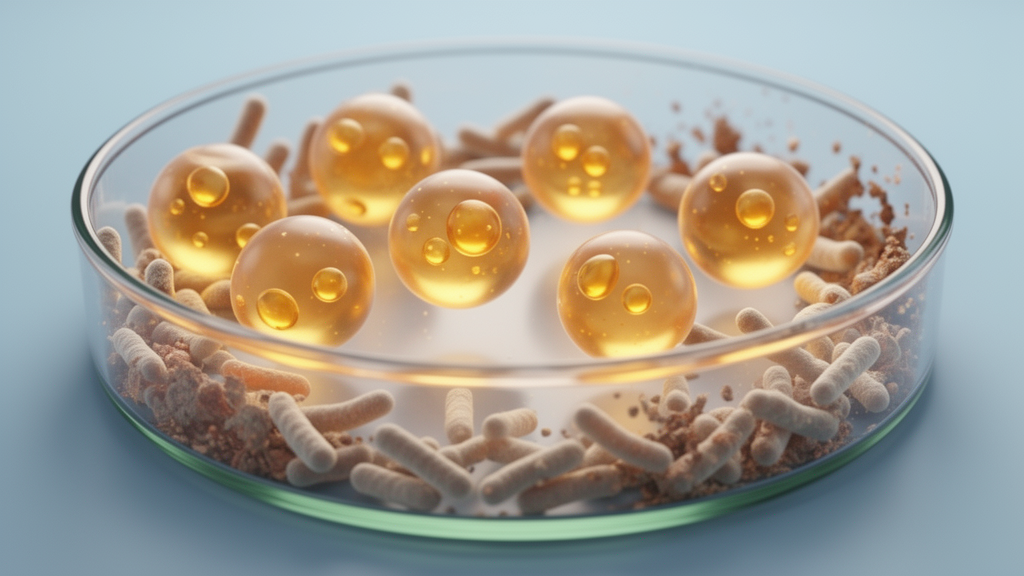
Characterization with dynamic light scattering, zeta-potential analysis and scanning electron microscopy showed that the microcapsules had a mean particle diameter of 381.2 nanometres, a polydispersity index of 0.574 and a zeta potential of −35.4 ± 1.45 mV, with predominantly spherical and relatively smooth morphology. Encapsulation efficiency was 89.0 ± 4.62 percent.
Gas chromatography–mass spectrometry of the ajwain (Trachyspermum ammi) essential oil identified thymol at 58.88 percent, p-cymene at 24.02 percent and γ-terpinene at 13.78 percent as the major constituents.
In vitro, LA-AEO-M inhibited the growth of C. perfringens as well as Staphylococcus epidermidis, Staphylococcus aureus, Escherichia coli and Klebsiella pneumoniae, producing inhibition zones of 9.33 to 14.33 millimetres. Minimum inhibitory concentrations ranged from 150 to 400 micrograms per millilitre, while minimum bactericidal concentrations ranged from 300 to 400 micrograms per millilitre, with MBC/MIC ratios of 4 or below under the assay conditions used.
In mice challenged with C. perfringens, dietary administration of LA-AEO-M at 150 milligrams per kilogram of diet significantly improved average daily weight gain and feed intake compared with infected untreated animals.
In the challenged mice, LA-AEO-M partially restored the infection-associated changes in the activities of the antioxidant enzymes superoxide dismutase, catalase and glutathione peroxidase, and in immunoglobulin levels. Histological and morphometric analyses indicated partial improvement of the infection-associated intestinal tissue alterations, and the microcapsules reduced the infection-associated upregulation of inducible nitric oxide synthase expression in intestinal tissue, a marker linked to inflammatory responses.
The authors are explicit about the limits of the work. Bacterial burden, direct markers of oxidative damage and inflammatory cytokines, component-specific effects, and the contribution of microencapsulation itself to the observed biological activity were not determined. Because the study relied on a single challenge model and measured indirect markers, the findings are described as preliminary evidence that LA-AEO-M possesses antibacterial activity and may attenuate selected physiological, biochemical, histological and inflammation-associated changes following challenge.
Those caveats matter for interpretation. Improved weight gain and feed intake in challenged mice, partial normalization of liver enzyme activities and reduced iNOS expression are associations observed in this specific experiment, not demonstrations of mechanism or of clinical benefit. The microcapsule formulation was characterized thoroughly at the physicochemical level, but whether encapsulation, rather than the free compounds, drove the effects remains an open question the authors themselves flag for future work.
The study is published under open access, with the version shared early as a citable, peer-reviewed accepted manuscript that will be replaced by the final Version of Record. The authors conclude that further controlled studies are required to establish the underlying mechanisms and the therapeutic potential of LA-AEO-M, positioning this work as an early formulation-stage contribution to the search for alternatives against C. perfringens-associated disease.
Subject of Research: Development of lactic acid and ajwain essential oil microcapsules evaluated against Clostridium perfringens in vitro and in a mouse challenge model
Article Title: Microencapsulation of lactic acid and ajwain essential oil: a novel strategy to attenuate oxidative damage and inflammatory responses in Clostridium perfringens pathogenesis
Article References: Yarabi, N., Karimi, E., & Oskoueian, E. (2026). Microencapsulation of lactic acid and ajwain essential oil: a novel strategy to attenuate oxidative damage and inflammatory responses in Clostridium perfringens pathogenesis. Annals of Microbiology. https://doi.org/10.1186/s13213-026-01881-7
Image Credits: AI Generated
DOI: 10.1186/s13213-026-01881-7
Keywords: Clostridium perfringens, microencapsulation, lactic acid, ajwain essential oil, thymol, antibacterial activity, necrotic enteritis, oxidative stress, inflammation, spray drying, mouse model, foodborne pathogen
News Source: Kristina Jarvis. (October 28, 2026). Microcapsules of Lactic Acid and Ajwain Oil Show Early Promise Against Clostridium perfringens. Scienmag.