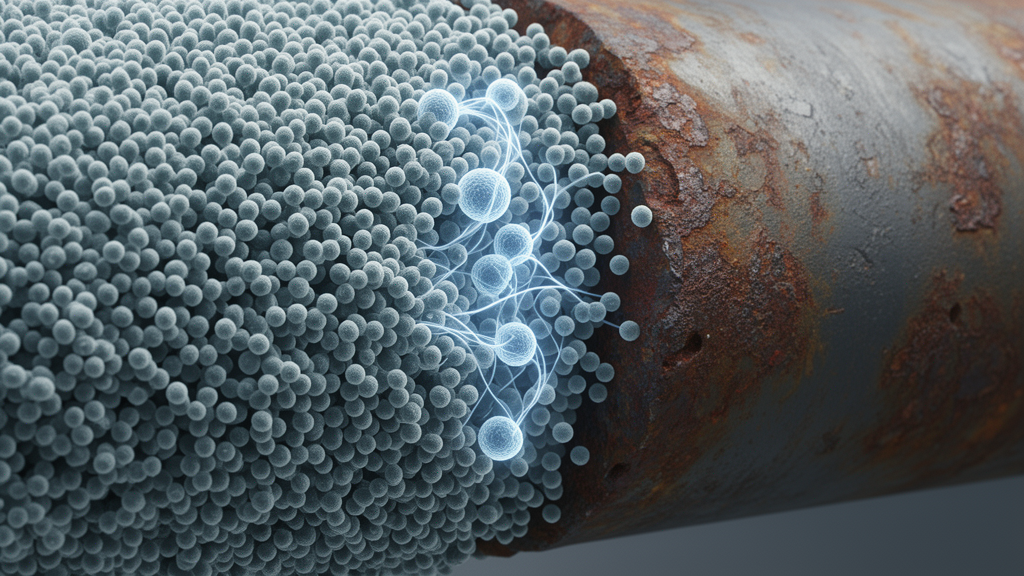
Microbiologically influenced corrosion poses an escalating operational challenge across petroleum extraction, transport, and refining networks, driving up to twenty percent of total industrial corrosion expenses and causing multi-billion-dollar infrastructure failures such as the historic Prudhoe Bay oil spill. A comprehensive review published in Discover Bacteria by Mohammed Arroussi and colleagues examines the intricate electro-biochemical pathways through which sessile microorganisms colonize metallic surfaces, establish resilient biofilms, and systematically compromise oil pipelines. As global energy consumption is projected to surge by up to sixty percent over the next three decades, pipelines serving extraction, production, and distribution remain acutely vulnerable to microbial colonization. When microorganisms adhere to structural alloys, the maturing biofilm drastically alters the local electrochemical conditions at the sessile cell and metal interface. This cellular attachment triggers severe internal biofouling, accelerates chemical biodegradation of exploration hardware and cooling circuits, degrades crude oil quality, and threatens the mechanical integrity of critical pipeline transportation assets worldwide.
The operational pipeline environment acquires its microbial populations primarily from subterranean geological reservoirs and surface freshwaters introduced during drilling and hydraulic fracturing operations. Deep subsurface formations serve as thriving microenvironments containing diverse organic hydrocarbons, sulfides, and inorganic minerals that act as electron donors and acceptors. Within these stratified subterranean strata, microbial proliferation concentrates primarily within the narrow transition zone between oil and formation water, where electron donors from hydrocarbons encounter aqueous electron acceptors. Extremophiles dominate these native communities, including barophilic, halophilic, and hyperthermophilic taxa such as Thermodesulfobacterium, Thermoanaerobacter, Archaeoglobus, Pyrolobus fumarii, and Thermococcus. Certain isolated taxa, such as Deferribacter thermophilus recovered from North Sea oilfields, directly couple hydrogen oxidation to the reduction of iron species. When formation fluids are pumped toward refining facilities, these resident bacteria and archaea are carried directly through pipelines, where they establish persistent sessile communities across internal pipe walls and processing equipment.
A primary driver of catastrophic pipeline degradation is biological reservoir souring, driven by sulfidogenic microorganisms that convert sulfate compounds into highly toxic hydrogen sulfide. Sulfidogenic communities span seven recognized taxonomic groups, comprising five bacterial lineages including Desulfosporomusa, Desulfosporosinus, and Desulfotomaculum alongside two distinct archaeal groups. Native petroleum reservoirs naturally harbor restricted baseline sulfate concentrations, but enhanced oil recovery operations frequently inject vast volumes of sulfate-bearing water to displace trapped hydrocarbons. This external sulfate influx stimulates sulfate-reducing bacteria and sulfate-reducing archaea, accelerating the reduction of sulfate into hydrogen sulfide, bisulfide, and sulfide ions governed by ambient temperature and acidity. The biogenic generation of hydrogen sulfide induces widespread souring throughout global petroleum reserves and triggers precipitation of conductive iron sulfide deposits onto structural steel surfaces. These iron sulfide films subsequently establish localized galvanic couples that accelerate aggressive localized pitting and facilitate secondary failure mechanisms, including crevice corrosion and stress corrosion cracking.
Hydrodynamic flow velocity and internal gas blending exert decisive control over biofilm stability and pipeline corrosion rates. Modest increases in fluid flow velocity enhance nutrient and dissolved oxygen transport to sessile colonies, accelerating corrosion susceptibility. Conversely, intense shear stresses induce mechanical detachment of biofilms and stimulate genes responsible for cellular dispersion. Laboratory simulations demonstrate that Desulfovibrio desulfuricans cannot successfully adhere or form biofilms in electrochemical glass cell bioreactors at three thousand revolutions per minute, while Desulfomicrobium species fail to establish stable biofilms on X70 steel at velocities of one meter per second. However, multispecies biofilms remain resiliently attached to API 5L X60 steel under flow velocities reaching three meters per second. Concurrently, blending hydrogen gas into natural gas grids creates complex corrosion dynamics. Hydrogenase-positive bacteria and methanogens readily utilize supplemental hydrogen as an electron donor, elevating hydrogen permeation flux through ferritic-pearlitic alloys up to 8.2 multiplied by ten to the negative eighth moles per meter-second.
Internal pipeline environments are further destabilized by the coexistence of corrosive chemical species within water condensation zones. Condensed moisture accumulating along internal pipe walls at critical rates between 0.001 and 2.25 milliliters per square meter per second creates highly aggressive local environments where dissolved carbon dioxide and hydrogen sulfide interact with resident biofilms. Carbon dioxide dissolution generally reduces local pH and can suppress bacterial motility by inactivating metabolic enzymes, yet specific experimental systems demonstrate contrary effects. In controlled evaluations, carbon dioxide exposure stimulated sulfate-reducing bacterial biofilms on X52 steel pipes, generating localized corrosion depths reaching seventy micrometers, while L245 steel experienced significantly more severe pitting under combined carbon dioxide and bacterial attack than under abiotic carbon dioxide alone. Concurrently, iron oxidation yields secondary corrosion products including iron carbonate, iron hydroxide, and magnetite. The incorporation of magnetite into microbial biofilms accelerates electrochemical metal dissolution, with additions as low as twenty parts per million markedly promoting pitting.
At the cellular level, microbiologically influenced corrosion proceeds through metabolite excretion and extracellular electron transfer mechanisms. Metabolite-induced corrosion involves corrosive by-products such as acetic acid produced by Acetobacter aceti or biogenic hydrogen sulfide generated by Desulfovibrio species, driving localized acid dissolution and sulfide stress attacks. In contrast, extracellular electron transfer allows electroactive microbes to exchange electrons directly with metallic surfaces. Microorganisms execute electron uptake through direct contact utilizing specialized outer-membrane c-type cytochromes or conductive nanowire pili, as observed in Geobacter sulfurreducens and Shewanella species. Alternatively, mediated transfer relies on endogenous or exogenous soluble electron shuttles such as riboflavin and phenazines. When carbon nutrients become depleted, electroactive species undergo metabolic shifts, utilizing elemental iron directly as an electron donor to sustain biocatalytic cathodic sulfate or nitrate reduction. Genetic knockout investigations deleting specific hydrogenases or outer-membrane MtrCAB cytochrome complexes confirm that strains deprived of direct electron transfer machinery exhibit substantially altered corrosion activity compared to wild-type counterparts.
Physical sediment accumulation on pipe surfaces triggers under-deposit microbiologically influenced corrosion, governed by scale mineralogy, deposit thickness, and embedded microbial composition. Evaluated deposits include silica, calcium carbonate, barium sulfate, and iron oxides such as hematite and magnetite. Experimental trials demonstrate complex synergistic interactions beneath these mineral layers. In fourteen-day immersion tests on N80 carbon steel, Yan and co-workers recorded mean pit depths of 7.42 micrometers in abiotic control media, 4.53 micrometers under mineral deposits alone, and 9.03 micrometers with sulfate-reducing bacteria, whereas combined deposit and bacterial systems produced severe pitting averaging 12.03 micrometers. Similarly, Diaz-Mateus and colleagues observed that multispecies biofilms coexisting with magnetite deposits generated an annual penetration rate of 0.611 millimeters per year on N80 steel, representing a 3.5-fold increase over the summed independent rates of consortium and deposit controls. However, deposit effects vary across consortia, as magnetite layers can conversely suppress certain multispecies biofilms depending on available electron donors and acceptors.
Mechanical stress significantly intensifies microbiologically influenced degradation, culminating in stress corrosion cracking and severe mechanical deterioration. The real-world peril of this synergistic mechanism was highlighted in April 2024 when combined external mechanical stress and sulfate-reducing bacteria precipitated the failure of an active API 5L X52 refined petroleum products pipeline in northern Iran. In laboratory evaluations on X80 pipeline steel, applied elastic stresses below 400 megapascals caused negligible changes in sessile bacterial attachment, whereas increasing stress loads from 400 to 550 megapascals stimulated Desulfovibrio biofilm formation. Under 550 megapascals of stress, the corrosion current density of X80 steel escalated from 16.8 to 44.3 milliamperes per square centimeter, sharply decreasing fracture strain. Beyond structural cracking, sustained microbial colonization induces severe loss of mechanical ductility and tensile strength. Controlled immersion tests reveal that twenty-one days of sulfate-reducing bacterial exposure reduced X80 ultimate strength by nine percent and ultimate tensile strain by eighteen percent, corresponding to localized pit depths reaching 30.6 micrometers.
Industrial mitigation of pipeline biocorrosion relies on specialized chemical, electrochemical, and operational interventions, though each presents notable technical trade-offs. Cathodic protection systems supply negative electrochemical potentials to suppress thermodynamic metal dissolution, yet electroactive sessile microbes can capture cathodic electrons directly, occasionally stimulating biofilm growth on steel surfaces even at polarized levels of minus 850 millivolts. Chemical biocide treatments remain the primary operational countermeasure, deploying formulations such as glutaraldehyde and tetrakis hydroxymethyl phosphonium sulfate, commonly known as THPS. Supplementing sulfate-reducing bacterial broths with one hundred parts per million of THPS completely averted tensile stress loss in X80 steel specimens, reducing ultimate tensile strain loss to just three percent compared to thirteen percent in untreated controls. Meanwhile, injecting nitrate into reservoirs to encourage nitrate-reducing bacteria and competitively suppress sulfate reduction introduces secondary hazards, as proliferating nitrate-reducing strains like Bacillus licheniformis and Pseudomonas aeruginosa can accelerate aggressive pitting and weaken protective passive films on pipeline alloys.
Emerging mitigation approaches focus on advanced metallurgical formulations and predictive machine learning models to overcome traditional pipeline monitoring limitations. Incorporating antibacterial elements, particularly copper, into stainless steels and titanium alloys generates toxic copper ions that disrupt bacterial enzymes and cell membranes, providing robust resistance against sessile colonization. In parallel, artificial intelligence architectures, including support vector machines and artificial neural networks, are being trained on multi-variable environmental and electrochemical datasets to model non-linear microbial dynamics and improve early risk forecasting. Nevertheless, critical research gaps persist across the discipline. Current laboratory investigations rely heavily on simplified single-strain cultures that fail to replicate the complex ecological dynamics of field consortia. Moreover, standardized techniques for continuous online detection of microbial pitting without removing protective scales remain unestablished, while localized electrochemical methods demand specialized modeling to interpret mature biofilm interfaces. Resolving these diagnostic and metallurgical barriers remains essential for securing long-term pipeline safety across global energy infrastructure.
Subject of Research: Mechanisms and mitigation strategies of microbiologically influenced corrosion in petroleum pipelines
Article Title: Advances in understanding microbial corrosion of oil pipelines
Article References: Arroussi, M., ulhaq Toor, I., Ma, W., Shams, A., & Al-Athel, K. (2026). Advances in understanding microbial corrosion of oil pipelines. Discover Bacteria, 3(1), Article 8. https://doi.org/10.1007/s44351-026-00046-w
Image Credits: AI Generated
DOI: 10.1007/s44351-026-00046-w
Keywords: microbiologically influenced corrosion, oil pipelines, biofilm formation, sulfate-reducing bacteria, extracellular electron transfer, stress corrosion cracking, under-deposit corrosion, hydrogen sulfide, reservoir souring, biocides, cathodic protection, Desulfovibrio vulgaris, nitrate injection, copper-bearing alloys, Shewanella oneidensis, direct electron transfer, pipeline integrity, carbon steel
News Source: Morgan Morrow. (November 16, 2026). Microbial Biofilms Drive Severe Pipeline Corrosion Through Direct Cellular Electron Transfer. Scienmag.