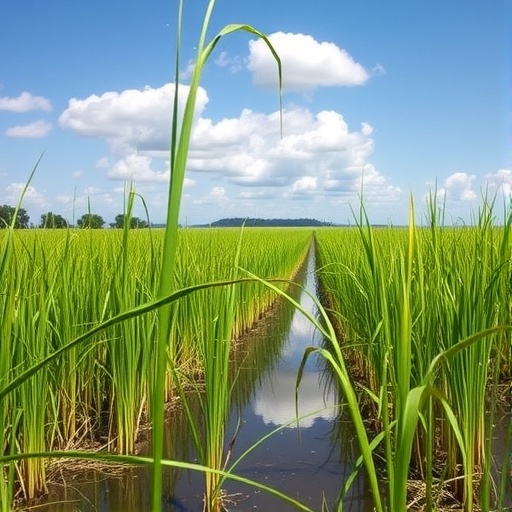
In an era defined by the urgent need for sustainable agricultural practices, a groundbreaking study published in Discover Agriculture introduces a cutting-edge approach to managing agricultural waste. This research, led by scientists Dhadse and Khan, explores microbial-assisted rapid vermistabilization of paddy straw residue, spotlighting a revolutionary method for resource recovery that could reshape sustainable farming practices on a global scale. As the demand for agricultural resources increases, the efficient management of crop residues becomes crucial in mitigating environmental impacts and fostering soil health.
The foundation of the research revolves around the process of vermistabilization, a natural phenomenon wherein earthworms and microbial activity collaborate to decompose organic matter. This study positions microbial assistance as a transformative factor, significantly accelerating the breakdown of paddy straw into nutrient-rich organic fertilizers. By integrating microbial inoculants with traditional vermistabilization, this novel approach not only expedites the conversion of agricultural waste but also enriches the end product, offering farmers a valuable resource to enhance soil fertility.
Traditional methods of disposing of paddy straw commonly involved burning the residue, which released greenhouse gases and harmful pollutants into the atmosphere. Dhadse and Khan emphasize the detrimental environmental effects of this practice, highlighting the urgency for alternative strategies. The research presents microbial-assisted vermistabilization as a dual solution: it addresses the immediate need for effective residue management while simultaneously contributing to carbon sequestration efforts, thereby playing a role in the global fight against climate change.
Moreover, the microbial communities utilized in this study were carefully selected for their efficiency in breaking down lignocellulosic materials. These microorganisms not only enhance the decomposition process but also contribute to the stabilization of organic matter, ultimately resulting in the production of high-quality vermicompost. The implications of such a method are profound; not only can farmers reduce waste, but they also gain access to an eco-friendly fertilizer that promotes sustained soil health and productivity.
The experimental results were striking. Compared to conventional methods, the microbial-assisted approach showed a remarkable reduction in the time needed for paddy straw decomposition. This efficiency translates into substantial labor and cost savings for farmers, who can utilize their resources much more effectively. Given that paddy straw is often in abundance following harvest, the potential for widespread adoption of this method could lead to significant reductions in agricultural waste.
Additionally, this research opens the door to further exploration of microbial synergism in agricultural applications. By understanding the interactions between different microbial species and earthworms, future studies can innovate multiple pathways for waste management and soil improvement. This deeper understanding may lead to the development of tailored microbial consortia designed for specific waste materials, enhancing the effectiveness of vermistabilization across various agricultural landscapes.
Economic benefits also emerge as a key theme of the study. The researchers highlight that the by-products of this process can be sold, creating an additional revenue stream for farmers. Given the rising costs of synthetic fertilizers, this sustainable alternative not only reduces reliance on chemical inputs but also promotes a circular economy within agricultural sectors. Farmers adopting this method can potentially see enhanced profits while contributing to environmental stewardship.
As the agricultural community grapples with climatic uncertainties and resource limitations, innovative methods like microbial-assisted rapid vermistabilization offer a glimmer of hope. The integration of science and traditional farming practices creates a compelling narrative for sustainable agriculture, one that is increasingly necessary in our current context. Such advancements reflect a growing awareness among researchers and farmers alike regarding the importance of sustainable practices in ensuring food security for future generations.
In conclusion, the pioneering research conducted by Dhadse and Khan highlights the vital importance of microbial-assisted rapid vermistabilization as a sustainable strategy for paddy straw management. By utilizing microbiology in conjunction with traditional composting techniques, farmers enhance their productivity while simultaneously contributing to environmental conservation. The significance of this work extends beyond the immediate benefits to individual farmers; it represents a crucial shift toward sustainable agriculture that respects both the earth and the communities that depend on it.
As the study shows, the intersection of science, innovation, and sustainable practices can lead to effective solutions for modern agricultural challenges. The findings not only present a powerful argument for the adoption of microbial technologies in farming but also inspire a reimagining of agricultural methodologies. By harnessing the power of nature, the agricultural sector can move towards a more sustainable and profitable future, ensuring that farming remains viable in an ever-changing world.
This research acts as a clarion call for the agricultural community, urging it to embrace scientific advancements that align with ecological preservation. There is no doubt that the journey towards sustainability will be paved with challenges, but studies like this illuminate the path forward, suggesting that through innovation and collaboration, a more sustainable agricultural future is indeed possible.
Subject of Research: Microbial-assisted rapid vermistabilization of paddy straw residue.
Article Title: Microbial-assisted rapid vermistabilization of paddy straw residue: a sustainable resource recovery approach.
Article References:
Dhadse, S., Khan, S. Microbial-assisted rapid vermistabilization of paddy straw residue: a sustainable resource recovery approach.
Discov Agric 3, 265 (2025). https://doi.org/10.1007/s44279-025-00452-9
Image Credits: AI Generated
DOI: https://doi.org/10.1007/s44279-025-00452-9
Keywords: sustainable agriculture, microbial technology, paddy straw management, vermistabilization, organic fertilizers, environmental conservation.
Tags: agricultural waste transformationearthworm and microbial collaborationeco-friendly farming solutionsenvironmental impact of burning strawinnovative crop residue managementmicrobial-assisted vermistabilizationorganic fertilizer productionpaddy straw managementreducing agricultural emissionsresource recovery in farmingsoil health improvementsustainable agriculture practices