Microalgae-based living hydrogels represent an emerging class of engineered living materials that combine biological activity with hydrated polymer networks, yet their practical translation for soil remediation remains constrained by a lack of field-scale validation. In a critical review published in Chemical and Biological Technologies in Agriculture, researchers led by Adamu Yunusa Ugya evaluated the current state of evidence surrounding these multifunctional platforms, specifically examining how well controlled laboratory mechanisms translate into complex soil environments.
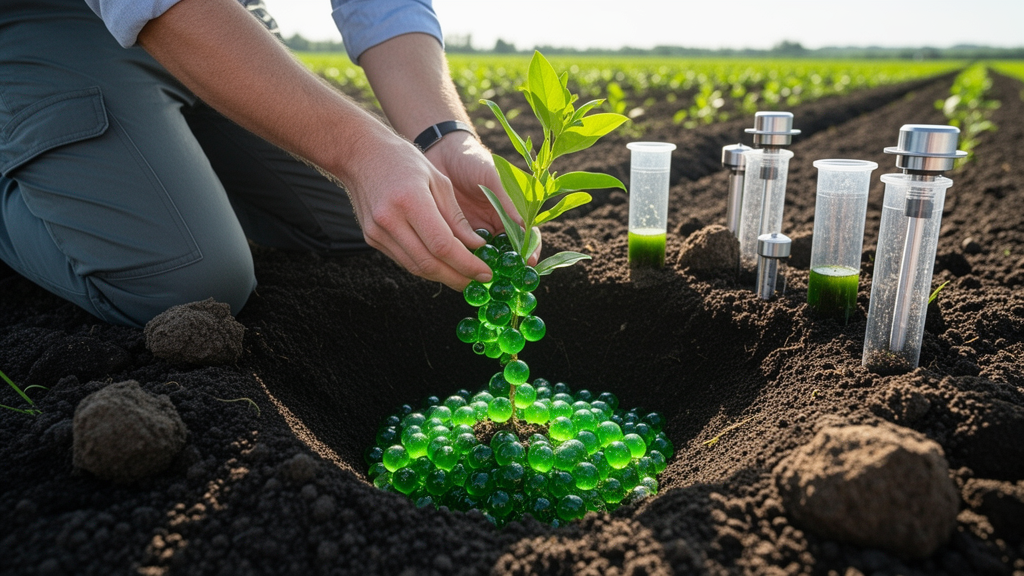
The conceptual framework for microalgae-hydrogel composites positions them as localized soil biogeochemical reactors capable of performing multiple environmental functions simultaneously. By integrating living microalgal cells within hydrated polymer networks, these systems are designed to regulate microenvironments and facilitate localized mass transfer. The authors note that the core remediation mechanisms under examination include contaminant sorption, biological transformation, nutrient assimilation, and soil water regulation, though current understanding frequently relies on mechanisms extrapolated from aquatic and other controlled experimental systems rather than direct soil observations.
According to available studies synthesized in the review, the hydrogel matrix itself plays several well-documented physical roles, including the stabilization and immobilization of microalgae, the enhancement of water retention, and the localized control of diffusion and mass transfer. Microalgal components contribute biologically by assimilating nutrients and interacting directly with target contaminants. However, the authors emphasize that the relative functional contributions of the living microalgal component versus the abiotic hydrogel matrix remain insufficiently resolved, particularly when these composites are deployed in native soil matrices.
The review also evaluates emerging material strategies aimed at fine-tuning soil remediation processes, including stimuli-responsive matrices and hybrid hydrogel formulations. These advanced platforms offer potential pathways for context-dependent regulation, allowing biological and physicochemical reactions to adjust dynamically to changing soil conditions. In addition, the integration of spatially organized microbial systems and synthetic microbiomes presents theoretical opportunities to optimize plant-soil-hydrogel interactions. Nonetheless, the authors caution that many of these advanced material designs remain at the proof-of-concept or purely conceptual stage and have yet to be validated under realistic soil environments.
Beyond direct contaminant management, microalgae-based hydrogels have been widely discussed in literature for broader ecological benefits, including enhancing climate resilience, altering carbon dynamics, and delivering ecosystem services. The review underscores that these broader environmental claims currently lack rigorous empirical backing. Proposed benefits relating to soil carbon dynamics and overall climate mitigation remain insufficiently quantified at the field scale, leaving significant gaps between theoretical projections and demonstrated ecological performance.
Transitioning microalgae-based living hydrogels beyond bench-scale and controlled experiments faces multiple critical scientific and operational hurdles. The authors identify a pronounced scarcity of long-term, multi-season field evidence across diverse soil types and climatic zones. Furthermore, the ultimate fate of contaminants processed by these composites remains uncertain, plant-soil-microbiome interactions are not fully understood, and the research field currently lacks standardized performance metrics to compare outcomes across different experimental designs.
To establish whether microalgae-based living hydrogels offer genuine environmental and functional advantages over established remediation technologies, the authors urge the scientific community to adopt more rigorous comparative frameworks. Future research must prioritize trials that directly compare microalgae-hydrogel composites against free microalgae and hydrogel-only treatments under contrasting soil and climatic regimes. Additionally, comprehensive mechanistic evaluations of contaminant removal, ecological risk assessments, and integrated techno-economic and life-cycle analyses will be essential to establish the viability and sustainability of living hydrogels for large-scale environmental remediation.
Subject of Research: Critical evaluation of microalgae-based living hydrogels for soil remediation
Article Title: Microalgae-based living hydrogels as engineered soil biogeochemical reactors: bridging synthetic microbiomes, climate resilience, and sustainable remediation
Article References: Ugya, A. Y., Sheng, Y., Ajibade, F. O., Chen, H., & Wang, Q. (2026). Microalgae-based living hydrogels as engineered soil biogeochemical reactors: bridging synthetic microbiomes, climate resilience, and sustainable remediation. Chemical and Biological Technologies in Agriculture. https://doi.org/10.1186/s40538-026-01086-9
Image Credits: AI Generated
DOI: 10.1186/s40538-026-01086-9
Keywords: microalgae-based hydrogels, engineered living materials, soil remediation, biogeochemical reactors, hydrogel matrices, microalgal immobilization, contaminant sorption, nutrient assimilation, biological transformation, soil water retention, stimuli-responsive hydrogels, hybrid hydrogels, plant-soil-hydrogel interactions, synthetic microbiomes, microenvironmental control, mass transfer regulation, ecological risk evaluation, techno-economic assessment
News Source: Gregory Coleman. (November 11, 2026). Microalgae hydrogels offer soil remediation potential but lack robust field validation. Scienmag.