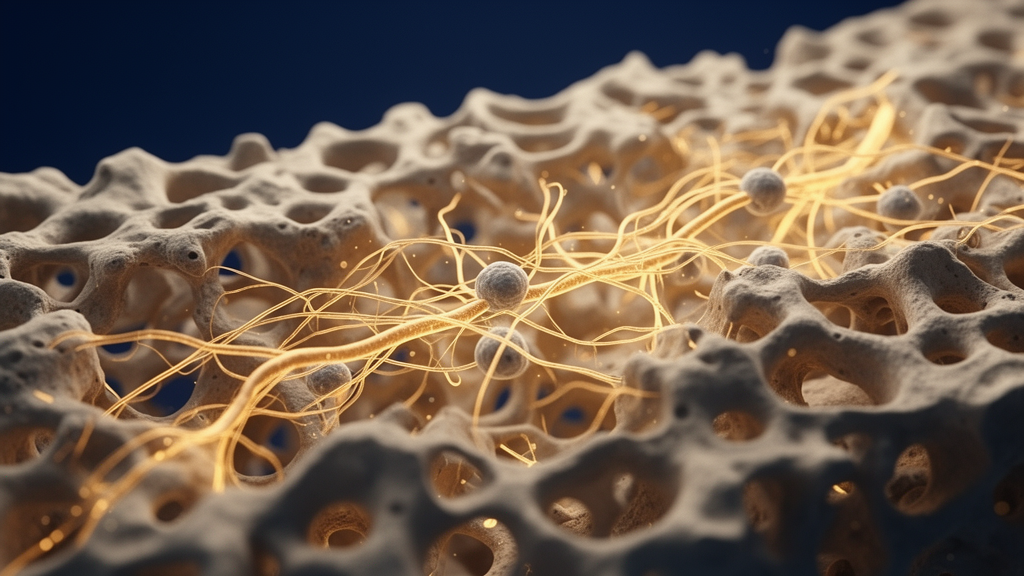
Researchers from the Institute of Science Tokyo have identified a critical role for sensory nerves in maintaining bone mass during periods of changing mechanical loading. In a study involving mice, the team demonstrated that sensory nerve abundance within bone tissue fluctuates in direct response to mechanical unloading and subsequent reloading. When these specific nerves were removed, the mice failed to recover bone mass after mechanical loading was restored. These findings establish a direct link between mechanical forces, sensory nerve activity, and the physiological process of bone recovery, offering potential avenues for new therapeutic strategies for osteoporosis and bone fragility.
Bone is a dynamic tissue that is continuously broken down and rebuilt through a process known as bone remodeling. This metabolic activity helps maintain bone mass and strength in response to the physical forces applied to the skeleton. When mechanical forces decrease due to prolonged inactivity, bed rest, or other forms of unloading, the balance of this remodeling process shifts toward bone loss and structural weakening.
To address this gap in knowledge, researchers from the Institute of Science Tokyo, Japan, investigated the effects of mechanical unloading and reloading in mice. The study focused specifically on how these changes in mechanical loading affected sensory nerves and their subsequent role in maintaining bone health. The research was led by Associate Professor Shingo Sato, Professor Toshitaka Yoshii, and graduate student Shohei Tsujino, all affiliated with the Department of Orthopaedic Surgery at Science Tokyo. The team also included collaborators from the National Rehabilitation Center for Persons with Disabilities, Saitama Medical University, the University of Tsukuba, and Juntendo University Graduate School of Medicine.
The study utilized a unique combination of spaceflight and ground-based experiments to simulate different levels of mechanical loading. The researchers examined mice housed in the “Kibo” Japanese Experiment Module on the International Space Station, where the microgravity environment greatly reduces mechanical loading on the skeleton. To complement the spaceflight data, the team also employed two widely used ground-based models: tail suspension and hindlimb immobilization. These models are standard tools in research for reducing mechanical loading specifically on the hind limbs of mice, allowing for controlled comparison with the spaceflight conditions.
In these experiments, the researchers measured changes in bone mass and the abundance of sensory nerves inside the bones. They also investigated the physiological response when mechanical loading was restored after a period of unloading. The results showed that reducing mechanical loading caused the mice to lose both bone mass and sensory nerves within their bones. This pattern of loss was observed consistently in both the mice exposed to microgravity in space and those subjected to the ground-based unloading models. When mechanical loading was subsequently restored, both bone mass and sensory nerve abundance recovered, indicating a reversible process tied to mechanical stimulus.
Furthermore, the research team provided evidence that sensory nerves inside bone actively help maintain bone health in response to changes in mechanical loading. These nerves release signaling molecules known as neuropeptides, which interact with bone cells to influence bone metabolism. In a specific experiment, the researchers administered one of these neuropeptides, calcitonin gene-related peptide (CGRP), to mice during tail suspension. The mice treated with CGRP lost significantly less trabecular bone than control mice who were administered saline. Additionally, the CGRP-treated mice exhibited higher activity of osteoblasts, the specific cells responsible for building new bone, compared to the control group.
The study also highlighted the necessity of sensory nerves for bone recovery. The researchers found that removing sensory nerves using either surgical or genetic techniques prevented the normal recovery of trabecular bone after mechanical loading was restored. This finding suggests that mechanical loading alone is insufficient for bone mass increase if the sensory nerve projection into the bone is impaired. Associate Professor Sato noted that these findings demonstrate that sensory nerves inside bone play a critical role in regulating bone homeostasis, and that applying mechanical loading fails to increase bone mass when this nerve projection is compromised.
The study was published in Volume 14 of the journal Bone Research on August 28, 2026. The research provides new insights into how bones respond to mechanical forces, a fundamental aspect of musculoskeletal biology. Understanding how bone remodels in response to changes in mechanical loading is essential for treating musculoskeletal disorders, including osteoporosis.
Reduced physical activity and aging are known contributors to bone loss and conditions such as osteoporosis, where bones become weaker and more prone to fractures. The findings of this study may help inform new strategies for preventing or treating bone loss caused by reduced mechanical loading. Such conditions can arise from prolonged inactivity, bed rest, or even long-term space travel. By targeting the sensory nerve pathway, future interventions might be able to mitigate bone loss in these scenarios, potentially reducing the medical and socioeconomic burden associated with osteoporosis and increasing healthy life expectancy.
The identification of calcitonin gene-related peptide as a key mediator in this process opens up specific targets for potential therapeutic intervention. The observation that CGRP administration mitigated bone loss during tail suspension suggests that pharmacological approaches could be used to support bone health during periods of reduced activity.
Subject of Research: Role of sensory nerves in bone homeostasis during mechanical unloading and reloading in mice
Article Title: Sensory nerves help maintain bone health under changing mechanical loading
Article References: Sensory nerves help maintain bone health under changing mechanical loading. Original publication (Bibliographic details unavailable.)
Image Credits: AI Generated
DOI: Not provided
Keywords: sensory nerves, bone mass, mechanical loading, bone remodeling, osteoporosis, microgravity, International Space Station, tail suspension, hindlimb immobilization, neuropeptides, calcitonin gene-related peptide, osteoblasts, trabecular bone, bone homeostasis, Institute of Science Tokyo, Bone Research, spaceflight experiment, ground-based models, musculoskeletal disorders, bone fragility
News Source: Denise Maddox. (November 13, 2026). Mice Study Links Sensory Nerves to Bone Recovery After Unloading. Scienmag.