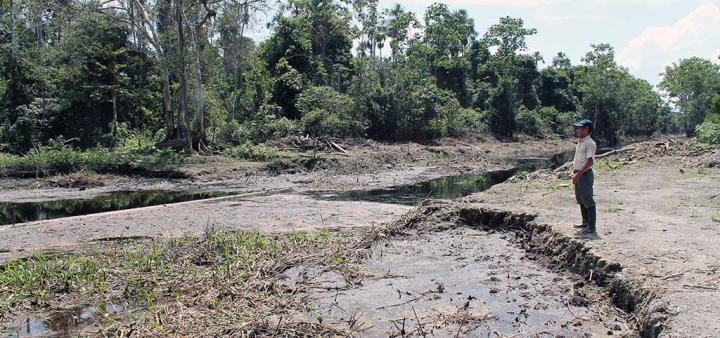
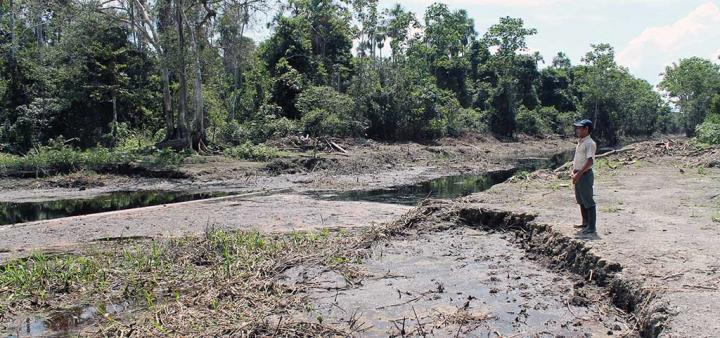
Credit: Cristina O'Callaghan Gordo/ISGlobal
People from two indigenous communities in the Peruvian Amazon who live close to the country's longest oil pipeline have mercury, cadmium and lead in their bodies at concentrations that could be harmful to their health. This was the conclusion of a study carried out jointly by the Barcelona Institute for Global Health (ISGlobal) and the Peruvian National Center for Occupational Health and Environmental Health Protection, with the support of the Peruvian Ministry of Health.
The objective of the study, which has been published in the journal Environmental Health, was to determine the concentrations of four metals (mercury, cadmium, lead and arsenic) in people living in two indigenous Kukama communities–San Pedro and Cuninico–in the Loreto region of Peru. In 2014, the area was affected by two major oil spills from the North Peruvian pipeline.
"In spite of the fact that many people in the area have been exposed to contamination caused by extractive activities, there are almost no studies assessing the effects of the contamination on the health of the people living close to the extraction zones, who are frequently exposed to oil spills", explains ISGlobal researcher Cristina O'Callaghan Gordo, the lead author of the study.
The samples studied were collected 13 and 16 months after the spills from a group of 130 people. Subsequent analysis showed that 50% of the population studied had concentrations of mercury in urine higher than the threshold limit value set by the country's Ministry of Health. This percentage increased to 64% in children under 10 years of age.
O'Callaghan Gordo considers the findings to be "a cause for concern because exposure to mercury is associated with neurological, psychological, renal, respiratory and cardiovascular problems". Crude oil can contain mercury and other metals, and high levels of these contaminants have been reported in the environment and in aquatic organisms in areas surrounding oil extraction sites and areas affected by oil spills.
In 17% of the same population, the authors found urine concentrations of cadmium higher than the recommended safe threshold value. Exposure to cadmium increases the risk of kidney damage, including chronic renal failure, and can also cause lung, prostate and kidney cancers.
In the case of lead, no safe blood level has been identified, and 19% of the children aged under 10 years in this study had blood concentrations of lead associated with a high health risk according to the reference levels established by the US Centers for Disease Control and Prevention. Lead exposure is linked to neurological disorders and behavioural abnormalities, including reduced intellectual capacity.
Levels of arsenic considered harmful to health were not found in any of the participants.
"The oil spills may be the source of exposure to these metals, although other sources cannot be ruled out, particularly in the case of mercury, which is also associated with other common activities in the Peruvian Amazon, such as deforestation and gold mining", adds the ISGlobal researcher.
Manolis Kogevinas, the Head of ISGlobal's Cancer Programme, who also participated in the study, recommends that future research should focus on "identifying and quantifying the sources of exposure" and suggests that research on the impact of oil spills should start "as soon as possible after the spill occurs to collect data that better reflects exposure to oil-related contaminants".
###
Media Contact
Pau Rubio
[email protected]
0034-696-912-841
http://www.isglobal.org/en/
Original Source
https://www.isglobal.org/documents/10179/6225531/NdP+amazonia+peruana+metales+090218+ENG.pdf/eb91c015-8d1b-4d57-821f-73cda5d3eb90 http://dx.doi.org/10.1016/j.envres.2018.01.013