Published in the journal AI in Civil Engineering, the study introduces a model-agnostic meta-learning approach combined with SHAP analysis to address the challenge of data scarcity in civil engineering. The team, led by Mayaz Uddin Gazi, Md. Titumir Hasan, and Ponkaj Debnath, demonstrated that their method outperforms standard machine learning algorithms while providing interpretable insights into the factors influencing concrete strength. This work offers a scalable solution for predicting material properties in real-world scenarios where extensive experimental data is unavailable.
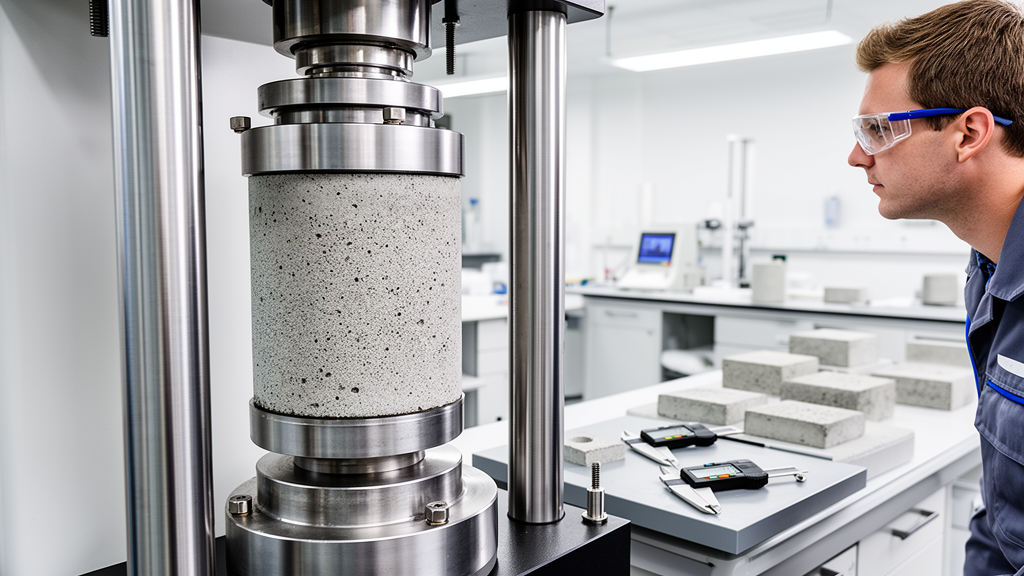
Compressive strength is a defining property of concrete that governs structural safety and serviceability. It influences critical design parameters such as member sizing, load distribution, and long-term durability. Building codes across the world, including Eurocode 2 and ACI 318, embed compressive strength as a benchmark for mix design and structural verification. However, traditional methods for determining this property rely heavily on destructive laboratory testing, such as 28-day cube or cylinder compression tests. These tests are time-consuming, resource-intensive, and susceptible to variations in specimen preparation and curing conditions, creating a need for efficient predictive models.
Machine learning has emerged as a powerful paradigm for modeling complex material behaviors in civil engineering. Techniques such as Gradient Boosting, Random Forest, and Artificial Neural Networks have been extensively investigated for their ability to produce accurate and generalizable results. Despite these advancements, two significant challenges persist: generalization across diverse datasets and the requirement for large, curated datasets that may not reflect real-world variability. Most high-performing models rely on extensive data, which can be difficult to obtain in practical engineering contexts where experimental costs are high and data availability is limited.
To address these limitations, the study leveraged Model-Agnostic Meta-Learning, or MAML, a framework designed to optimize model parameters for rapid adaptation to new tasks with minimal examples. MAML operates through a bi-level optimization process, where an outer loop finds optimal initial parameters and an inner loop adapts the model to specific tasks using small amounts of data. This approach allows the model to learn from small datasets while maintaining generalizability for new tasks, making it particularly suitable for few-shot regression problems like predicting continuous variables such as compressive strength.
The research team utilized a curated dataset of 430 samples focusing on 28-day compressive strength. The input features included cement, blast furnace slag, fly ash, water, superplasticizer, coarse aggregates, fine aggregates, and age. Data preprocessing involved handling missing values, removing duplicates, and normalizing features using Min-Max normalization to ensure fair contribution from all variables during training. The dataset was partitioned into three subsets: 70% for training, 15% for validation, and 15% for testing, a standard practice that ensures robust model evaluation and prevents overfitting.
The proposed pipeline integrated structured preprocessing, a neural network-based meta-learning core, and SHAP-based feature attribution. SHAP, or Shapley Additive Explanations, was used to estimate the contribution of each feature to the model output, providing transparency into the decision-making process. The model was evaluated using four metrics: Mean Absolute Error, Root Mean Square Error, Mean Absolute Percentage Error, and the Coefficient of Determination, or R-squared. These metrics collectively assess the model’s accuracy, precision, and reliability across different performance dimensions.
The MAML framework achieved superior performance compared to standard models like XGBoost and Random Forest. The meta-learning model recorded a Mean Absolute Error of 3.56 MPa, a Root Mean Square Error of 5.55 MPa, and an R-squared value of 0.913. In contrast, XGBoost, the best-performing conventional model, had a Mean Absolute Error of 34.68 and an R-squared value of 0.8891. Statistical validation via the Wilcoxon Signed-Rank Test confirmed the significance of the model’s improvements, with a p-value of 0.0020, indicating that MAML’s performance significantly differs from XGBoost.
SHAP analysis revealed nonlinear interactions and dominant factors influencing compressive strength. The water-cement ratio demonstrated a strong inverse relationship with strength, consistent with classical mix design theory. The model also identified a saturation effect for superplasticizer, where additional dosage beyond approximately 10 kg/m3 offered diminishing or adverse effects on strength. Aggregate gradation showed that an increase in coarse aggregate content enhances strength only when accompanied by adequate paste volume, reaffirming packing density theories. Curing age followed a near-logarithmic gain in strength contribution, aligning with known hydration kinetics.
The interpretability provided by SHAP analysis is crucial for validating the model’s alignment with known material behavior. Waterfall plots for representative test instances highlighted the contribution of each input feature toward the final prediction. For high-strength predictions, positive contributions from blast furnace slag and coarse aggregate were prominent, while water had a pronounced negative influence. For low-strength predictions, insufficient cement content was the primary driver. These instance-specific explanations enable engineers to trace the influence of individual features on predicted outcomes, fostering trust in AI-assisted decision-making.
The study acknowledges several limitations, primarily the limited focus of the dataset. The model was trained on a specific set of concrete mix parameters and external conditions, and its generalization to a wider variety of mixes and environmental factors such as temperature and humidity remains to be tested. Additionally, the study focused exclusively on compressive strength, while other important properties like tensile strength and crack resistance were not investigated. The authors suggest that future work should include larger datasets with varying environmental conditions and explore the application of meta-learning to other mechanical properties and fields such as structural health monitoring.
This research demonstrates the applicability of meta-learning in civil engineering, providing a scalable and interpretable solution for strength prediction in data-limited conditions. The framework’s ability to generalize across different tasks without significant retraining makes it valuable for early-stage predictions and multi-source data integration. By combining predictive accuracy with interpretability, the study offers a robust tool for engineers and material mix designers aiming to estimate compressive strength with limited experimental data input.
The work was published in the journal AI in Civil Engineering in September 2025. The authors, Mayaz Uddin Gazi, Md. Titumir Hasan, and Ponkaj Debnath, positioned their research as a response to the specific limitations of existing machine learning approaches in civil engineering. While previous studies have successfully applied algorithms like Random Forest and Support Vector Machines to concrete strength prediction, the authors noted that these models often require substantial training data to achieve reliable generalization. Furthermore, many of these conventional models lack interpretability, making it difficult for engineers to extract actionable insights from their predictions. The proposed framework aims to bridge this gap by combining the data efficiency of meta-learning with the transparency of SHAP-based feature importance analysis.
The dataset used for this study was derived from publicly available open-source data, initially comprising approximately 1,030 entries. The researchers filtered this data to retain only samples with a curing age of 28 days, resulting in a final dataset of 430 samples. This specific selection was made to focus exclusively on compressive strength at a consistent time interval and to align with the objective of developing an optimal model using a limited dataset. The dataset is widely recognized as a standard benchmark in machine learning research for concrete strength prediction, having been extensively utilized and validated in previous studies. This prior use underscores its reliability and suitability for comparative analysis, particularly for testing predictive performance in data-limited scenarios. The input features included cement, blast furnace slag, fly ash, water, superplasticizer, coarse aggregates, fine aggregates, and age, providing a comprehensive view of the mix components.
Descriptive statistics of the concrete mix components revealed significant variability in the data. The mean cement content was 254.23 kg, with a standard deviation of 101.37 kg, indicating substantial variation in the actual cement content across samples. Blast furnace slag and fly ash had mean values of 71.78 kg and 78.66 kg, respectively, with minimum values of 0, suggesting their selective or limited usage in some samples. Water content showed lower dispersion, with a mean of 184.74 kg and a standard deviation of 19.57 kg. Superplasticizer content had a mean of 7.51 kg but exhibited high variability, with maximum values reaching 32.20 kg. Coarse and fine aggregates showed moderate variation, with standard deviations of 87.52 kg and 71.38 kg, respectively. The curing age variable was consistent, with most samples conforming to the typical 28-day curing time, supported by a median of 28 days and a small interquartile range. These statistical measures highlight the diverse composition of the concrete mixtures and the curing processes that affect compressive strength.
The methodology included a rigorous data cleaning process to ensure the quality of the inputs fed into the machine learning models. This involved handling missing values, removing duplicate records, and identifying outliers using statistical techniques such as z-scores or the Interquartile Range. Data types were verified to ensure they were in appropriate formats for the algorithms, with categorical features transformed using encoding methods and continuous variables standardized. Min-Max normalization was applied to rescale feature values to a fixed range, typically [0, 1]. This step is crucial for algorithms sensitive to the scale of input data, such as neural networks, as it ensures that all features contribute equally to the model’s learning process. By adjusting the scale of the data, normalization helps improve convergence rates during training and mitigates issues related to outliers that could disproportionately influence distance calculations in many machine learning algorithms.
The study also examined the relationships between concrete mixture components and compressive strength through exploratory data analysis. Cement content shares a direct relationship with strength, as it is the main binder responsible for aggregate-to-aggregate tie strength. In contrast, workability increases with water content, which is undesirable because high water content results in void formation after evaporation, reducing the strength of the final product. Fly ash and superplasticizer are used as specialty chemicals rather than mass amounts, typically added where specific performance characteristics are desired. The strength gain of the concrete exhibits age-dependent behavior and continuous chemical reactions, suggesting that strength increases non-linearly with age. This complexity underscores why concrete mix design is more than a simple proportioning rule and requires an expert optimization process to manage the multifactorial matrix of constituent interactions.
Subject of Research: Application of model-agnostic meta-learning and SHAP analysis for concrete compressive strength prediction
Article Title: Few-shot meta-learning for concrete strength prediction: a model-agnostic approach with SHAP analysis
Article References: Gazi, M. U., Hasan, M. T., & Debnath, P. (2025). Few-shot meta-learning for concrete strength prediction: a model-agnostic approach with SHAP analysis. AI in Civil Engineering, 4(1), Article 20. https://doi.org/10.1007/s43503-025-00064-8
Image Credits: AI Generated
DOI: 10.1007/s43503-025-00064-8
Keywords: concrete strength, meta-learning, machine learning, civil engineering, SHAP analysis, few-shot learning, predictive modeling, material science, Few-shot, concrete, strength, prediction
News Source: Denise Maddox. (November 10, 2026). Meta-learning improves concrete strength prediction with limited data. Scienmag.