In a groundbreaking study that could redefine therapeutic strategies for Parkinson’s disease, researchers have unveiled the pivotal role of melatonin in orchestrating mitochondrial dynamics to drive dopaminergic neuronal differentiation and nerve regeneration. This innovative research leverages the complex interplay between mitochondrial fusion mechanisms and the WNT/β-catenin signaling pathway, opening promising avenues for the treatment of neurodegenerative disorders characterized by dopaminergic neuron loss.
Central to the study is melatonin, a neurohormone primarily known for regulating circadian rhythms, which here demonstrates profound regulatory capacity over mitochondrial fusion dynamics. Mitochondria, the cellular powerhouses, continuously undergo fusion and fission processes to maintain their function and integrity. Disruption in these processes has been implicated in neurodegenerative diseases, including Parkinson’s disease, where impaired mitochondrial morphology correlates with dopaminergic neuron degeneration. The researchers observed that melatonin exquisitely modulates these fusion dynamics, thus preserving mitochondrial health and enhancing cellular bioenergetics in neuronal precursor cells.
The research team focused on human induced pluripotent stem cells (iPSCs), which have revolutionized disease modeling and regenerative medicine due to their ability to differentiate into various cell types, including neurons. By applying melatonin to these cells, the scientists demonstrated a significant increase in dopaminergic neuronal differentiation. This effect was intricately connected to the activation of the WNT/β-catenin signaling pathway, a well-established signaling cascade essential for neurogenesis and neuronal survival during embryonic development and adult brain plasticity.
Mechanistically, melatonin’s modulation of mitochondrial fusion dynamics appears to activate the WNT/β-catenin pathway via mitochondrial-nuclear communication. Enhanced mitochondrial fusion leads to improved mitochondrial function and ATP production, which promotes β-catenin stabilization and nuclear translocation. Once in the nucleus, β-catenin acts as a transcriptional co-activator for genes essential for neuronal differentiation and survival, thereby orchestrating the conversion of human iPSCs into functional dopaminergic neurons.
This molecular crosstalk between mitochondrial function and WNT signaling signifies a novel regulatory axis that integrates metabolic status with gene expression during neuronal differentiation. Such findings underscore the multifaceted role of melatonin, extending beyond its antioxidant properties to become a critical modulator of intracellular signaling networks that dictate cell fate decisions.
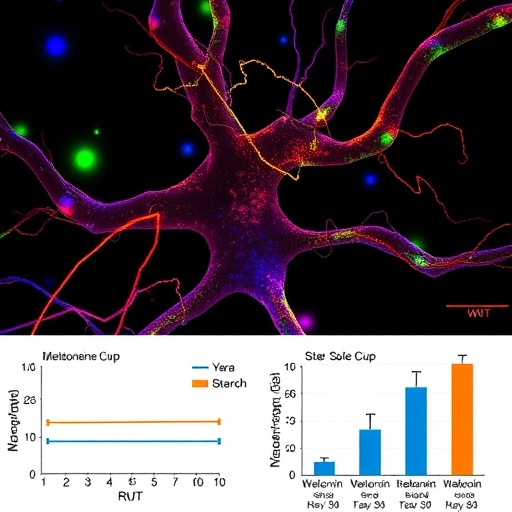
To validate the translational potential of these findings, the researchers employed an established mouse model of Parkinson’s disease induced by 1-methyl-4-phenyl-1,2,3,6-tetrahydropyridine (MPTP), which selectively destroys dopaminergic neurons in the substantia nigra, mimicking human pathology. Treatment with melatonin in this model not only enhanced mitochondrial fusion within surviving neurons but also significantly promoted nerve regeneration. Behavioral assessments revealed notable improvements in motor function, suggesting functional recovery aligned with underlying cellular reparative processes.
Importantly, this study highlights how mitochondrial fusion dynamics can serve as a targetable mechanism to stimulate endogenous regenerative processes in the adult brain. By rescuing mitochondrial morphology and function, melatonin facilitates neurogenic cues via the WNT/β-catenin pathway, bridging bioenergetic health and gene transcription control to favor neuronal regeneration.
Furthermore, the utilization of human iPSCs in this research addresses the translational gap often encountered in neurodegenerative disease modeling. This approach allows mechanistic insights in a relevant human cellular context, thereby enhancing confidence in the applicability of melatonin-based therapeutic strategies for Parkinson’s patients.
The findings also invite a broader re-examination of mitochondrial dynamics in other neurodegenerative disorders, such as Alzheimer’s disease and Huntington’s disease, where mitochondrial dysfunction and impaired neurogenesis play critical roles. Modulating mitochondrial fusion with agents like melatonin could therefore represent a universal strategy to enhance neural regeneration and restore functional capacity across diverse neurodegenerative conditions.
Beyond its regenerative capabilities, melatonin’s influence on the WNT/β-catenin pathway may have implications for neural development and disease prevention. Dysregulation of WNT signaling is associated with aberrant neurogenesis and neurodevelopmental disorders; therefore, melatonin’s modulation of this pathway may provide neuroprotective benefits beyond the context of injury or degeneration.
Future research directions should explore the dosing regimens and delivery methods of melatonin to optimize its neuroregenerative effects while minimizing potential side effects. Additionally, unraveling the upstream regulators of mitochondrial fusion affected by melatonin could identify novel drug targets for precise modulation of mitochondrial dynamics in neural tissues.
The integration of mitochondrial biology with canonical signaling pathways like WNT/β-catenin represents a cutting-edge frontier in neuroscience research. This study’s mechanistic insights exemplify the power of combining cellular bioenergetics with gene regulatory networks to unlock regenerative potential in the human brain.
Given the global burden of Parkinson’s disease and the lack of curative therapies, these findings offer a beacon of hope. Melatonin, a molecule with well-documented safety profiles, could accelerate the development of effective treatments that promote not only neuroprotection but active regeneration of lost dopaminergic neurons.
In conclusion, this research marks a significant advance by positioning melatonin as a master regulator of mitochondrial fusion dynamics and WNT/β-catenin signaling that collectively drive the differentiation of human iPSCs into dopaminergic neurons and stimulate nerve regeneration in a preclinical Parkinson’s model. Such knowledge lays the foundation for novel regenerative therapies capable of restoring neuronal populations and functional capacities impaired in Parkinson’s disease.
The convergence of mitochondrial dynamics with developmental signaling cascades under melatonin’s influence heralds a paradigm shift in understanding and treating neurodegenerative diseases. As science moves toward harnessing endogenous repair mechanisms, melatonin stands out as a promising candidate to lead this transformative journey from disease mitigation to true neural restoration.
Subject of Research: Neuroprotective roles of melatonin in mitochondrial fusion dynamics, WNT/β-catenin signaling, and dopaminergic neuronal differentiation in human iPSCs; nerve regeneration in MPTP-induced Parkinson’s disease mouse model.
Article Title: Melatonin orchestrates mitochondrial fusion dynamics-mediated WNT/β-catenin signaling to promote dopaminergic neuronal differentiation of human iPS and nerve regeneration in a MPTP-induced mouse model of Parkinson’s disease.
Article References:
Zhang, P., Huang, P., Dong, Q. et al. Melatonin orchestrates mitochondrial fusion dynamics-mediated WNT/β-catenin signaling to promote dopaminergic neuronal differentiation of human iPS and nerve regeneration in a MPTP-induced mouse model of Parkinson’s disease. Cell Death Discov. (2025). https://doi.org/10.1038/s41420-025-02906-x
Image Credits: AI Generated
DOI: https://doi.org/10.1038/s41420-025-02906-x
Tags: cellular bioenergetics in neurodegenerationcircadian rhythms and neurobiologydopaminergic neuron differentiationhuman-induced pluripotent stem cellsmelatonin and neuronal growthmitochondria-WNT signaling pathwaymitochondrial dynamics in neuronsmitochondrial fusion and fissionneurodegenerative disease therapiesneurohormones and brain healthParkinson’s disease treatment strategiesregenerative medicine advancements