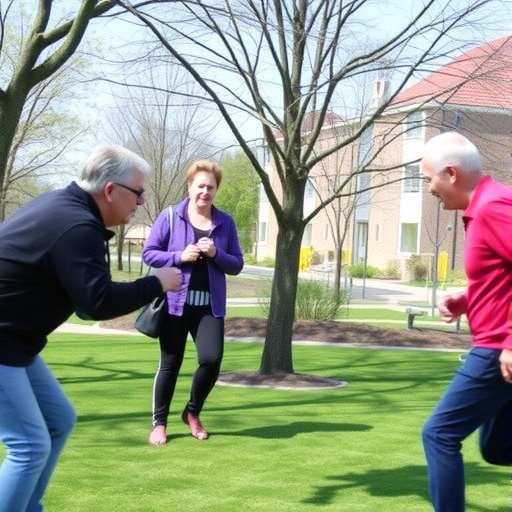
As populations around the world experience unprecedented demographic shifts, the well-being of older adults has become a critical focus of public health initiatives. A groundbreaking study slated for publication in BMC Geriatrics in 2026 offers a comprehensive social return on investment (SROI) analysis of the ENJOY seniors exercise park IMP-ACT project. This innovative intervention aims at improving health outcomes among older individuals through targeted physical activity facilitated by specially designed outdoor exercise parks. These parks, tailored for seniors’ physiological and social needs, are rapidly emerging as a vehicle for enhancing active aging and reducing the societal burden of age-related health decline.
The ENJOY project represents a pioneering model that blends urban planning, geriatrics, and community health to create an environment conducive to regular physical engagement for older adults. Unlike traditional exercise facilities, these parks focus on inclusivity, accessibility, and enjoyment—the core components that drive sustained participation in physical activity. This study meticulously quantifies the financial, social, and health benefits derived from investing in such infrastructures, employing a robust SROI methodology that captures not only direct medical improvements but also broader socio-economic impacts.
A key highlight of the ENJOY initiative is its multi-disciplinary design approach. Collaborators from geriatrics, physiotherapy, urban design, and economics conjoined expertise to develop exercise installations whose ergonomics consider the typical mobility limitations encountered in older populations. The equipment emphasizes low-impact strength training, balance enhancement, and cardiovascular support, areas critically linked to reducing fall risks and chronic disease progression—a common health hurdle among seniors globally.
The IMP-ACT project includes longitudinal surveillance of participants, tracking variables such as physical performance, mental health indices, and social integration metrics over extended periods. This granular data collection enables the calculation of nuanced outcome indicators, demonstrating tangible improvements like increased independence in daily activities, decreased hospital admissions, and enhanced psychological well-being. Such outcomes underscore the multi-faceted benefits of physical activity interventions beyond mere fitness gains.
Crucially, the study situates these health benefits within an economic framework, evaluating costs saved through reduced reliance on healthcare services, diminished caregiver burden, and delayed institutionalization. The SROI model employed integrates qualitative data from participant interviews and community stakeholders to produce a holistic valuation. For every dollar spent on the ENJOY exercise parks, the return accrues not solely through healthcare savings but through enriched community cohesion and enhanced quality of life—a compelling case for policymakers.
What also distinguishes the ENJOY parks is the fostering of social capital among seniors. Regular interaction in a communal space tailored for peer engagement combats social isolation, a known risk factor for depression and cognitive decline in aging. The research captures these psychosocial improvements, extending the SROI benefits to include mental health stabilization and community resilience, emphasizing the parks’ role as social hubs rather than mere exercise venues.
The technical rigor of this study is noteworthy. The authors utilized advanced statistical modeling techniques to adjust for confounding variables such as baseline health status, socio-economic background, and individual motivation levels. The integration of propensity score matching and sensitivity analyses serves to enhance the credibility and generalizability of the findings across diverse populations and geographic settings.
Importantly, the project aligns with global public health agendas, including the World Health Organization’s Decade of Healthy Aging, which advocates for environments that support functional ability in older people. By providing robust empirical evidence supporting outdoor exercise infrastructure, the ENJOY IMP-ACT project bridges critical evidence gaps and offers scalable models adaptable to both urban and rural contexts internationally.
The implications for urban design and public health policy are profound. The study’s findings advocate for the integration of age-friendly exercise parks into existing recreational spaces and new developments, reinforcing the need for cross-sector collaboration. The sustained engagement of older adults in these exercise environments can lead to systemic reductions in public healthcare costs, highlighting exercise parks as both health promotion and economic intervention strategies.
This analysis further explores the role of community involvement and governmental support in sustaining the success of such initiatives. Securing long-term funding, ensuring maintenance of facilities, and embedding the parks within broader social programming are identified as critical enablers. The project emphasizes co-design with older residents, ensuring the exercise parks meet evolving user needs and preferences, positioning participants as active agents in their health journeys.
The ENJOY IMP-ACT study also sheds light on the psychosomatic mechanisms underpinning physical activity benefits. Regular engagement in moderate exercise is shown to counteract inflammatory pathways commonly exacerbated in aging, thereby reducing the incidence and severity of chronic diseases like diabetes and cardiovascular dysfunction. Such analyses lend biological plausibility to the macro-level improvements captured by social and economic metrics.
Moreover, the research identifies technology integration potentials, including wearable devices and app-based monitoring systems, to personalize exercise regimens and track adherence in real-time. These innovations promise to enhance engagement and provide richer data streams for future evaluations, representing a frontier in merging gerontechnology with community health.
As the study anticipates dissemination, it encourages stakeholders worldwide—from municipal planners to healthcare providers—to reimagine outdoor recreational spaces with an aging lens. The evidence-based validation of the ENJOY seniors exercise park reinforces the paradigm shift towards preventive, community-centered health initiatives, aligning with the growing impetus to foster aging populations that are not merely longer-lived but thrivethrough sustained physical, psychological, and social well-being.
In conclusion, the comprehensive social return on investment analysis of the ENJOY seniors exercise park IMP-ACT project not only underscores the tangible health benefits of physical activity for older adults but also illuminates the intricate web of economic, social, and psychological returns generated from thoughtfully designed community infrastructure. This convergence of multidisciplinary insights paves the way for future urban health interventions that honor the complexity of aging and opportunity for vibrant, active senior years.
Subject of Research:
Improving older people’s health through physical activity via the ENJOY seniors exercise park IMP-ACT project, analyzed through a social return on investment (SROI) framework.
Article Title:
A social return on investment analysis of the ENJOY seniors exercise park IMP-ACT project: improving older people’s health through physical activity.
Article References:
Brusco, N.K., Fearn, M., Hill, K.D. et al. A social return on investment analysis of the ENJOY seniors exercise park IMP-ACT project: improving older people’s health through physical activity. BMC Geriatr (2026). https://doi.org/10.1186/s12877-026-07260-w
Image Credits:
AI Generated
Tags: accessibility in senior exercise infrastructureactive aging public health initiativescommunity health interventions for aging populationshealth outcomes of senior exercise programsinclusive outdoor fitness for elderlymulti-disciplinary approach to geriatric healthphysical activity benefits for older adultsreducing age-related health declinesocial return on investment seniors exercise parkssocio-economic impacts of senior fitness parkssustainable physical activity engagement for seniorsurban planning for senior wellness